8 min read
4.5
· 26,278 Amazon ratingsShare This Review
America's First Daughter by Stephanie Dray & Laura Kamoie Review: Richly Researched Biographical Fiction of Patsy Jefferson
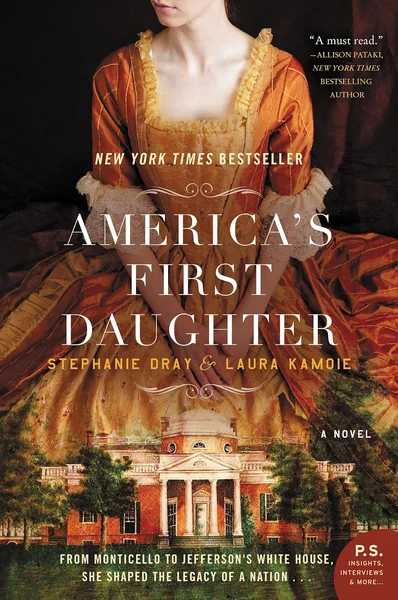
America's First Daughter is a sweeping historical fiction novel co-authored by Stephanie Dray and Laura Kamoie, published by William Morrow Paperbacks in 2016, that brings to life Martha "Patsy" Jefferson Randolph — Thomas Jefferson's eldest daughter — as the keeper of her father's most complex secrets and the architect of an enduring American legacy. Drawing from thousands of letters and original sources, it is both a New York Times and USA Today bestseller, and a landmark work of biographical historical fiction centered on a woman too long eclipsed by the men around her.
LuvemBooks Verdict
Best for
Readers of biographical historical fiction who want their founding-era narratives to grapple honestly with the period's moral contradictions — particularly those drawn to the overlooked women who shaped America's founding generation from behind the scenes.
Worth it if
Worth reading if you want a richly sourced, clear-eyed portrait of Martha "Patsy" Jefferson Randolph that refuses to sanitize either her world or her father's profound hypocrisies, and rewards patient readers with substantial period depth.
Skip if
Skip it if you're hoping for a portrait of a woman fully independent of Thomas Jefferson's orbit — Patsy's identity is so bound to her devotion to her father that she rarely escapes his gravitational pull, even in a story nominally her own — or if the novel's considerable length and density of historical detail feel daunting.
What readers & critics say
Kirkus Reviews, as quoted on bookmovement.com, praised the authors for performing "tireless research," singling out the novel's command of detail from Parisian debutante life to Virginia plantation society. Reader reviewers at nicholelouise.com and readingladies.com highlight the authors' honest, unsentimental rendering of Patsy as "a woman of her time" — loyal and devoted, but painted without sugar-coating or idealization.
Sources: bookmovement.com (quoting Kirkus Reviews), nicholelouise.com, readingladies.com, readingreality.net, goodbooksandgoodwine.comAsk LuvemBooks
Was this helpful?
- Is it worth reading?
- For readers of biographical historical fiction who want founding-era narratives that grapple honestly with moral contradiction, America's First Daughter delivers. Kirkus Reviews praised Dray and Kamoie's "tireless research," and the novel's honest, clear-eyed rendering of Patsy — characterized by sacrifice, devotion, hardship, privilege, and grit, without idealization — is one of its most praised achievements. The central caveat is that Patsy's identity is so thoroughly defined by her devotion to Jefferson that readers seeking a portrait of a woman independent of her father may find the novel keeps her in his shadow despite its ambitions.
- Similar books
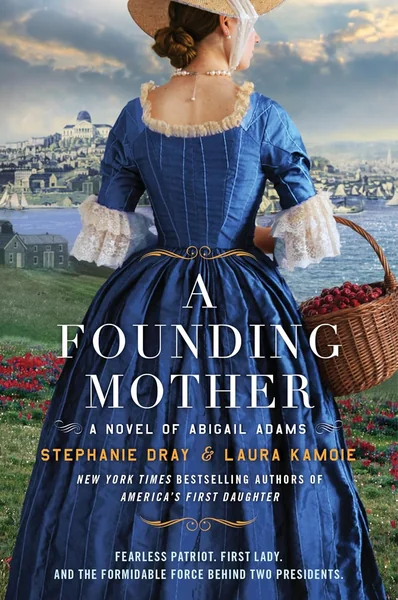
- Readers who enjoy America's First Daughter will find a natural companion in A Founding Mother: A Novel of Abigail Adams by Stephanie Dray and Laura Kamoie, which shares the same research-intensive approach and centers another founding-era woman whose story has long been told in the margins of a famous husband's legacy. LuvemBooks also notes that fans of Ron Chernow's Alexander Hamilton — a richly documented account of another contradictory founder — will find this novel a rewarding companion read. For those drawn to founding-era biographical fiction centered on women who shaped what survived, the broader Dray and Kamoie catalogue offers the most direct continuity.
- Who should read this?
- America's First Daughter is best suited to readers of biographical historical fiction who want founding-era narratives that engage honestly with the period's moral contradictions — particularly around slavery and the Sally Hemings relationship — rather than paper over them. Fans of richly documented women's history, especially those who have read Dray and Kamoie's My Dear Hamilton or Ron Chernow's Alexander Hamilton, will find it a natural and rewarding companion. Readers seeking a portrait of a woman fully independent of Jefferson's influence, or those looking for a lighter introduction to the period, may find the novel's constraints and density less satisfying.
- About Stephanie Dray, Laura Kamoie
- Laura Croghan Kamoie is an American historian and author. America's First Daughter is a co-authored collaboration between Kamoie and Stephanie Dray, and LuvemBooks has also reviewed their follow-up work, A Founding Mother: A Novel of Abigail Adams.
- How does it compare to A Founding Mother?
- Both America's First Daughter and A Founding Mother: A Novel of Abigail Adams — the other Dray and Kamoie title reviewed by LuvemBooks — center founding-era women whose stories have long been told in the shadows of famous men, and both are grounded in rigorous historical research. America's First Daughter is the duo's landmark work, using Patsy Jefferson Randolph's perspective to interrogate the moral contradictions of Jefferson himself, while A Founding Mother brings the same approach to Abigail Adams. Readers who respond to one will very likely find the other equally rewarding.
- What sensitive content does it contain?
- America's First Daughter engages directly and unflinchingly with Jefferson's slaveholding and his relationship with Sally Hemings — his enslaved woman and his late wife's half-sister — as a source of moral complexity and pain for Patsy. The novel also depicts the constraints that Republican womanhood placed on Patsy's identity and autonomy, often to the detriment of her own well-being. Readers sensitive to depictions of slavery and the systemic subjugation of women in the founding era should approach with that context in mind.
Summarize this book
Follow up
Synthesized from verified book data & published reviews · How we review
Press Enter to ask. Answers come from our editorial Q&A — start typing to see related questions.
Age & Reading Level
Recommended age
Adult
Reading level
Adult
3 content notes · who it suits
Content to know about
Skip if You're looking for a portrait of a woman fully independent of a famous father's influence, or want a light introduction to the founding era.
Our Review
What the Novel Is and What It Does
Historical Scope and Significance
Strengths: Research, Voice, and Characterization
Limitations and Points of Tension
Who This Book Is For
Sources & Further Reading
The key facts and claims in this review are grounded in the retrieved, verified sources listed below.
- Cited in this review
- 1
- 2
kirkusreviews.com
- 3
- Further reading
- 4
Stephanie Dray, Laura Kamoie, Wikipedia
- 5
stephaniedray.com
- 6
readingladies.com
- 7
nicholelouise.com
- 8
readingreality.net
- 9
goodbooksandgoodwine.com
- 10
wanderloving.com
- 11
- 12
newbookrecommendation.com
Books like America's First Daughter
Curated picks for readers who enjoyed America's First Daughter, with our reasoning for each match.
If you liked America's First Daughter