
At a glance
About the Author
Steven Habbi1 book reviewed
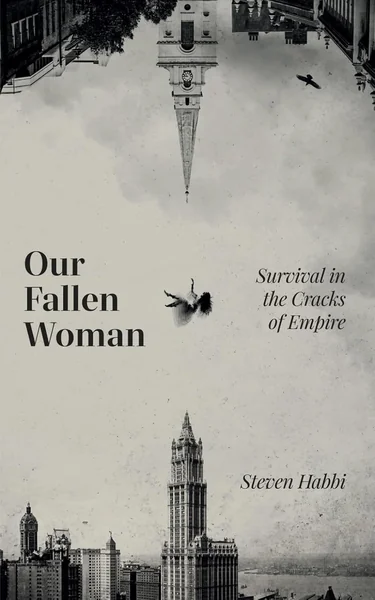
Our Fallen Woman
Survival in the Cracks of Empire
by Steven Habbi
LuvemBooks Verdict
Best for: Readers of female-led Irish diaspora historical fiction who want to inhabit one woman's full life — Galway to Prohibition-era New York, 1880–1925 — in a fictional-biography structure that blends drama, romance, and crime.
Worth it? Skip it? Read the full verdict →Ask LuvemBooks
Was this helpful?
- Is it worth reading?
- For the right reader, yes — LuvemBooks finds the premise genuinely strong: the 1880–1925 span covers some of the most consequential terrain in Irish and immigrant-American history, and centering a woman surviving the 'cracks' of that world gives the novel a built-in emotional engine. Midwest Book Reviews called it a riveting read from start to finish and praised Habbi's natural flair for character- and narrative-driven storytelling. The key caveat is that beyond that notice and the publisher's own copy, independent critical commentary is very thin, so readers who weigh a broad review base may prefer to watch how its reputation develops.
- Similar books
- Readers drawn to Erin's Galway-to-New York arc should look at Marie Benedict's Carnegie's Maid, another female-driven story of an Irish immigrant navigating American power, and Kristin Hannah's The Four Winds, which likewise centers a woman surviving a brutal historical era. For the multigenerational immigrant-saga sweep, Min Jin Lee's Pachinko is the modern benchmark, while Hernan Diaz's Trust offers a more formally daring take on wealth and power in early-20th-century New York. Michael C. Connolly's Murky Overhead is another adjacent pick for readers of Irish-inflected historical fiction.
- Who should read this?
- It's a natural pick for readers of female-led Irish historical fiction — the Galway-to-New York lineage that runs through much of the genre — and for anyone drawn to immigrant sagas where the historical backdrop is the antagonist as much as any person. It also suits readers who enjoy layered genre fiction, since drama, romance, and crime all run through one narrative, and those who like discovering a debut early. Readers who want a single focused mode or a deep bench of critical consensus should look elsewhere for now.
- How has it been received so far?
- So far, the strongest notice on record comes from Midwest Book Reviews, carried on the book's retail listings, which calls the novel a riveting read from start to finish and credits Habbi with a natural flair for character- and narrative-driven storytelling. Beyond that endorsement and the publisher's own copy, there is little independent critical commentary yet — unsurprising for a small-press debut published in January 2026. Readers who enjoy getting in early on a debut will find a premise with real scope and at least one enthusiastic independent endorsement behind it.
- Is it based on a true story?
- No — Erin is an invented character, though the novel is explicitly positioned as a tribute to the real experiences of women who endured systemic injustice between 1880 and 1925. Its terrain is thoroughly historical: famine-haunted Ireland, emigration through London, and Prohibition-era New York, in the tradition of Irish diaspora epics that treat emigration as a lifelong condition rather than a single journey.
- Is it a good book club pick?
- Yes — the novel's stated concerns give a group real material: what is lost when survival demands everything, and what remains when faith, identity, and hope are pushed to their limits, all filtered through one woman's 45-year journey across four cities. The deliberate blend of drama, romance, and crime, and the book's positioning as a tribute to real women under systemic injustice, offer natural discussion threads. The trade-off is that with little independent commentary available, a club would be charting its own assessment rather than building on an established critical conversation.
Summarize this book
Follow up
Synthesized from verified book data & published reviews · How we review
Press Enter to ask. Answers come from our editorial Q&A — start typing to see related questions.
Age & Reading Level
Recommended age
Adult
Reading level
Adult
3 content notes · who it suits
Content to know about
Skip if you want a tightly focused single-genre historical novel or a deep bench of established critical consensus before committing.
Editorial Review
Steven Habbi's debut historical novel follows Erin, a fictional Irishwoman, from famine-haunted Galway through Dublin, London, and 1920s New York between 1880 and 1925. A sweeping, female-driven survival story blending drama, romance, and crime — though its reception record is still young.
Read the Full ReviewRelated reading
Adjacent titles worth exploring. We haven't reviewed these yet, so they link out to Amazon.