

9 min read
4.5
· 27,672 Amazon ratingsShare This Review
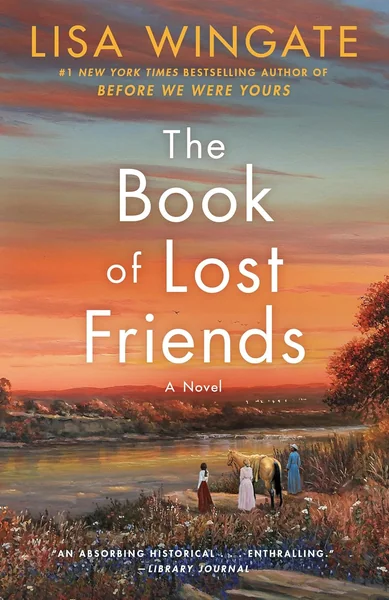
The Book of Lost Friends: A Novel by Lisa Wingate Review: A Sweeping Dual-Timeline Historical Novel
Lisa Wingate's The Book of Lost Friends is a New York Times bestseller and a dual-timeline historical novel that roots its emotional power in the real-world tragedy of post–Civil War "Lost Friends" newspaper advertisements, weaving together the journeys of three young women in 1875 Louisiana and Texas with the story of a modern teacher who uncovers their forgotten history.
LuvemBooks Verdict
Best for
Readers drawn to American history beyond the standard Civil War canon — particularly teachers, book clubs, and fans of Lisa Wingate's Before We Were Yours — who want an emotionally driven, dual-timeline story rooted in the real, underrepresented history of post–Civil War "Lost Friends" newspaper advertisements.
Worth it if
The dual-timeline structure, accessible prose, and a journey narrative anchored in documented historical injustice are exactly what you want from popular historical fiction.
Skip if
Readers who prefer tightly unified, single-timeline historical fiction or a more formally ambitious literary approach to Reconstruction history may find the modern 1987 frame a softer, less urgent counterpart to the raw 1875 narrative.
What readers & critics say
Bookmarks.reviews praised the "stark beauty of the prose" and noted the author "handles tough subjects with a great deal of sensitivity," while tobyasmith.com commended Wingate for skillfully employing the dual-timeline device in a way that is "easy to follow and clearly connected by the US history of slavery." Bookshelffantasies.com and heyitscarlyrae.com both highlighted how the modern Benedetta storyline, though initially hesitation-inducing, ultimately deepens the novel's emotional impact.
Sources: bookmarks.reviews, tobyasmith.com, bookshelffantasies.com, heyitscarlyrae.comAge & Reading Level
Recommended age
Adult
Reading level
Adult
3 content notes · who it suits
Content to know about
Skip if you want formally ambitious or experimentally structured literary fiction about Reconstruction history.
In This Review
- What Works & What Doesn't
- What the Novel Actually Is — and Where It Comes From
- Historical Significance and the Weight of the Source Material
- Structural Strengths: The Dual-Timeline Design
- Genuine Limitations and Who May Struggle With It
- Who This Novel Is For
What Works & What Doesn't
What Works
- Rooted in a real and underrepresented historical source — the post–Civil War 'Lost Friends' newspaper advertisements — giving the novel documented emotional and educational weight
- Three distinct, fully named protagonists (Hannie, Lavinia, and Juneau Jane) whose converging 1875 journey drives a strong central narrative through Reconstruction-era Louisiana and Texas
- Dual-timeline structure connects a modern character, teacher Benny Silva, to the historical story in a way that critical coverage called 'absorbing' and 'enthralling'
- From the author of the #1 New York Times bestseller Before We Were Yours, bringing an established track record with historically grounded American fiction to a similar subject
- Broad critical and reader reception spanning Booklist, Library Journal, Deep South Magazine, and All About Romance, reflecting wide appeal across reader types
What Doesn't
- Some early readers found the 1987 Benny Silva storyline a less urgent counterpart to the 1875 narrative, which carries the novel's primary dramatic stakes
- The deliberately accessible prose and structure — positioned by Bookreporter as comfort reading — may not satisfy readers seeking a more formally ambitious or literarily challenging approach to Reconstruction history
What the Novel Actually Is — and Where It Comes From
Historical Significance and the Weight of the Source Material
Structural Strengths: The Dual-Timeline Design
Genuine Limitations and Who May Struggle With It
Who This Novel Is For
Frequently Asked Questions
Sources & Further Reading
The key facts and claims in this review are grounded in the retrieved, verified sources listed below.
- Cited in this review
- 1
lisawingate.com
- 2
- 3
- Further reading
- 4
Lisa Wingate, Wikipedia
- 5
bookshelffantasies.com
- 6
shejustlovesbooks.com
- 7
marmaladeandmustardseed.com
- 8
- 9
heyitscarlyrae.com
- 10
- 11
bookthoughtsfrombed.com
- 12
penguinrandomhouse.com
Related Reviews
Reviews of books we picked for readers who enjoyed The Book of Lost Friends.
Reader Comments
No comments yet
Be the first to share your thoughts!