BOOKS
Published

Read Time

9 min read

Reader rating

4.6

· 116,868 Amazon ratings
reader ratings, not a LuvemBooks score
Curated & edited by

LuvemBooks Editorial

How we create our reviews →
Share This Review

The Frozen River by Ariel Lawhon Review: A Gripping Historical Mystery Demanding Justice

The Frozen River is a New York Times bestseller and GMA Book Club Pick that resurrects the remarkable true story of Martha Ballard — an 18th-century Maine midwife whose real diary becomes the engine of a taut historical mystery set against the frozen landscape of 1789 Hallowell. Ariel Lawhon, the bestselling author of I Was Anastasia and Code Name Hélène, constructs a narrative in which a body entombed in the Kennebec River, an alleged rape by two prominent townsmen, and a community's determination to silence a woman's testimony all converge in one relentless winter. Starred reviews from Booklist, Kirkus, Shelf Awareness, and BookPage confirm the novel as a standout in both the historical fiction and historical mystery genres.

LuvemBooks Verdict

Best for

Readers drawn to women's history and early American life who want a historically grounded mystery anchored by a quietly formidable protagonist — particularly those who enjoy fiction built on real documented lives and legal-social stakes.

Worth it if

Worth it if you appreciate historical fiction that earns its drama through specificity — a real diary, a real community, and a protagonist whose authority is hard-won and systematically threatened across a single punishing winter.

Skip if

Skip it if you want a lean, fast-moving thriller — the novel's dense web of Hallowell community members and relationships demands sustained attention and rewards patience over speed.

Ariel Lawhon's novel arrived with serious institutional momentum — a New York Times bestseller, GMA Book Club Pick, and NPR Book of the Year — and trade reviews were emphatic across the board, with starred assessments from Kirkus, Shelf Awareness, Booklist, and BookPage. Shelf Awareness, as cited on ariellawhon.com, calls it "a riveting story of small-town justice and a fitting tribute to a quiet, determined heroine," while Good Morning America describes it as "extensively researched" and praises Lawhon's ability to evoke both the physical world of 1789 Maine and the shifting moral climate of the unfolding trial.

Sources: ariellawhon.com, goodmorningamerica.com, literaryquicksand.com, audible.com
4.6from 116,868 Amazon ratings— reader ratings, not a LuvemBooks score
In This Review
  • What Works & What Doesn't
  • What the Novel Is and What It Argues
  • Historical Foundation and Lawhon's Approach
  • Critical Reception and Significance
  • Specific Strengths: Character, Stakes, and Structure
  • Who This Book Is For — and Where It Demands More of Its Reader

What Works & What Doesn't

What Works
  • A New York Times bestseller and NPR Book of the Year with starred reviews from Booklist, Kirkus, Shelf Awareness, and BookPage, confirming broad critical consensus
  • Grounded in the real diary of historical midwife Martha Ballard, giving the mystery an unusually rich documentary foundation
  • A single-winter structure keeps narrative stakes tightly focused around a looming trial and the fate of Martha's diary
  • Major outlets praised Lawhon's ability to animate a real-life heroine — Martha Ballard is a specific, formidable, and historically grounded protagonist
  • Crosses genre lines effectively, drawing readers of historical fiction and historical mystery alike, per BookPage's starred assessment
What Doesn't
  • The large cast of Hallowell community members — noted by Shelf Awareness — requires sustained attention to a web of relationships and grievances across a full novel's length
  • Readers seeking a fast, stripped-down thriller may find the novel's layered community drama more deliberate in pace than they expect
The Frozen River earns its accolades: it is a rigorously sourced, atmospherically charged historical mystery that restores a near-forgotten American heroine to her rightful place in the record.

What the Novel Is and What It Argues

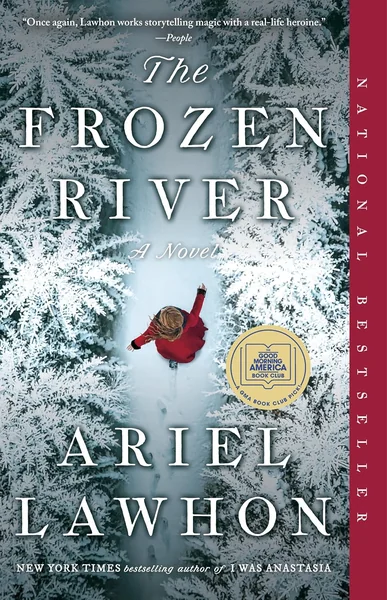
The Frozen River: A GMA Book Club Pick: A Novel by Ariel Lawhon front cover
Set in Hallowell, Maine, in 1789, The Frozen River opens when the Kennebec River freezes solid — and a body is found entombed in the ice. Martha Ballard, a renowned midwife and healer, is summoned to examine the corpse and determine cause of death. She is an ideal witness: as the keeper of a meticulous diary, Martha has documented the births, deaths, crimes, and scandals of her close-knit community for years. Critically, her diary contains an account of an alleged rape committed by two of Hallowell's most respected gentlemen — one of whom is now the man in the ice. When a local physician overrules her finding and declares the death accidental, Martha is left to pursue the truth alone, over the course of a single, punishing winter, as a trial looms and the prejudices of her era press down on every page. The novel is, at its core, an argument about whose voice counts as evidence — and whose is buried with the body.
a vivid, exciting page-turner from one of our most interesting authors of historical fiction.

Historical Foundation and Lawhon's Approach

The novel is explicitly inspired by the life and real diary of Martha Ballard, a historical figure whose records constitute one of the most detailed accounts of daily life and community medicine in early America. Lawhon, whose previous novels have drawn on the lives of real women — Anastasia Romanov, Nancy Wake — applies the same method here: building a work of fiction on a documented historical foundation. Shelf Awareness, in a starred review, notes that Lawhon draws on the real Martha Ballard's diary to construct a narrative containing "breathless twists and a large cast of hardscrabble characters," calling it "a riveting story of small-town justice and a fitting tribute to a quiet, determined heroine." The publisher describes the result as "clever, layered, and subversive" — a novel that situates a woman's quest for justice inside a world that considered women best seen and not heard.

Critical Reception and Significance

The novel arrived with serious institutional momentum: a New York Times bestseller, a GMA Book Club Pick, and an NPR Book of the Year. Trade reviews were emphatic. Kirkus awarded it a starred review, calling it "a richly satisfying drama" and "a vivid, exciting page-turner from one of our most interesting authors of historical fiction." Critical coverage, also in a starred review, described it as "outstanding," singling out Martha as "an extraordinary character" and predicting the novel would "entrance readers passionate about early America and women's history." BookPage's starred review called it "atmospheric, unique and elegantly written," adding that it "will satisfy mystery lovers and historical fiction enthusiasts alike." People Magazine declared that "once again, Lawhon works storytelling magic with a real-life heroine." That convergence of trade enthusiasm and popular recognition places The Frozen River among the more durably praised entries in recent historical fiction.

Specific Strengths: Character, Stakes, and Structure

What distinguishes Martha Ballard from many fictional heroines of her era is the specificity of her power and its limits. She is not a woman who exists outside her society's constraints — she is embedded in them, relying on the authority her diary and her decades of service have earned, and watching that authority be systematically undermined. Critics observed that Martha is "brave and outspoken when it comes to protecting the innocent," drawing a favorable comparison to Outlander's Claire Fraser for readers seeking a similarly tenacious and morally anchored protagonist. The diary itself functions as both narrative device and dramatic stake: as the winter progresses, it moves from private record to public scandal, implicating people Martha loves and forcing her to weigh loyalty against justice. Real Simple noted the novel carries "a gothic, wintry feel that makes it an ideal fireside read" — a quality built into the novel's single-season structure, which tightens the pacing and keeps the trial deadline constantly in view.

Who This Book Is For — and Where It Demands More of Its Reader

The Frozen River rewards readers who appreciate historical fiction rooted in documented lives, legal and social stakes, and a protagonist whose strength is quiet and cumulative rather than spectacular. The Portland Press Herald called it "a propulsive historical thriller with a contemporary sensibility" — which captures both the novel's accessibility and its thematic ambition. Lawhon's books have been translated into more than thirty languages, and her body of work has earned LibraryReads and One Book One County selections alongside the GMA spotlight, suggesting a broad and dedicated readership. That said, the novel's large cast of Hallowell community members — what Shelf Awareness describes as a "large cast of hardscrabble characters" — requires readers to track a web of relationships and grievances that accumulates across nearly the full winter timeline. Those expecting a streamlined two-hander thriller may find the community's density deliberate but demanding. For readers drawn to women's history, early American legal life, or the intersection of domestic record-keeping and public power, however, The Frozen River delivers on every front Lawhon has staked out.

Sources & Further Reading

The key facts and claims in this review are grounded in the retrieved, verified sources listed below.

  1. Cited in this review
  2. 1
  3. 2
  4. 3
  5. Further reading
  6. 4
  7. 5
  8. 6
  9. 7
  10. 8
  11. 9