
9 min read
4.6
· 194,365 Amazon ratingsFeatured In
Share This Review
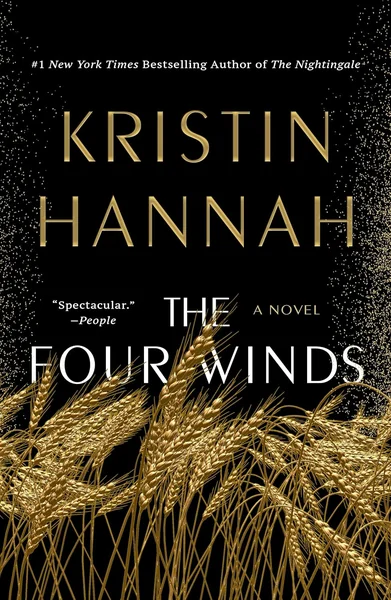
The Four Winds by Kristin Hannah Review: An Emotionally Relentless Dust Bowl Saga
Kristin Hannah's historical fiction novel The Four Winds follows Elsa Wolcott Martinelli from Dalhart, Texas, in 1921 through the Dust Bowl catastrophe of the 1930s, tracing one woman's fierce determination to survive for her children against a backdrop of drought, displacement, and economic collapse. Named the Bestselling Hardcover Novel of the Year by Publishers Weekly, it is a sweeping American epic with genuine emotional power — though Kirkus Reviews notes that its historical ambitions occasionally tip into the didactic.
LuvemBooks Verdict
Best for
Readers who love emotionally driven, female-centered historical fiction and want an unflinching saga of Depression-era and Dust Bowl hardship anchored by a resilient protagonist whose arc from outcast to survivor delivers sustained cathartic power.
Worth it if
You come to Kristin Hannah precisely for her brand of unrelenting emotional directness and sweeping historical canvases — The Four Winds delivers that formula at full scale, with a Dust Bowl and Great Depression setting that gives it a distinctive American heartland texture.
Skip if
You prefer narrative restraint, psychological complexity, or prose that subverts genre convention — Kirkus Reviews' warning about "melodramatic scenes and clichéd emotions" and the novel's consistently harrowing register are likely to feel exhausting rather than cathartic.
What readers & critics say
Kirkus Reviews, the most substantive critical source in the record, positions the novel as a book for "devoted Hannah fans in search of a good cry," praising Elsa's "iron core of character and courage" while flagging a didactic strain in which Hannah's historical ambitions produce "a series of sepia-toned postcards depicting melodramatic scenes and clichéd emotions." BookPage describes Hannah as working "like a wise and imaginative teacher," noting that the story builds to "epic proportions" through Elsa's transformation into a "warrior matriarch who fights for justice."
“For devoted Hannah fans in search of a good cry — Elsa develops an iron core of character and courage.”
— kirkusreviews.com“Like a wise and imaginative teacher, Hannah imbues past events with relevance; the story builds to epic proportions.”
— bookpage.comAge & Reading Level
Recommended age
Adult
Reading level
Adult
5 content notes · who it suits
Content to know about
Skip if you find unrelenting historical sorrow and emotional directness exhausting rather than cathartic.
In This Review
- What Works & What Doesn't
- What the Novel Is and What It Covers
- Scope, Significance, and Place in Hannah's Body of Work
- Where the Novel Excels
- Genuine Limitations
- Who This Novel Is For
What Works & What Doesn't
What Works
- Named the Bestselling Hardcover Novel of the Year by Publishers Weekly, reflecting its extraordinary reach and readership
- Protagonist Elsa Martinelli is a fully committed character whose arc — from family outcast to courageous survivor — drives the novel's considerable emotional power
- The historical canvas is vast and unflinching, placing Elsa against dust storms, migrant labor exploitation, hunger riots, and union-busting violence across Texas and California
- Praised by Christy Lefteri as 'a captivating, heartbreaking tale of a family who will do anything for each other — and everything to survive'
- Extends Kristin Hannah's established tradition of female-centered historical survival stories onto distinctly American Depression-era ground
What Doesn't
- Kirkus Reviews identifies a didactic strain, noting that Hannah's historical ambitions can result in 'melodramatic scenes and clichéd emotions' that read as a series of sepia-toned set pieces rather than fully immersive narrative
- The novel's emotional register is consistently and deliberately harrowing — readers who find unrelenting sorrow exhausting rather than cathartic may struggle with its sustained darkness
What the Novel Is and What It Covers
Scope, Significance, and Place in Hannah's Body of Work
Where the Novel Excels
Genuine Limitations
Who This Novel Is For
Frequently Asked Questions
Sources & Further Reading
The key facts and claims in this review are grounded in the retrieved, verified sources listed below.
- Cited in this review
- 1
- 2
- Further reading
- 3
Kristin Hannah, Wikipedia
- 4
kirkusreviews.com
- 5
kristinhannah.com
- 6
bookofthemonth.com
- 7
the-bibliofile.com
- 8
theresasmithwrites.com
- 9
bookclubchat.com
- 10
emmasbibliotreasures.com
- 11
- 12
gissellereads.com
- 13
laurieisreading.com
- 14
entiresummary.com
- 15
seattlebookmamablog.org
- 16
barnesandnoble.com
Related Reviews
Reviews of books we picked for readers who enjoyed The Four Winds.
Reader Comments
No comments yet
Be the first to share your thoughts!