BOOKS
Published

Read Time

3 min read

Curated & edited by

LuvemBooks Editorial

How we create our reviews →
Share This Review

Before We Were Yours by Lisa Wingate Review: Riveting Historical Fiction Rooted in Real Scandal

Before We Were Yours is a dual-timeline historical fiction novel by Lisa Wingate, grounded in one of America's most notorious real scandals: the Tennessee Children's Home Society, whose director Georgia Tann kidnapped and sold poor children to wealthy families across the country. The novel interweaves the story of twelve-year-old Rill Foss, torn from her Mississippi River shantyboat home in 1939, with present-day federal prosecutor Avery Stafford's search through her family's hidden past. Published by Ballantine Books and a New York Times, USA Today, Wall Street Journal, and Publishers Weekly bestseller, the novel has sold over two million copies and won the Southern Book Prize.

LuvemBooks Verdict

Best for

Readers of emotionally driven popular historical fiction who want to uncover a buried chapter of American history — specifically, the real-life child-trafficking scandal of Georgia Tann and the Tennessee Children's Home Society — through a dual-timeline narrative exploring family secrets, stolen identity, and generational loss.

Worth it if

Worth reading if you're drawn to meticulous, morally urgent historical fiction that braids an immersive 1939 child's-eye perspective with a present-day investigation, and you're prepared for consistently high emotional stakes rooted in documented atrocity.

Skip if

Skip it if you find dual-timeline structures frustrating when the contemporary frame feels less organically driven than the historical one, or if narratives centred on child kidnapping and institutional cruelty are too harrowing for your reading appetite.

What readers & critics say

Kirkus Reviews calls it "a respectful and absorbing page-turner" while noting that Wingate is "less successful in engaging readers in her fictional characters' lives" than in illuminating the true history. BookCoffeeHappy describes the tale as "riveting, wrenching, and ultimately uplifting," praising how it reminds readers that "the heart never forgets where we belong."

Sheds light on a shameful true story of child exploitation… a respectful and absorbing page-turner.

Kirkus Reviews

Riveting, wrenching, and ultimately uplifting — the heart never forgets where we belong.

BookCoffeeHappy

Written with such emotion that I was utterly captivated; Wingate's writing was the thing I loved most.

SheJustLovesBooks
Sources: Kirkus Reviews, BookCoffeeHappy
4.6from 158,949 Amazon ratings— reader ratings, not a LuvemBooks score
In This Review
  • What Works & What Doesn't
  • What the Novel Is — and the Real History Behind It
  • Significance and Reception
  • Strengths: Dual Structure and Historical Grounding
  • Genuine Limitations and Points of Contention
  • Who This Book Is For

What Works & What Doesn't

What Works
  • Grounded in the real, documented history of Georgia Tann and the Tennessee Children's Home Society, giving the narrative factual weight and moral urgency
  • Dual-timeline structure delivers both an immersive 1939 perspective through Rill Foss and a present-day investigative lens through Avery Stafford, broadening the story's scope
  • Awarded the Southern Book Prize and praised by People, Paula McLain, and Jamie Ford, reflecting broad critical recognition
  • Over two million copies sold and a multi-list bestseller, including Publishers Weekly's #3 Longest-Running Bestseller of 2017 — one of the most widely read works of American historical fiction of the past decade
  • This Ballantine Books edition includes a new author essay on shantyboat life, adding historical and cultural context
What Doesn't
  • Some readers find the present-day Avery Stafford storyline less organically compelling than the 1939 Rill Foss narrative, with at least one reviewer describing the contemporary frame as feeling somewhat forced
  • The novel's subject matter — child kidnapping, institutional cruelty, and family devastation — is consistently harrowing, making it a demanding read for those sensitive to such themes
Before We Were Yours is a work of historical fiction that transforms a largely forgotten American atrocity into a story of family, identity, and survival — and it has reached millions of readers who might never have encountered this history otherwise.

What the Novel Is — and the Real History Behind It

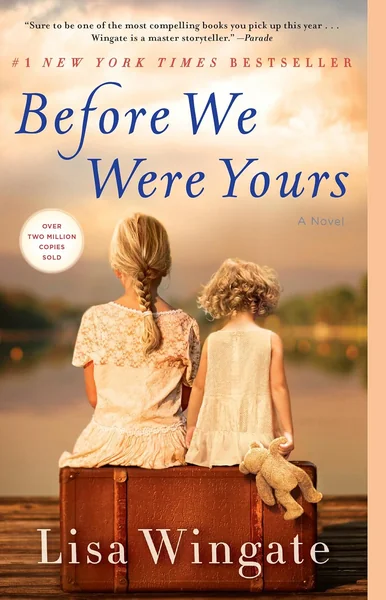
Before We Were Yours: A Novel by Lisa Wingate front cover
At the center of Before We Were Yours is a true scandal: Georgia Tann, director of a Memphis-based adoption organization, orchestrated the kidnapping and sale of poor children to wealthy families across the United States during the mid-twentieth century. Lisa Wingate uses this history as the engine for a dual-timeline narrative. In 1939 Memphis, twelve-year-old Rill Foss and her four younger siblings are wrenched from their family's Mississippi River shantyboat after their father rushes their mother to the hospital one stormy night. Thrown into the Tennessee Children's Home Society orphanage and assured they will be returned home, the children quickly discover the grim reality of their situation. Rill fights desperately to hold her family together under the rule of a cruel facility director. In the present-day thread, Avery Stafford — a successful federal prosecutor from a privileged South Carolina family, engaged and outwardly settled — returns home during her father's health crisis and, through a chance encounter, finds herself drawn into an investigation of her family's long-concealed history. The two storylines are designed to converge in ways that illuminate themes of identity, belonging, family secrets, and the long reach of historical injustice.

Significance and Reception

The novel's cultural footprint is substantial and well-documented. Penguin Random House confirms sales of over two million copies, and the book landed on the New York Times, USA Today, Wall Street Journal, and Publishers Weekly bestseller lists. Publishers Weekly named it its #3 Longest-Running Bestseller of 2017. It also won the Southern Book Prize and was selected as an "If All Arkansas Read the Same Book" title. People called it "poignant, engrossing," and novelist Paula McLain wrote that "Lisa Wingate takes an almost unthinkable chapter in our nation's history and weaves a tale of enduring power." New York Times bestselling author Jamie Ford described the novel as leaving him "in awe at the journey of these characters who seem to have immortal souls." This breadth of critical and commercial recognition places Before We Were Yours firmly among the major works of popular American historical fiction of the past decade.

Strengths: Dual Structure and Historical Grounding

The novel's dual-timeline construction is one of its defining structural choices. SuperSummary describes it as "a haunting and compelling work of historical fiction told in polyvocal form with two alternating principle voices narrating a story of complex family history." By giving equal weight to Rill's visceral, present-tense ordeal in 1939 and Avery's more measured, contemporary investigation, Wingate creates a framework that allows readers to experience the scandal both from within — through a child caught up in it — and from the outside looking back. The historical grounding in the Georgia Tann case gives the emotional stakes a factual anchor that purely imagined fiction could not provide. This edition published by Ballantine Books also includes a new essay by the author about shantyboat life, offering additional historical and cultural context for Rill's world.

Genuine Limitations and Points of Contention

Not every reader finds the dual structure equally compelling throughout. Some reviewers, including one at Barlins Books, have noted that while the children's storyline is tragic and gripping, the present-day Avery Stafford narrative can feel somewhat contrived — a "respectable premise" that at moments reads as a constructed device to deliver the historical material rather than as an organically driven story. This is a tension inherent in dual-timeline historical fiction: the contemporary frame, by design, carries less urgency than the historical one, and readers whose primary interest is the 1939 thread may find themselves impatient during Avery's chapters. The novel's emotional register is also consistently high — Wingate does not shy away from the darkness of the source material — which means readers sensitive to narratives involving child endangerment and institutionalized cruelty should approach with awareness of what the subject matter demands.

Who This Book Is For

Before We Were Yours is designed for readers of emotionally driven popular historical fiction — particularly those drawn to stories that recover buried chapters of American history, explore how family secrets echo across generations, and follow characters whose sense of identity has been deliberately obscured. Fans of authors like Paula McLain and Jamie Ford, both of whom have praised the novel, will find familiar territory here: meticulous historical detail woven into deeply personal narratives of loss and resilience. Readers who prefer tightly plotted, action-forward fiction or who are averse to high emotional stakes may find the novel's sustained mournful intensity a challenge. For those who come to it ready to engage with its subject — stolen childhoods, fractured families, and the question of where belonging truly lies — the novel's two-million-copy reach is a reliable signal of its power to connect.

Sources & Further Reading

The key facts and claims in this review are grounded in the retrieved, verified sources listed below.

  1. 1
    Lisa Wingate — author profileHigh-authority source

    Lisa Wingate, Wikipedia

  2. 2
  3. 3
  4. 4
  5. 5
  6. 6
  7. 7
  8. 8
  9. 9
  10. 10
  11. 11
  12. 12
  13. 13
  14. 14
  15. 15
  16. 16