8 min read
4.6
· 280,666 Amazon ratingsFeatured In
Share This Review
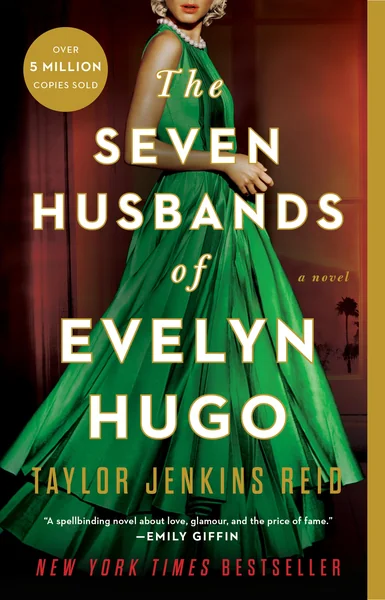
The Seven Husbands of Evelyn Hugo by Taylor Jenkins Reid Review: A Dazzling Old Hollywood Historical Drama
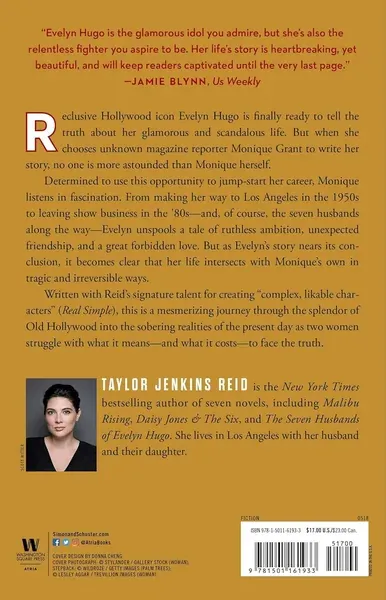
Taylor Jenkins Reid's historical drama novel constructs a fictional Hollywood legend whose seven marriages serve as chapter markers for a life defined by ambition, survival, bisexuality, and a hidden great love — a compulsively structured narrative that has found enormous readership since its original publication by Atria Books in 2017.
 Tap to enlarge
LuvemBooks Verdict
Best for
Readers who love morally complex, plot-driven historical fiction with LGBTQ+ themes and a glamorous Old Hollywood setting — particularly those who enjoy compulsive, binge-worthy narratives built around a charismatic, deeply secretive protagonist.
Worth it if
You're drawn to stories about identity, performance, and the cost of a life lived in public — and you can surrender to a late-detonating mystery rather than needing answers to surface gradually.
Skip if
You prefer tightly bounded literary fiction where emotional revelations accumulate steadily; the prolonged withholding of the novel's central mystery and the uneven dramatic weight across the seven episodic sections may test your patience.
What readers & critics say
Kirkus Reviews gave the novel its "Get It" verdict, calling it "an entrancing novel that speaks to the Marilyn Monroe and Elizabeth Taylor in us all" and praising Reid's portrait of a star who reveals her darkest secrets with disarming candour. The University of Arizona Wildcat highlighted the book's pseudo-archival format — fabricated newspaper clippings and gossip columns — as making the novel feel as though it had been written about a real person, while author Miranda Beverly-Whittemore (quoted on taylorjenkinsreid.com) called it "a glamorous romp through Hollywood in its heyday" with "several unexpected twists and a dazzling, ambitious movie star."
“Reid's heroine reveals her darkest secrets as if she were wiping off makeup at the end of the night — a celebration of human resilience.”
— Kirkus ReviewsAsk LuvemBooks
Was this helpful?
- Is it worth reading?
- For readers drawn to compulsive narrative momentum, morally complex protagonists, and LGBTQ+ historical storylines, LuvemBooks considers The Seven Husbands of Evelyn Hugo a strong recommendation. The seven-part structure keyed to each husband gives the novel a clear, propulsive architecture, and the central reveal about Evelyn's love for Celia St. James carries genuine emotional and thematic weight. The main caveat is structural: the mystery of why Evelyn chose Monique is deliberately withheld across most of the novel, so readers who prefer answers to accumulate gradually rather than arrive all at once may find the long deferral a strain. The novel's translation into more than two dozen languages and its television adaptation interest reflect how widely it has resonated across literary and popular fiction audiences.
- Similar books
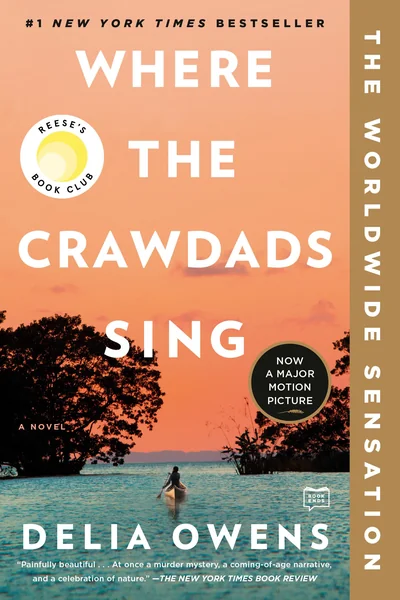
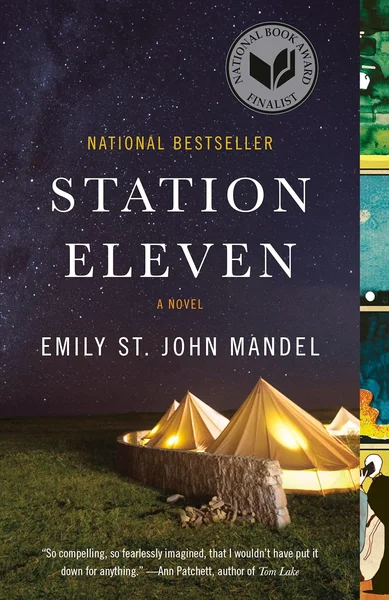
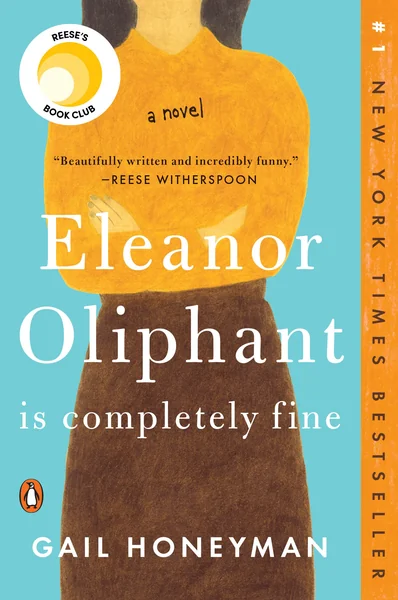
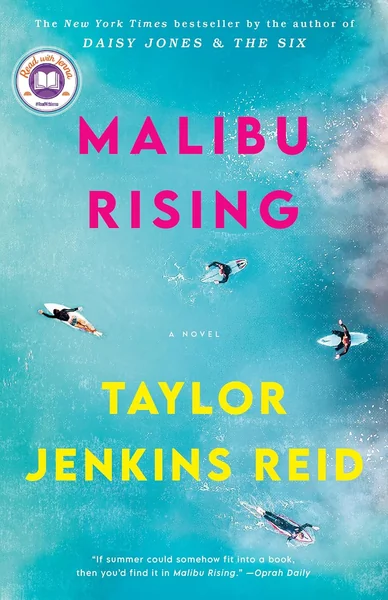
- Readers who loved The Seven Husbands of Evelyn Hugo often gravitate toward other novels that blend atmospheric storytelling with layered mysteries and complex female protagonists. Where the Crawdads Sing by Delia Owens shares the dual-timeline structure and a fiercely independent woman navigating isolation and public scrutiny. Eleanor Oliphant Is Completely Fine by Gail Honeyman similarly builds toward a withheld revelation about its protagonist's past, rewarding patient readers with a deeply emotional payoff. Station Eleven by Emily St. John Mandel offers another formally inventive, multi-strand narrative in which art, fame, and survival intersect across time. The God of the Woods by Liz Moore brings comparable atmospheric tension and a mystery deliberately deferred across a sprawling cast. Taylor Jenkins Reid's own Daisy Jones & The Six and Malibu Rising are natural next reads for those who want more of her Old Hollywood and California-saga sensibility.
- Who should read this?
- The Seven Husbands of Evelyn Hugo is best suited to adult readers who enjoy morally complex female protagonists, LGBTQ+ historical storylines, and the interplay between public celebrity and private truth. Fans of historical drama with a popular fiction pace — think Old Hollywood glamour, fabricated gossip columns, and a mystery that pays off in a concentrated late revelation — will find it especially satisfying. Those who prefer tightly bounded literary fiction over plot-driven, episodic popular fiction should calibrate their expectations, as the novel's architecture privileges momentum and dramatic reveal over slow literary accumulation. The novel's enormous crossover readership — more than two dozen language translations — suggests it travels well across both literary and genre fiction audiences.
- About Taylor Jenkins Reid
- Taylor Jenkins Reid is an American author best known for her novels The Seven Husbands of Evelyn Hugo, Daisy Jones & the Six, One True Loves, Malibu Rising, Carrie Soto Is Back, and Atmosphere.
- Tell me about the adaptation
- Television rights to The Seven Husbands of Evelyn Hugo were acquired in 2019 by Freeform and Fox 21 Television Studios. Jennifer Beals and Ilene Chaiken — the creative team behind The L Word — were attached to produce, and Taylor Jenkins Reid herself was set to contribute as a screenwriter. As of LuvemBooks' last verified information, the adaptation had not yet released; the involvement of the L Word team signals a creative alignment with the novel's central LGBTQ+ storyline.
- What are the main themes?
- The novel's central themes are the cost of a life performed for public consumption, bisexuality navigated under rigid mid-twentieth-century social codes, and the gap between a celebrity's curated image and private truth. Evelyn's seven marriages are not romantic failures but strategic instruments of survival and reinvention — making ambition, self-invention, and the price of hidden identity as important as any love story. The fabricated newspaper clippings and gossip columns that run alongside the narrative give these themes a formal dimension: the novel itself enacts the tension between the public record Evelyn constructed and the private story she finally chooses to tell.
Summarize this book
Follow up
Synthesized from verified book data & published reviews · How we review
Press Enter to ask. Answers come from our editorial Q&A — start typing to see related questions.
Age & Reading Level
Recommended age
Ages 16+
Reading level
Adult
3 content notes · who it suits
Content to know about
Best for: Adults / mature 16+ — the novel centres on bisexuality navigated under coercive mid-century social codes, references domestic abuse, and builds toward emotionally weighty revelations about identity and hidden relationships across a lifetime
Skip if you prefer literary fiction where answers accumulate gradually and revelations feel earned across the full narrative rather than delivered in a concentrated late detonation
Our Review
What the Novel Actually Is

The Central Revelation and Thematic Ambition
Structure, Form, and Craft Design
Reception and Cultural Reach
Who It Rewards and Where It Strains
Sources & Further Reading
The key facts and claims in this review are grounded in the retrieved, verified sources listed below.
- Cited in this review
- 1
en.wikipedia.org
- 2
taylorjenkinsreid.com
- Further reading
- 3
Taylor Jenkins Reid, Wikipedia
- 4
- 5
readsandcompany.com
- 6
- 7
- 8
- 9
shesbecomingbookish.com
- 10
Books like The Seven Husbands of Evelyn Hugo
Curated picks for readers who enjoyed The Seven Husbands of Evelyn Hugo, with our reasoning for each match.
If you liked The Seven Husbands of Evelyn Hugo