8 min read
Share This Review

Our review
Going Postal
Going Postal by Terry Pratchett Review: A Razor-Sharp Satirical Fantasy Triumph
Going Postal is the 33rd Discworld novel by Terry Pratchett, following con artist Moist von Lipwig as he's coerced by the Patrician Havelock Vetinari into resurrecting Ankh-Morpork's long-dead postal service — or face a very real death. Kirkus Reviews called it "sharp-edged humor — and wonderfully executed," and the book's shortlisting for both the Nebula and Locus Awards confirms its standing as one of Pratchett's most celebrated entries.

 Tap to enlarge
LuvemBooks Verdict
Best for
Readers who enjoy satirical comedy with genuine bite — whether they're Discworld veterans or complete newcomers looking for a sharp, self-contained entry point built around a charismatic con-artist protagonist.
Worth it if
Worth reading if you want a comedy that earns its laughs through clever structural craft and a richly drawn scoundrel-turned-civil-servant, with a telecom-industry satire woven deftly around the fun rather than over it.
Skip if
Skip it if you need a protagonist's moral transformation to be painstakingly earned over time, or if you find even occasional heavy-handed polemic about public good versus private profit a dealbreaker in your comedy reading.
Where reviewers agree and split
Readers rate it 4.8 on Amazon. The reviews we read that discuss it in depth split on some points:
- Mixed
Kirkus Reviews · Press review: satire undercut by heavy-handed messaging, but fans will appreciate the Discworld return (from its headline)
- Positive
Eyrie · Book blog: Among Discworld's finest, with emotionally moving moments and engaging character development (from its headline)
- Positive
SFF Insiders · Book blog: well-structured plot with memorable characters and entertaining premise (from its headline)
- Positive
Bewildering Stories · Book blog: heartwarming fantasy with morally inspiring characters and redemptive transformation (from its headline)
What readers & critics say
Kirkus Reviews delivered an unambiguous verdict — "sharp-edged humor — and wonderfully executed" — praising Pratchett's satirical integration while noting a handful of passages tip into heavy-handed statements about public versus private interest; fantasybookreview.co.uk, though ranking it just below Pratchett's very best, called it a great entry point into the Discworld series for newcomers.
“Sharp-edged humor — and wonderfully executed. A deeply satisfying comedy about a man sent to a fate worse than death: the post office.”
— Kirkus ReviewsPreview the book
Ask LuvemBooks
Was this helpful?
- Is it worth reading?
- Going Postal earns its reputation as one of Pratchett's finest Discworld outings. Kirkus Reviews called it 'wonderfully executed,' praising both the comedy and the craft of the satirical integration, and the book's shortlisting for the Nebula and Locus Awards for Best Fantasy Novel confirms its standing. The telecom-industry satire is largely light-handed, woven around the comedy rather than replacing it, and Moist von Lipwig is a richly drawn protagonist whose forced rehabilitation generates genuine narrative momentum. The key caveat is that a handful of passages tip into heavy-handed statements about public good versus private profit, and Moist's reformation happens quickly enough that some readers may find the character turn less than fully earned.
- Similar books
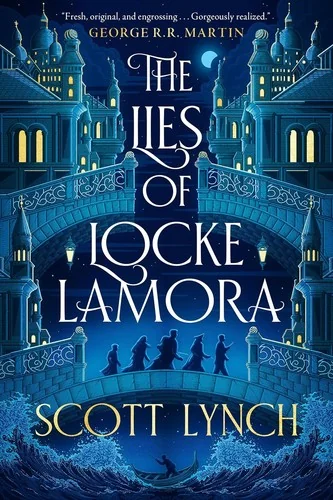
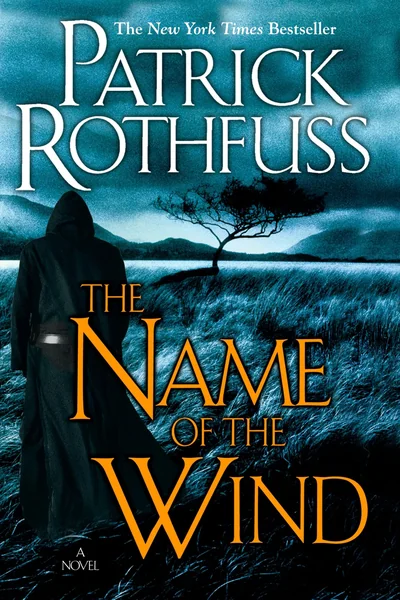
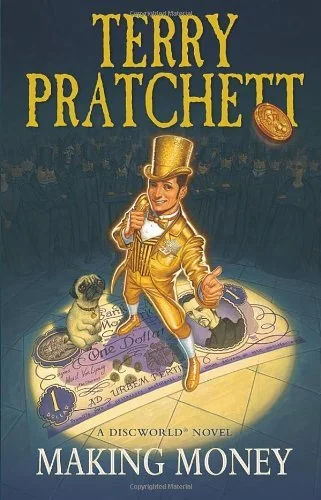
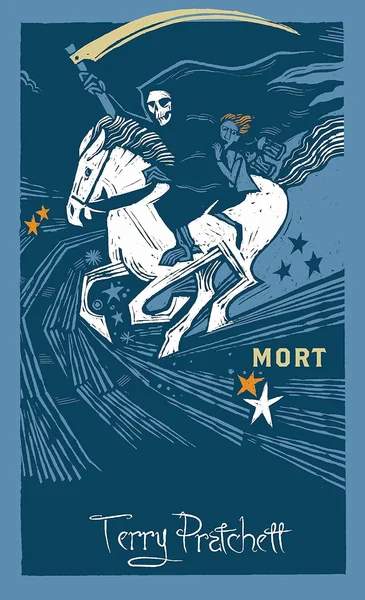
- Readers who enjoy Going Postal tend to gravitate toward a few natural companions. Making Money by Terry Pratchett is the direct sequel, reuniting readers with Moist von Lipwig as he's press-ganged into running Ankh-Morpork's banking system. Mort, also by Pratchett, is another beloved standalone-friendly Discworld entry with a similar blend of absurd premise and character-driven comedy. For con-artist-driven fantasy with comparable wit, The Lies of Locke Lamora by Scott Lynch is a frequently cited recommendation, and Douglas Adams' The Hitchhiker's Guide to the Galaxy shares Going Postal's gift for satirical comedy with a science-fictional flavour. The Name of the Wind by Patrick Rothfuss rounds out the picture for readers drawn to charismatic, morally ambiguous protagonists at the centre of a richly constructed world.
- Who should read this?
- Going Postal is ideal for adult readers who enjoy comic fantasy with genuine satirical teeth — particularly those with an appetite for skewering corporate overreach and telecommunications monopolies. It works equally well as an entry point for curious newcomers to Discworld and as a reward for long-time series readers, since it requires no familiarity with the Watch or Unseen University. Readers drawn to morally ambiguous protagonists — specifically, charming con artists forced into civic responsibility — will find Moist von Lipwig an irresistible lead. Those who prefer their comedy without any polemic should be aware that a handful of passages make pointed statements about public good versus private profit.
- About Terry Pratchett
- Terry Pratchett was a beloved British fantasy author best known for the Discworld series, celebrated for his satirical wit. He sold over 85 million books worldwide over the course of his career.
- Tell me about the adaptation
- Going Postal was adapted by Sky One as a two-part television film, which aired in May 2010. The adaptation is testament to the story's durability and broad appeal beyond the page, translating Moist von Lipwig's postal resurrection — and his clash with the Grand Trunk Company — for a mainstream television audience. The original novel's tightly structured, chapter-driven form and clearly defined protagonist made it a natural candidate for screen adaptation.
- Is this a good Discworld starting point?
- Going Postal is explicitly recommended as a strong entry point for new Discworld readers. It does not rely on the Watch or Unseen University — the two most familiar institutional pillars of Ankh-Morpork fiction — meaning readers without deep series knowledge are not at a disadvantage. Moist von Lipwig is introduced fresh, and the novel's unusually deliberate chapter structure gives the story a more architecturally planned shape than many of its Discworld siblings, making it easier to follow for the uninitiated.
- What are the main themes?
- Going Postal operates primarily as a satire of the modern telecommunications industry, mapping predatory corporate consolidation onto Discworld's clacks telegraph network. The Grand Trunk Company — executives who acquire a functioning public good and run it into the ground for profit — stands in for the kind of rapacious private interests Pratchett viewed as antithetical to the public good. Running alongside the corporate satire is a personal redemption narrative: Moist von Lipwig's forced transformation from career criminal to civic-minded Postmaster General. Pratchett also plays with the idiom embedded in the title itself — 'going postal' cuts two ways, referring both to Moist's new vocation and to the pressure-cooker frustration the whole situation generates.
- How does this compare to other Pratchett books?
- Going Postal stands out even within Pratchett's prolific Discworld output for several reasons. It was the first Discworld novel to earn Pratchett a shortlisting for either the Nebula or the Locus Award for Best Fantasy Novel. Its chapter structure — each opening with a philosophical synopsis — is a formal rarity in the Discworld canon, previously reserved for children's books and the Science of Discworld series. Compared to earlier entries like The Colour of Magic or Soul Music, it has a more architecturally planned shape and a clearer redemption arc, making it feel slightly more novelistically conventional — which, paradoxically, may make it more accessible to new readers.
Summarize this book
Follow up
Synthesized from verified book data & published reviews · How we review
What would you like to know about Going Postal?
Answers come from our editorial notes on this book. If we haven't covered something, we'll say so.
Readers often ask
Our Review
We review the evidence: published critics, reader verdicts and BookTube reviews, gathered and weighed with AI assistance and edited by LuvemBooks, rather than one reader's first-hand take.
What the Book Is and What Actually Happens
Satirical Ambition and What It's Targeting
Structural Distinctiveness Within the Discworld Canon
Critical Reception and Awards Standing
Who This Book Is For and Where It Sits in the Series
Sources & Further Reading
The key facts and claims in this review are grounded in the retrieved, verified sources listed below.
- Cited in this review
- 1
terrypratchettbooks.com
- 2
kirkusreviews.com
- 3
en.wikipedia.org
- 4
en.wikipedia.org
- Further reading
- 5
Terry Pratchett, LuvemBooks
- 6
bookbrowse.com
- 7
- 8
beta.thestorygraph.com
- 9
sffinsiders.com
- 10
- 11
bewilderingstories.com
- 12
wiki.lspace.org
- 13
Fantasy Book Review
Age & Reading Level
Our age band
Adult
Our age band groups books for browsing; it isn't an age a review gave.
Reader reviews
Be one of the first readers to answer.
Read it? Was it right for you?
Books like Going Postal
Curated picks for readers who enjoyed Going Postal, with our reasoning for each match.
More by Terry Pratchett
If you liked Going Postal