Skip to content
Reviewed

Read Time

8 min read

Age & reading levelAdult
Reader rating
4.7 · 89,552 Amazon ratings
reader ratings, not a LuvemBooks score
Curated & edited by

LuvemBooks Editorial

How we create our reviews →
Share This Review
Front cover of The Name of the Wind

Our review

The Name of the Wind

The Name of the Wind by Patrick Rothfuss Review: A Lyrical, World-Building Fantasy Landmark

The Name of the Wind is the debut heroic fantasy novel by Patrick Rothfuss and the first entry in The Kingkiller Chronicle trilogy, following the legendary wizard Kvothe as he narrates his own extraordinary life story to a scribe. Originally published by DAW Books in 2007 after more than 14 years in the making, it became a New York Times bestseller and has since sold over 10 million copies worldwide.

Adultviolence against children (street orphan survival) · death of parents

LuvemBooks Verdict

Best for

Readers who prize lyrical, literary prose and richly systemic world-building over breakneck plot momentum, and who are willing to commit to an unfinished trilogy centred on the psychology and self-mythology of a single extraordinary character.

Worth it if

Worth reading if you are drawn to immersive fantasy where the texture of a meticulously constructed world, a rigorous magic system, and prose that has drawn comparisons to Ursula K. Le Guin matter more to you than a fast-moving external plot.

Skip if

Skip it if you prefer action-driven fantasy with a clear narrative arc and a completed series, as the pacing is deliberately character- and education-focused and the concluding third volume of the trilogy remains unpublished.

Fantasybookreview.co.uk hailed Rothfuss as "one of the better storytellers around at the moment," judging his place among fantasy's nobility as "almost assured." Thebooksmugglers.com called Rothfuss's prose "absurdly stunning, the type that makes me cry at its sheer beauty," while bloggingwithdragons.com described the novel as "a masterpiece that will transport readers into the body and mind of a wizard," noting it kept them reading past 5AM on a second encounter.

Sources: Fantasy Book Review, The Book Smugglers, Blogging with Dragons
4.7from 89,552 Amazon ratings— reader ratings, not a LuvemBooks score

Ask LuvemBooks

Was this helpful?

The Name of the Wind is Patrick Rothfuss's debut heroic fantasy and the opening volume of The Kingkiller Chronicle, following the legendary wizard Kvothe as he narrates his own extraordinary life to a scribe — from his origins as a child of Edema Ruh performers, through harrowing years as a street orphan, to his enrollment at the University where magic is treated as rigorous academic discipline. Praised by Ursula K. Le Guin for its prose musicality and compared in craft to Le Guin's own work by Michael Chabon, the novel delivers immersive world-building, a systematic magic system with consistent rules, and a framing device that interrogates myth-making and unreliable narration in ways that elevate the genre. The essential caveat: pacing is deliberate and character-focused rather than action-driven, and the trilogy remains unfinished — two considerations worth weighing before diving in.
Is it worth reading?
For readers who prize immersive world-building, a rigorously constructed magic system, and literary prose, The Name of the Wind delivers on all fronts — Ursula K. Le Guin praised Rothfuss's writing for its 'real music in the words,' and Michael Chabon compared his prose to Le Guin's own. The framing device, in which Kvothe narrates his own legend to a scribe, adds a layer of sophistication rare in the genre, interrogating the nature of myth and self-narration. The significant caveat is that pacing is deliberate and character-focused rather than plot-driven, and the trilogy remains unfinished — so readers who prefer action-forward stories or completed series should factor that in before starting.
Similar books
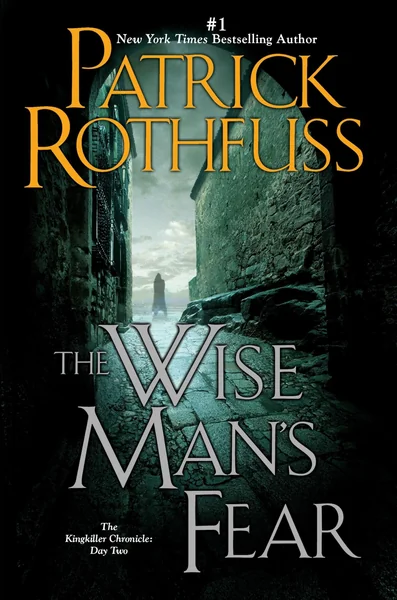
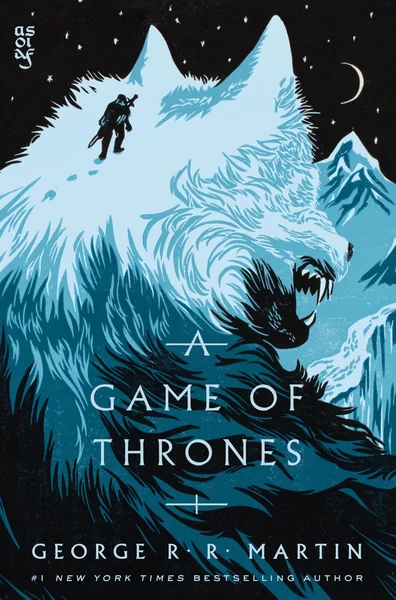
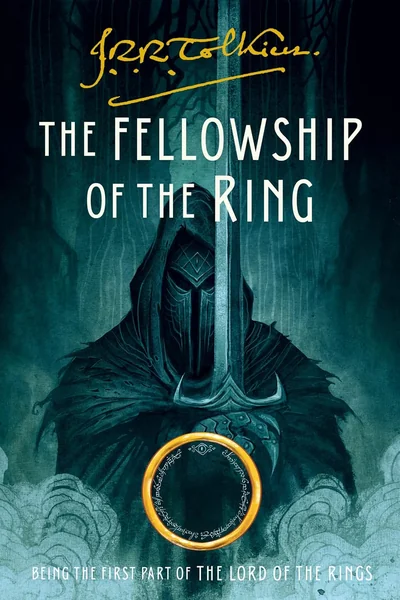
Readers drawn to The Name of the Wind often gravitate toward other epics of comparable scope and craft. Patrick Rothfuss's own sequel, The Wise Man's Fear, continues Kvothe's narrated legend and is the natural next step. For readers who love systematic magic and sprawling world-building, Brandon Sanderson's Stormlight Archive series — beginning with The Way of Kings — is a frequent companion recommendation. George R. R. Martin's A Game of Thrones offers a similarly ambitious, character-driven approach to epic fantasy, while J.R.R. Tolkien's The Fellowship of the Ring provides the foundational world-building tradition the genre builds upon. For something with a more lyrical, myth-inflected sensibility, V.E. Schwab's The Invisible Life of Addie LaRue shares Rothfuss's interest in stories, storytelling, and the weight of legend.
Who should read this?
The Name of the Wind is ideal for adult readers of literary and heroic fantasy who value exceptional prose, richly constructed world-building, and a magic system with genuine internal logic. Fans of authors like Ursula K. Le Guin or Brandon Sanderson will find familiar pleasures — literary seriousness in the former case, systematic magic in the latter. Readers who prefer plot-driven, action-forward fantasy may find the character-focused pacing a mismatch, and those who avoid starting unfinished series should note that the concluding third volume of the Kingkiller Chronicle remains unpublished.
About Patrick Rothfuss
Patrick James Rothfuss is an American author.
Tell me about the adaptation
The Kingkiller Chronicle has been in various stages of Hollywood development for years, with Lin-Manuel Miranda previously attached as a producer on both film and television adaptations. Miranda has spoken warmly of the source material, writing that 'no one writes about stories like Pat Rothfuss' and describing the series' exploration of how stories can change the world. As of this writing, no firm release date or confirmed production announcement has been made, but adaptation chatter continues to generate renewed reader interest in the series.
How does it compare to The Wise Man's Fear?
The Wise Man's Fear is the direct sequel to The Name of the Wind and continues Kvothe's three-day narration as 'Day Two' of the Kingkiller Chronicle. Both novels share the same framing device, world, and character voice, though The Wise Man's Fear expands Kvothe's adventures significantly beyond the University setting that dominates the first volume. LuvemBooks has reviewed The Wise Man's Fear separately for readers who want a full comparison before committing to the series.
Summarize this book

Summarize this book

The Name of the Wind opens in the rural town of Newarre, where a man named Kvothe quietly manages the Waystone Inn — until a chronicler named Chronicler arrives and Kvothe agrees to recount his life over three days. Day One covers his origins as the child of traveling Edema Ruh performers, his harrowing years as a street orphan in a city, and his eventual enrollment at the University, where magic is studied as a rigorous academic discipline governed by well-defined rules. The story unfolds on the fictional continent of Temerant, specifically the Four Corners of Civilization, a world where magical lamps are luxury items, most people are skeptical that wizards can call upon the Wind at all, and legendary figures like Taborlin the Great and the feared Chandrian hover between folklore and terrifying reality. Rothfuss spent more than 14 years writing and revising the novel before it was published by DAW Books in 2007.

Follow up

How does the magic system work?
What is the framing device?
Is this part of a series?

Synthesized from verified book data & published reviews · How we review

Ask LuvemBooks

What would you like to know about The Name of the Wind?

Answers come from our editorial notes on this book. If we haven't covered something, we'll say so.

Readers often ask

Our Review

We review the evidence: published critics, reader verdicts and BookTube reviews, gathered and weighed with AI assistance and edited by LuvemBooks, rather than one reader's first-hand take.

A landmark of modern heroic fantasy, The Name of the Wind earns its reputation through a singular voice, a rigorously constructed world, and a framing device that elevates the genre's storytelling possibilities.

What the Novel Is and How It's Structured

The Name of the Wind — also known as The Kingkiller Chronicle: Day One — opens in the rural town of Newarre, where a man named Kvothe quietly manages the Waystone Inn. What follows is a story-within-a-story: Kvothe, a figure of near-mythical renown, agrees to recount his life over three days to a chronicler.
Day One covers his origins as the child of traveling Edema Ruh performers, his harrowing years as a street orphan, and his eventual enrollment at the University, where magic is studied as a rigorous academic discipline. Rothfuss spent more than 14 years writing and revising the novel — originally conceived as a single 1,000-page work — before splitting the narrative into what became The Kingkiller Chronicle trilogy.

The World of Temerant and Its Magic System

The novel is set on a large fictional continent called Temerant, specifically the region known as the Four Corners of Civilization, a culturally and nationally diverse territory with echoes of medieval Christianity in its dominant faith. Alongside the mortal world exists the Fae, a parallel realm whose supernatural inhabitants can cross over only when the moon is full.
What distinguishes Temerant's magic, however, is its systematic rigor: the arcane arts obey well-defined rules and principles, accessible only to those formally trained in their use. Magical lamps, for instance, are a luxury commodity, while much of the general population remains skeptical that wizards can call upon the Wind at all.
This tension between myth and rational discipline runs throughout the book, embodied in figures like the legendary Taborlin the Great and the feared Chandrian — evil beings whose arrival is supposedly heralded by flames turning blue, yet who are widely dismissed as folklore.

Reception and Literary Praise

The novel's reception upon its 2007 debut was exceptional by any measure. As Wikipedia's reception summary records, Ursula K. Le Guin praised Rothfuss's prose directly, writing that it was "a rare and great pleasure to come on somebody writing the way [Patrick Rothfuss does], not only with the kind of accuracy of language that seems to me absolutely essential to fantasy-making, but with real music in the words as well."
Michael Chabon was noted to have compared Rothfuss's prose to Le Guin's own — a striking symmetry. Lin-Manuel Miranda, who is producing film and television adaptations of the series, has written of the work: "No one writes about stories like Pat Rothfuss. How the right story at the right time can change the world, how the teller can shape a life."
The book is a New York Times bestseller and has sold over 10 million copies worldwide.

Narrative Strengths: Voice, Myth-Making, and Unreliable Narration

Central to the novel's design is its framing device, in which an older, world-weary Kvothe narrates his own legend. This structure allows Rothfuss to interrogate the nature of myth and self-narration: Kvothe is simultaneously the teller and the tale, and the gap between the man at the inn and the legend he describes is one of the book's most compelling tensions.
The audible.com summary notes that this device allows Rothfuss to explore themes of myth-making and unreliable narration throughout. The fictional University — inspired in part by Rothfuss's own graduate school experiences — serves as the novel's intellectual engine, grounding the fantastical in something that reads as an institution with its own politics, economics, and social hierarchies.

Considerations for Prospective Readers

Readers drawn to plot-driven, action-forward fantasy may find the novel's pacing a considered investment. Much of the book's momentum is devoted to Kvothe's education, his musical performances, and the texture of daily life in Temerant rather than to escalating external conflict.
The Kingkiller Chronicle also remains an unfinished trilogy — The Wise Man's Fear followed in 2011, but the concluding third volume has not yet been published as of this writing. For readers who prefer to begin series with a clear endpoint in sight, that context is worth weighing.
For those who prize immersive world-building, a richly constructed magic system, and prose that has drawn comparisons to Le Guin herself, The Name of the Wind delivers on all fronts.

Sources & Further Reading

The key facts and claims in this review are grounded in the retrieved, verified sources listed below.

  1. 1

    Patrick Rothfuss, LuvemBooks

  2. 2
  3. 3
  4. 4
  5. 5
  6. 6
  7. 7
  8. 8
  9. 9
  10. 10
  11. 11
  12. 12
  13. 13
  14. 14

    The Book Smugglers

Age & Reading Level

Recommended age

Adult

Content to know about

violence against children (street orphan survival)
death of parents

Skip if you want action-driven, plot-forward fantasy with a clear endpoint in sight — the trilogy is unfinished and the pacing is deliberately immersive rather than propulsive.

Patrick Rothfuss on The Name of the Wind

Patrick Rothfuss discusses his debut novel The Name of the Wind, his writing process, and his fantasy inspirations.

Uploaded by Orion Publishing Group, 2008 · Watch on YouTube ·

More from this interview on Patrick Rothfuss' page →

Backstage pass to a hero's myth

Rothfuss struggles with elevator pitches, jokingly comparing his story to The Princess Bride meets The Crow before describing it as a backstage pass behind the mythology surrounding a hero.

From our readers

Reader reviews

Be one of the first readers to answer.

Read it? Was it right for you?

Books like The Name of the Wind

Curated picks for readers who enjoyed The Name of the Wind, with our reasoning for each match.