7 min read
4.3
· 30,910 Amazon ratings, as of Oct 2026Share This Review
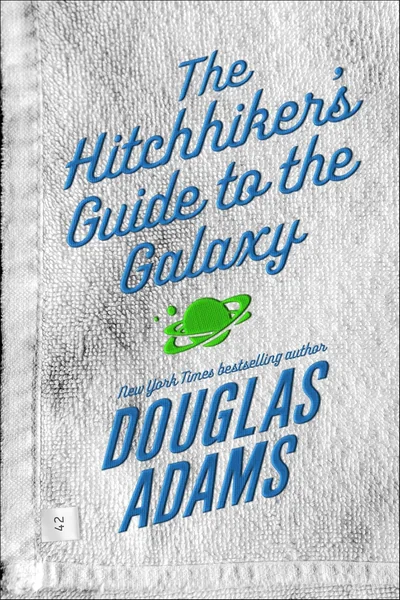
Our review
The Hitchhiker's Guide to the Galaxy
The Hitchhiker's Guide to the Galaxy by Douglas Adams Review: A Genre-Defining Comic Science Fiction Classic
The Hitchhiker's Guide to the Galaxy by Douglas Adams is a science fiction comedy novel following Arthur Dent, the sole Englishman to survive Earth's demolition to make way for a hyperspace bypass, as he roams the cosmos with alien researcher Ford Prefect. First published in 1979 and often regarded as a classic of the genre, it remains one of the most beloved and widely translated works in science fiction.
LuvemBooks Verdict
Best for
Readers who love absurdist British comedy and are happy to follow a bewildered everyman through satirical set pieces about bureaucracy and existentialism rather than a tightly plotted adventure.
Worth it if
Worth reading if you find the idea of a universe run by petty civil servants and bad poets funnier than any conventional villain, and you're willing to let digression and wit do the work that plot usually does.
Skip if
Skip it if you need a propulsive, coherent narrative — the story is largely a frame for comic philosophy, and readers familiar with other adaptations may be tripped up by Adams's acknowledged continuity contradictions.
What readers & critics say
Some reviewers note the novel as selling 250,000 copies in its first three months and ranking fourth in the BBC's The Big Read poll, cementing it as a widely regarded classic of the science fiction genre; one review describes Adams's approach as like stepping into the mind of a "maverick genius," singling out the satirical depth beneath the famous jokes.
“my first encounter with Douglas Adams's surreal, whimsical universe came in the form of the creased and battered, slim paperback”
— The Guardian“Sci-fi, Monty Python-style—as West England villager Arthur Dent becomes the only survivor of Earth”
— Kirkus ReviewsAsk LuvemBooks
Was this helpful?
- Is it worth reading?
- For readers willing to let wit and digression carry the story, the book more than delivers on its reputation. The Guardian observes that genuine reflection on the human condition sits beneath the famous jokes, so the comedy operates on more than one level. The main caveat is structural: the plot is largely a vehicle for satirical set pieces rather than a conventionally driven narrative, and readers coming from other adaptations — the 2005 film or the original radio series — will encounter acknowledged continuity differences. Those caveats aside, its track record across fifty years and more than thirty languages speaks to a durability that goes well beyond novelty.
- Similar books
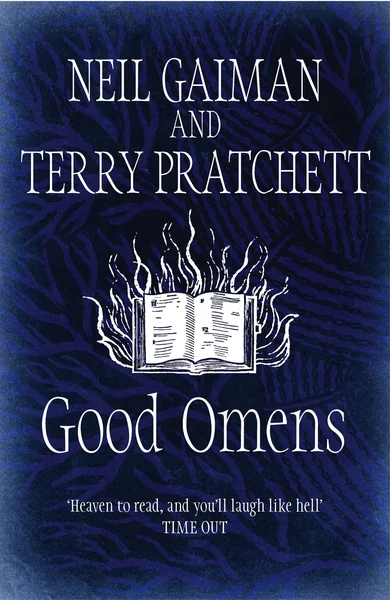
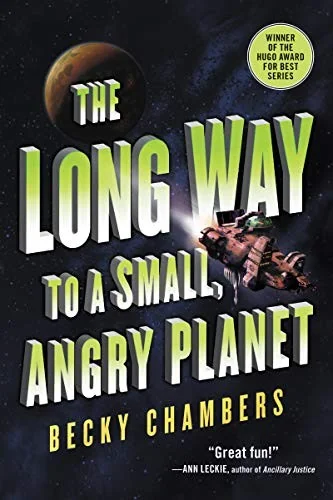
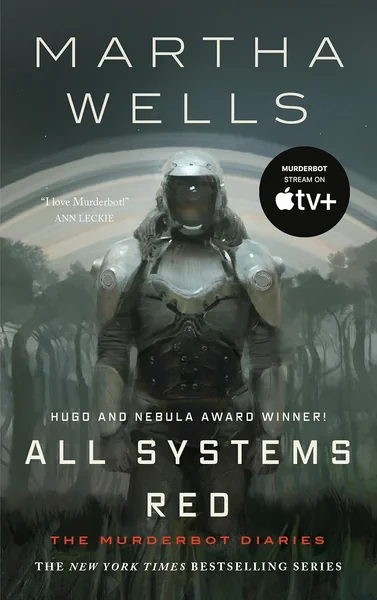
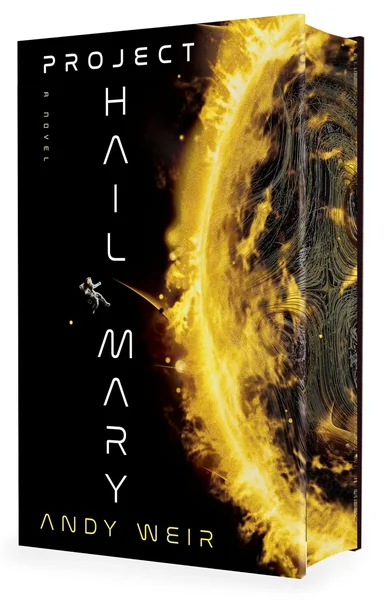
- Readers who enjoy Adams's blend of wit and speculative fiction have several strong options among the curated picks below. Good Omens by Terry Pratchett and Neil Gaiman shares the same British satirical register and delight in cosmic absurdity. The Long Way to a Small, Angry Planet by Becky Chambers and All Systems Red by Martha Wells both offer character-driven science fiction with warmth and humour, though with rather more narrative structure than Adams provides. Project Hail Mary by Andy Weir takes a lighter, more optimistic tone than hard science fiction usually manages, making it a good bridge for readers who appreciated the approachability of Adams's universe.
- Who should read this?
- The book is best suited to readers who enjoy absurdist British comedy and are happy to follow Arthur Dent — an everyman whose chief ambition amid galactic catastrophe is a decent cup of tea — through philosophical digressions rather than a tightly plotted adventure. Fans of satire who find bureaucracy funnier than villainy, and who appreciate the idea of the universe's greatest question yielding the answer 42, are the core audience. Readers embedded in hard science fiction or action-driven space opera may find Adams's commitment to comedy over plot a deliberate provocation; the exchange is the point, not a compromise.
- What age is it for?
- Best for ages 11 and up, based on customer-noted reading experience with the text. The novel's humour is layered — the surface jokes land easily for younger readers, while the satire on bureaucracy, existentialism, and the indifference of the cosmos rewards the comprehension of older readers and adults. There is no content that restricts younger readers; the floor is set by reading level and the density of Adams's comic digressions rather than by any heavy subject matter.
- About Douglas Adams
- Douglas Noël Adams was an English author, humourist, and screenwriter.
- Tell me about the adaptations
- The novel has been adapted across multiple formats: a 1981 BBC television series, various stage productions, a 1984 text adventure game, and a 2005 feature film. Because the story originated in radio and was adapted repeatedly, Adams himself acknowledged contradicting his own continuity between versions — so readers arriving via the 2005 film or the original radio series will find some differences in detail and tone when they turn to the novel.
- Where should I start with this author?
- The Hitchhiker's Guide to the Galaxy is the natural starting point — it introduces Arthur Dent, Ford Prefect, and the in-universe Guide, and establishes Adams's comic voice and satirical method. The direct sequel, The Restaurant at the End of the Universe, picks up immediately where this novel ends. Adams described the full sequence as a "trilogy of six," so there is a clear reading order once the first book is done.
Summarize this book
Follow up
Synthesized from verified book data & published reviews · How we review
What would you like to know about The Hitchhiker's Guide to the Galaxy?
Answers come from our editorial notes on this book. If we haven't covered something, we'll say so.
Readers often ask
Our Review
What the Book Actually Is
Its Place in the Genre and Culture
What Adams Does Well
Genuine Limitations and Who It May Frustrate
Who It Is For
Sources & Further Reading
The key facts and claims in this review are grounded in the retrieved, verified sources listed below.
- Cited in this review
- 1
- 2
- Further reading
- 3
Douglas Adams, LuvemBooks
- 4
en.wikipedia.org
- 5
- 6
- 7
frappesandfiction.com
- 8
cassandracstirling.com
- 9
motherbookerblog.com
- 10
- 11
Age & Reading Level
Recommended age
Ages 11+
Reading level
Adults & confident younger readers
Tropes
From how readers describe it, not our own reading.
who it suits
Best for: Ages 11+ — reading level and comprehension of Adams's layered satirical digressions suit confident readers of that age and above.
Skip if you need a propulsive, coherent narrative and find digressive comic philosophy a frustration rather than a feature.
Reader reviews
Be one of the first readers to answer.
Read it? Was it right for you?
Books like The Hitchhiker's Guide to the Galaxy
Curated picks for readers who enjoyed The Hitchhiker's Guide to the Galaxy, with our reasoning for each match.


If you liked The Hitchhiker's Guide to the Galaxy