

10 min read
4.6
· 594 Amazon ratingsFeatured In
Share This Review
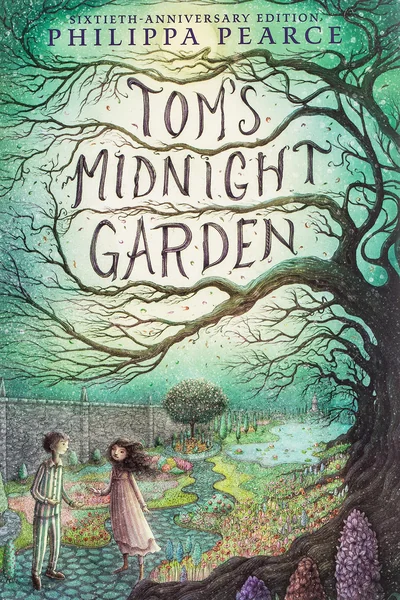
Tom's Midnight Garden by Philippa Pearce Review: A Timeless Carnegie Medal Classic
Philippa Pearce's Tom's Midnight Garden, first published in 1958, is a Carnegie Medal–winning children's fantasy novel that has endured for more than six decades as one of the most celebrated works in British children's literature. When twelve-year-old Tom Long is quarantined with his aunt and uncle after his brother contracts measles, a grandfather clock that strikes thirteen opens the door to a vanished Victorian garden — and to Hatty, a lonely girl who becomes his inseparable companion across time. The novel's meditation on time, loss, and friendship has earned it a place among the great works of the genre, and a 2018 anniversary edition from Greenwillow Books, illustrated by Jaime Zollars, has introduced it to a new generation of readers.
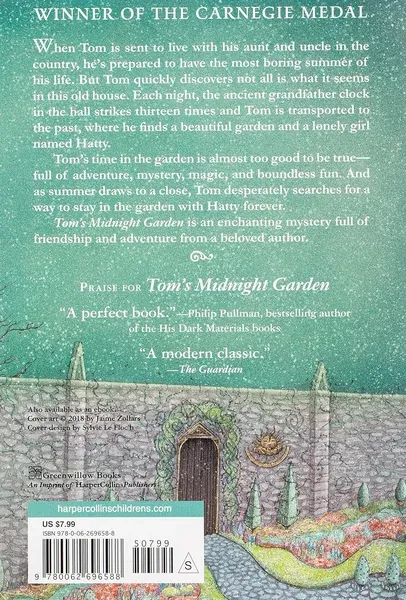
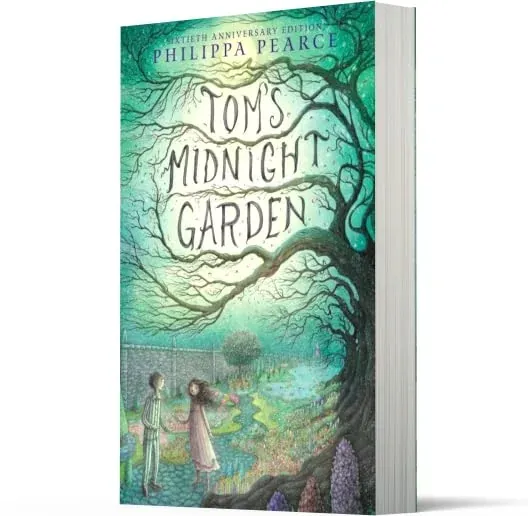 Tap to enlarge
LuvemBooks Verdict
Best for
Children aged eight to twelve — and the adults and educators who share books with them — who are drawn to emotionally precise, atmospherically rich fantasy and have the patience for a mystery that unfolds through accumulation rather than action.
Worth it if
Worth it if you value a children's novel built on genuine intellectual rigour — one whose rules about time, visibility, and loss hold together and carry real emotional weight by the final page.
Skip if
Skip it if you're looking for fast-paced, plot-driven middle-grade adventure — this is a slow, layered, contemplative book, and its tendency to romanticise the Victorian country-house world may feel limiting to readers alert to its class assumptions.
What readers & critics say
The Guardian's children's classics series describes the novel as "exquisite," praising its finely honed narrative architecture and the emotional precision of the Tom-and-Hatty relationship; Kirkus Reviews calls it "a lyrical and poignant fantasy" containing "a great deal of imagination and grace, rarely encountered in recent children's work," comparing it to Portrait of Jennie and The Secret Garden.
“The story of Tom Long…is exquisite. Lonely and bored, Tom discovers that when the grandfather clock strikes 13, the magnificent garden is restored.”
— The Guardian“A lyrical and poignant fantasy…containing a great deal of imagination and grace, rarely encountered in recent children's work.”
— Kirkus ReviewsAge & Reading Level
Recommended age
Ages 8–12
Reading level
Middle grade
2 content notes · who it suits
Content to know about
Best for: Ages 8+ — the novel's deliberate pacing, accumulative mystery, and philosophical underpinnings around J. W. Dunne's theory of time suit confident readers of eight and above; younger independent readers may find the atmospheric structure slow-going.
Skip if you want fast-paced, action-driven middle-grade adventure with a plot that builds through incident rather than atmosphere.
In This Review
- What Works & What Doesn't
- What the Novel Is and What It Does
- Significance and Standing in the Canon
- What the Novel Does Exceptionally Well
- Genuine Limitations and Points of Debate
- Who This Edition Is For and How It Reaches Readers Today
What Works & What Doesn't
What Works
- Carnegie Medal winner and voted the British public's second-favourite Medal-winning work of all time in the 2007 anniversary poll
- Intellectually rigorous fantasy framework — the rules governing Tom's visibility and the garden's time operate with internal consistency
- Emotionally precise: the relationship between Tom and Hatty, and the way time moves differently for each of them, carries genuine feeling
- Extraordinarily durable — adapted for BBC television and radio three times and for the stage, and never out of print in over sixty years
- Works as both a read-aloud for younger audiences and a re-readable novel for adults and older children
What Doesn't
- Some critics argue the novel romanticizes nineteenth-century aristocratic domestic life, presenting the Victorian garden as an unambiguous paradise against a diminished modern present
- Deliberate, atmospheric pacing — rewarding for patient readers, but potentially slow for those accustomed to action-driven middle-grade fiction
What the Novel Is and What It Does

Significance and Standing in the Canon

What the Novel Does Exceptionally Well
Genuine Limitations and Points of Debate
Who This Edition Is For and How It Reaches Readers Today
Frequently Asked Questions
Sources & Further Reading
The key facts and claims in this review are grounded in the retrieved, verified sources listed below.
- Cited in this review
- 1
en.wikipedia.org
- 2
- Further reading
- 3
Philippa Pearce, Wikipedia
- 4
- 5
montclair.edu
- 6
- 7
booksfortopics.com
- 8
newbookrecommendation.com
- 9
- 10
didyoueverstoptothink.com
- 11
- 12
Related Reviews
Reviews of books we picked for readers who enjoyed Tom's Midnight Garden.

Reader Comments
No comments yet
Be the first to share your thoughts!