
8 min read
4.6
· 22,496 Amazon ratingsShare This Review
The Secret Garden by Frances Hodgson Burnett Review: A Timeless Classic of Childhood Transformation
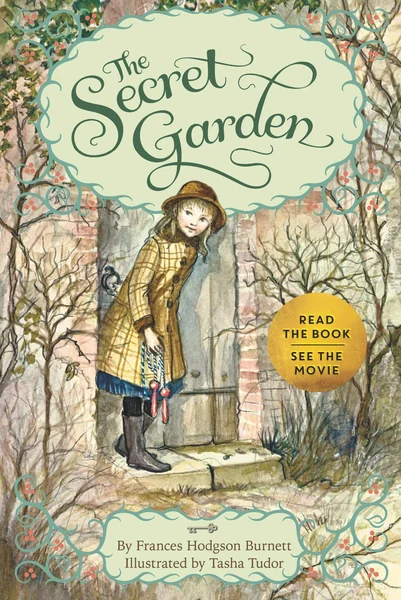
Frances Hodgson Burnett's The Secret Garden, first published in book form in 1911 and available in a HarperCollins reprint edition illustrated by Tasha Tudor, remains a cornerstone of English children's literature — a richly structured story of a difficult, neglected child whose encounter with a locked garden, a hidden boy, and the wild Yorkshire moors reshapes her entirely.
LuvemBooks Verdict
Best for
Readers aged eight and up — and adults revisiting childhood favourites — who want a psychologically honest portrait of a difficult child, and who appreciate character-driven, atmospherically rich fiction over plot-propelled adventure.
Worth it if
You value structural elegance and slow-burn character transformation, and are drawn to a confirmed classic that rewards re-reading at different life stages for its layered treatment of grief, neglect, and regeneration.
Skip if
You're expecting a briskly plotted adventure, or are introducing the book to younger children without being prepared to address its unexamined colonial-era attitudes towards India and its Indian characters.
What readers & critics say
Wikipedia records that the novel garnered largely warm reviews and sold well upon its 1911 publication, with a second printing announced within a month, and notes that critic Marghanita Laski's 1950s reassessment ranked it as the best of Burnett's three celebrated children's books. Britannica observes that the physical and spiritual healing Mary and Colin experience in the garden is mirrored deliberately in the natural calendar, an architectural quality that has helped secure the novel's status as a classic of children's literature.
“Although at the beginning it is very slow moving and long, it is a really unputdownable gem of a book.”
— theguardian.comAge & Reading Level
Recommended age
Ages 8–12
Reading level
Middle grade
1 content note · who it suits
Content to know about
Best for: Ages 8+ — abstract psychological themes and longer, atmosphere-driven prose suit confident middle-grade readers; colonial depictions of India warrant contextual discussion for younger readers.
Skip if you want a fast-paced, plot-driven adventure story.
The Secret Garden by Frances Hodgson Burnett is Trending
The Secret Garden Is Having a Quiet Moment — and Readers Are Noticing
A classic that never really goes away, The Secret Garden is getting fresh attention right now. Readers seem drawn to its themes of healing, renewal, and finding life in unexpected places — and the Kindle Nation Daily spotlight recently put it back on a lot of reading lists.
The Secret Garden has been popping up in reader conversations lately, with outlets like Kindle Nation Daily highlighting it as a story about two lonely children discovering friendship and the restorative power of nature. The HarperCollins edition illustrated by Tasha Tudor has long been a favorite version for both new readers and those returning to it as adults.
What keeps drawing people back to this book is how well its core ideas hold up — that getting outside, tending something, and connecting with another person can genuinely change you. Those themes feel especially relevant when a lot of readers are in a mood for something quieter and more grounding. The story of Mary Lennox arriving at a bleak Yorkshire estate and slowly finding her way to the hidden garden still lands the way it did in 1911.
If you've never read it, or if you read it as a kid and haven't revisited it since, this is a good moment to pick it up. It's a relatively quick read, the Tasha Tudor illustrated edition is beautiful, and it's the kind of book that tends to stick with you longer than you'd expect.
In This Review
- What Works & What Doesn't
- What the Novel Is and What Happens
- The Novel's Place in Literature and Its Lasting Reputation
- What the Novel Does Exceptionally Well
- Genuine Limitations and Who May Struggle with It
- Who This Edition Is For and How It Reads Today
What Works & What Doesn't
What Works
- Unusually unsentimental, psychologically credible portrait of Mary Lennox — one of children's literature's most honestly depicted difficult protagonists
- Seasonal structure mirrors the characters' inner transformation with genuine architectural elegance
- A confirmed classic of English children's literature, with strong critical reception dating from its 1911 publication through major reassessments in later decades
- Illustrated by Tasha Tudor in this HarperCollins edition, offering a visually distinctive reading experience
- Rich thematic depth — grief, neglect, nature, and regeneration — that rewards both young readers and adults revisiting the text
What Doesn't
- Pacing is deliberately slow in its middle sections, which may frustrate readers expecting a plot-driven narrative
- Colonial-era depictions of India and Indian characters reflect unexamined imperial attitudes that modern readers and educators will need to address in context
- The quasi-spiritual dimension of healing — rooted in Burnett's interest in Christian Science and theosophy — can feel abstract compared to the more grounded character work of the novel's first half
What the Novel Is and What Happens
The Novel's Place in Literature and Its Lasting Reputation
What the Novel Does Exceptionally Well
Genuine Limitations and Who May Struggle with It
Who This Edition Is For and How It Reads Today
Frequently Asked Questions
Sources & Further Reading
The key facts and claims in this review are grounded in the retrieved, verified sources listed below.
- Cited in this review
- 1
- 2
- Further reading
- 3
Frances Hodgson Burnett, Wikipedia
- 4
en.wikipedia.org
- 5
- 6
- 7
- 8
commonsensemedia.org
- 9
americanliterature.com
- 10
dearauthor.com
- 11
greenishbookshelf.com
- 12
thebooksareeverywhere.com
- 13
- 14
Related Reviews
Reviews of books we picked for readers who enjoyed The Secret Garden.

Reader Comments
No comments yet
Be the first to share your thoughts!