

8 min read
4.7
· 87,206 Amazon ratingsShare This Review
Wonder by R. J. Palacio Review: A Landmark Children's Novel About Belonging
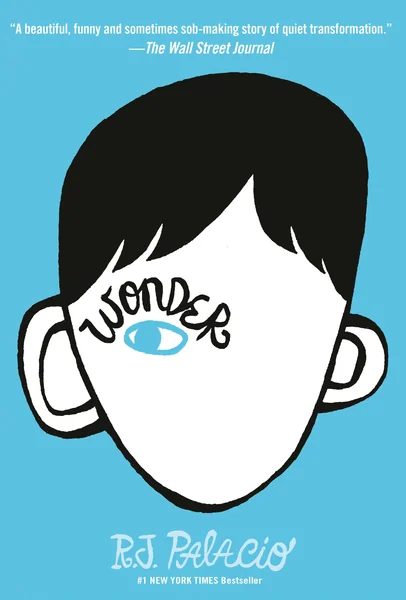
R. J. Palacio's Wonder is a contemporary children's novel published on February 14, 2012, by Knopf Books for Young Readers, following ten-year-old August "Auggie" Pullman — a boy with Treacher Collins syndrome — as he navigates his first year at Beecher Prep after years of homeschooling. A New York Times bestseller that has sold over 16 million copies worldwide and been published in more than fifty languages, it received strong critical praise from outlets including Entertainment Weekly and Common Sense Media, and its message inspired the Choose Kind movement. The multi-perspective structure, which gives voice not only to Auggie but to his sister Via and classmates, is one of its most discussed structural choices; readers who prefer a single narrator may find the shifting viewpoints an adjustment, though many critics consider them a strength. It is designed for readers aged roughly 9–11 and remains one of the most widely assigned middle-grade novels of the past decade.
LuvemBooks Verdict
Best for
Middle-grade readers aged nine to eleven — and the parents, teachers, or book-club facilitators who want a classroom-ready novel that opens honest conversations about difference, belonging, and the cost of cruelty.
Worth it if
You value emotionally rich storytelling that earns its uplift through specificity rather than sentiment, and want a book structured — via multiple narrators — to be discussed as much as read.
Skip if
You prefer a single, unbroken point of view or are looking for lighter middle-grade fare — the rotating narrators can disrupt momentum in the middle section, and the novel's consistently high emotional stakes (bullying, exclusion, family tension) make it an intense rather than gentle read.
What readers & critics say
Kirkus Reviews awarded the book a starred review, calling it "a memorable story of kindness, courage and wonder," while The Guardian's reader reviewers described it as "a great emotional journey" that leaves readers feeling better for having encountered it. According to rhcbooks.com, critical coverage dubbed it "a beautiful, funny and sometimes sob-making story of quiet transformation," and the novel has accumulated accolades from Booklist, Publishers Weekly, and School Library Journal as a best children's book of the year.
“A memorable story of kindness, courage and wonder.”
— Kirkus Reviews“It was hard to stop thinking about how it inspired and refreshed me — a great emotional journey that will leave any reader feeling better.”
— The GuardianAge & Reading Level
Recommended age
Ages 8–12
Reading level
Middle grade
2 content notes · who it suits
Content to know about
Best for: Ages 9+ — the multi-perspective narrative structure and sustained emotional complexity suit confident readers in the middle-grade range and above.
Skip if you're looking for a light, low-stakes middle-grade read without sustained emotional intensity.
Wonder by R. J. Palacio is Trending
Wonder Stage Musical Premiered Late 2025, Sparking Fresh Interest in the Book
A stage adaptation of Wonder premiered at the American Repertory Theater in Cambridge, MA in December 2025, running through February 2026. The production has renewed conversation around R. J. Palacio's beloved novel, bringing Auggie's story to a new audience.
Wonder has been getting fresh attention thanks to its stage debut. A theatrical adaptation — developed with R. J. Palacio's involvement — premiered at the American Repertory Theater in Cambridge, Massachusetts on December 17, 2025, and ran through February 15, 2026. That kind of high-profile stage production tends to pull people back to the source material, and it's clear that's happening here.
For a book that's already sold over 16 million copies and spent years as one of the most-assigned middle-grade novels in schools, a stage adaptation is a big deal. The 2017 film brought a huge wave of new readers to the book, and a live theatrical production — especially one at a respected venue like the ART — has a similar effect. People who saw the show, or heard about it, are picking up the novel to experience the full story.
If you haven't read Wonder yet, or want to revisit it, now is a good time. The novel follows 10-year-old Auggie Pullman, who has Treacher Collins syndrome, as he starts school for the first time. It's a quick, genuinely moving read for kids and adults alike, and the Choose Kind message it sparked still resonates.
In This Review
- What Works & What Doesn't
- What the Book Is — and What Happens
- Significance and Cultural Reach
- Structural Strengths — Multiple Perspectives
- A Genuine Limitation — and Who May Struggle With It
- Who *Wonder* Is For
What Works & What Doesn't
What Works
- A #1 New York Times bestseller that has sold over 16 million copies worldwide and been published in more than fifty languages, affirming its broad, lasting appeal
- Multi-perspective narration gives meaningful interior lives to characters beyond Auggie — including sister Via and classmate Jack — deepening the novel's emotional range
- Strong critical reception, with Entertainment Weekly praising it as 'a crackling page-turner filled with characters you can't help but root for'
- Rooted in a real, named medical condition (Treacher Collins syndrome) and a specific New York City setting, lending the story concrete authenticity
- Spawned a wide-ranging universe of spin-offs and a 2017 film adaptation, offering further entry points for readers who connect with the world
What Doesn't
- Readers who prefer a single sustained narrator may find the mid-book perspective shifts disruptive to momentum, particularly chapters away from Auggie's immediate story
- The novel's consistently high emotional register — bullying, exclusion, family tension — makes it a more intense read than lighter middle-grade fare, which may not suit all children in the recommended age range
What the Book Is — and What Happens
Significance and Cultural Reach
Structural Strengths — Multiple Perspectives
A Genuine Limitation — and Who May Struggle With It
Who *Wonder* Is For
Frequently Asked Questions
Sources & Further Reading
The key facts and claims in this review are grounded in the retrieved, verified sources listed below.
- Cited in this review
- 1
bookanalysis.com
- 2
- 3
en.wikipedia.org
- Further reading
- 4
R. J. Palacio, Wikipedia
- 5
- 6
- 7
compulsivereader.com
- 8
- 9
- 10
penguinrandomhouse.com
Related Reviews
Reviews of books we picked for readers who enjoyed Wonder.
Reader Comments
No comments yet
Be the first to share your thoughts!