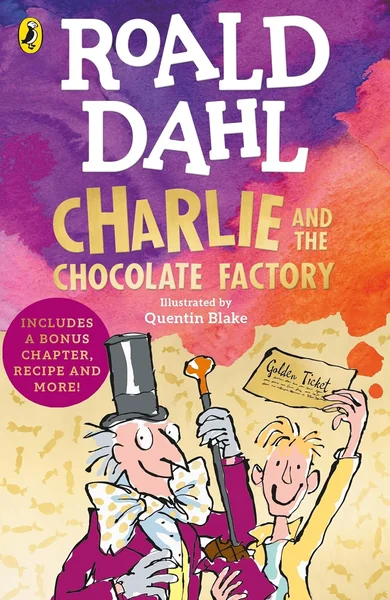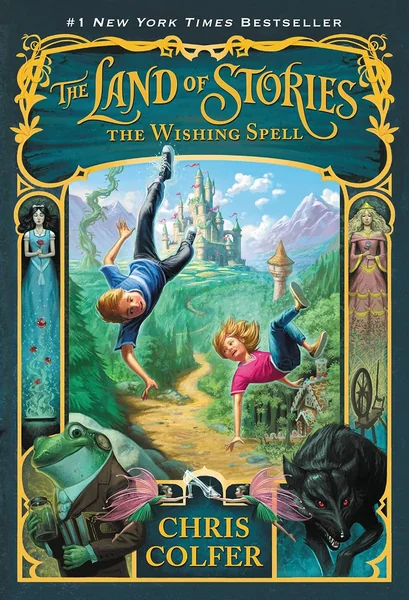
Charlie and the Chocolate Factory by Roald Dahl cover

Charlie and the Chocolate Factory

by Roald Dahl

Controversy/Discussion
$14.64 on AmazonRead our full review

At a glance

Pages176
First published1964
SettingSmall English town and Wonka's factory
AudienceMiddle grade (8-12)
ISBN0241558328
Roald Dahl

About the Author

Roald Dahl

3 books reviewed

View author →

LuvemBooks Verdict

Best for

Families and young readers aged eight and up who want a darkly comic moral fable with genuine cultural weight — and adults looking to share the novel that underlies two major films, a 2023 origin story, and six decades of Wonka mythology.

Worth it if

You want a children's classic that rewards both first-time young readers and returning adults, offering satirical depth, a satisfying moral clarity, and a richly imagined world rooted in real chocolate-industry history.

Skip if

You're seeking a gentle, psychologically nuanced children's story — Dahl's caustic, punitive humour and Charlie's thin characterisation as a near-saintly archetype will likely frustrate readers expecting warmth or interiority over moral fable.

What readers & critics say

Britannica describes the novel as Dahl's "most popular" children's work and characterises it as "irreverent, darkly comic" — a tone consistent with the sharp moral framework reviewers consistently note. A young reviewer at The Guardian awarded it five out of five stars, singling out the fates of the four wayward ticket-winners as the standout element, and recommending it for readers eight and over.

A few things go wrong for four children who have won tickets to the factory — that is my favourite part. I give it five out of five stars.

The Guardian (children's books site)
Sources: Britannica, The Guardian
4.7from 22,324 Amazon ratings— reader ratings, not a LuvemBooks score

Ask LuvemBooks

Was this helpful?

Charlie and the Chocolate Factory is Roald Dahl's darkly comic morality fable about Charlie Bucket, a boy of grinding poverty who wins a golden ticket into the wondrous, secretive factory of chocolatier Willy Wonka — and whose simple decency sets him apart from four less virtuous fellow visitors. A genuine cultural landmark spanning six decades, the novel rewards readers who enjoy Dahl's particular brand of mischief: comedy that winks at children over the heads of lampooned adults, delivered with straight-faced relish. The key caveat is tone: Dahl's caustic, punitive humour and the controversial history of the Oompa-Loompa characterisation make it worth a parental preview before reading aloud to younger children.
Is it worth reading?
For readers who enjoy darkly comic children's fiction with a strong moral spine, Charlie and the Chocolate Factory remains one of the foundational texts of the genre — a story that functions as a first read for young audiences and as a rewarding revisit for adults who can appreciate Dahl's satirical influences and jokes with fresh context. The novel's legacy — two major films, a 2023 origin film, stage productions, and a Royal Mail commemorative stamp — speaks to a resonance that has held for over six decades. The key caveat is tone: Dahl's punitive humour is an acquired taste, and readers seeking a gentler, more comforting children's story may find the fates of the four wayward children more unsettling than amusing. Those who click with Dahl's voice, however, will find the novel working at full power.
Similar books
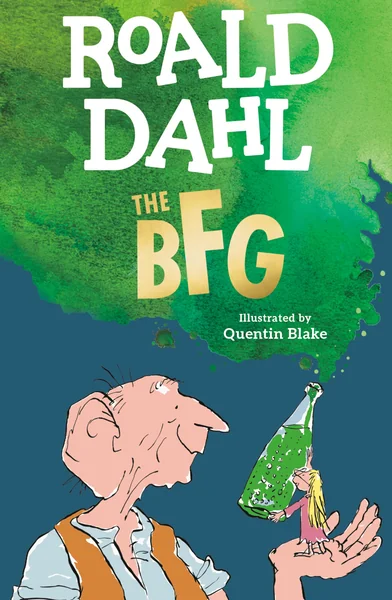
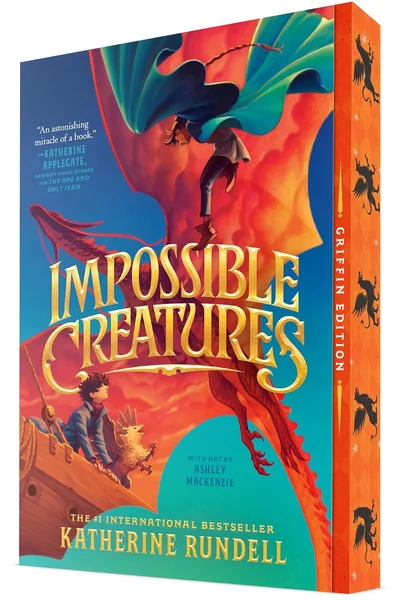
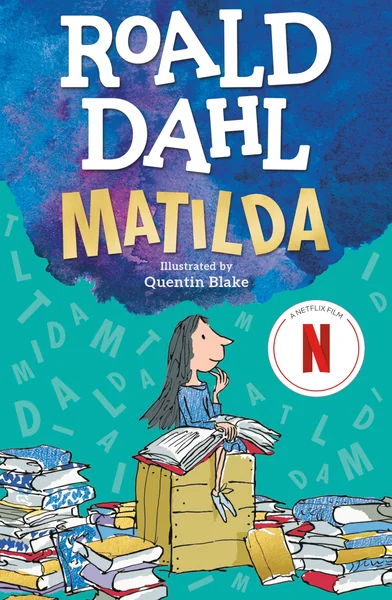
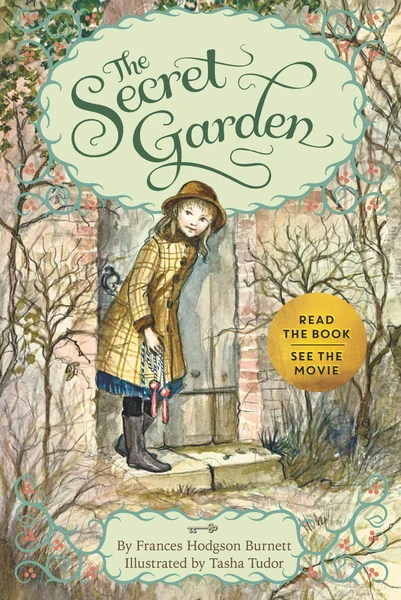
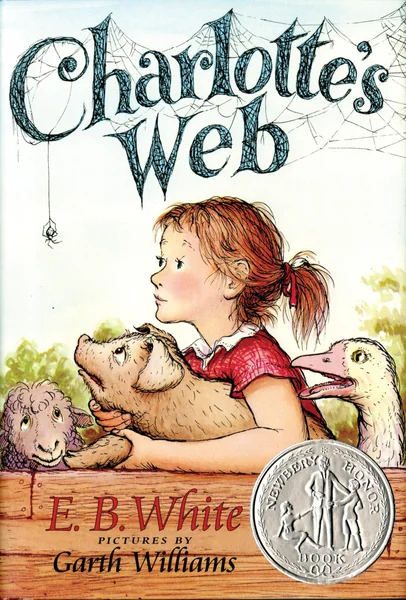
Readers who love Charlie and the Chocolate Factory will find much to enjoy in Dahl's other works reviewed on LuvemBooks: Matilda shares the same darkly comic moral clarity and a child protagonist defined by quiet virtue triumphing over awful adults, while The BFG trades the punitive humour for warmer whimsy and an endearing friendship. For classic children's fiction with a similarly transformative, almost magical setting, The Secret Garden by Frances Hodgson Burnett and Tom's Midnight Garden by Philippa Pearce both reward young readers drawn to hidden worlds and children who change through what they discover. Charlotte's Web by E. B. White and Bridge to Terabithia by Katherine Paterson offer emotionally resonant chapter-book experiences for the same age range, and Impossible Creatures by Katherine Rundell brings a more contemporary sense of fantastical world-building to readers ready for their next adventure.
Who should read this?
Charlie and the Chocolate Factory is an ideal read for children aged eight and over who are ready for chapter-book fiction with a satirical edge — particularly those who enjoy adventure stories with a strong moral framework and a sense of darkly comic mischief. It is also a rewarding revisit for adults, who bring additional context to Dahl's jokes, his Cadbury-rooted industrial history, and the satirical layer aimed squarely at adult failings. Families looking to connect a child's reading life to a broader cultural conversation — the films, the stage show, the Royal Mail stamps — will find the original novel is the source that gives everything else its meaning. Readers seeking a gentler, more psychologically layered protagonist, or a story without punitive humour, may want to look elsewhere.
What age is it for?
Best for ages 8 and up — the combination of accessible adventure, chapter-book length, and satirical edge suits confident readers in that range, as noted by The Guardian's young reviewer. Younger children can certainly enjoy the story, but the punitive fates of the four wayward children are played for dark comedy rather than gentle resolution, and the Oompa-Loompa characterisation has a documented controversial history in earlier editions, so a parental preview is worthwhile before reading aloud to under-eights.
Tell me about the adaptations
Charlie and the Chocolate Factory has generated one of the most extensive adaptation footprints of any children's novel of its era. The original 1971 film Willy Wonka & the Chocolate Factory was followed by a 2005 adaptation titled Charlie and the Chocolate Factory starring Johnny Depp as Wonka. Most recently, a 2023 origin film titled Wonka explored the character's backstory. Beyond film, the story has been adapted into theatrical stage productions, video games, and merchandise — and in 2012, Charlie Bucket brandishing a Golden Ticket appeared on a Royal Mail first-class stamp in the UK, cementing the book's status as a genuine cultural institution.
How does it compare to Dahl's other books?
Britannica describes Charlie and the Chocolate Factory as perhaps the most popular of Dahl's irreverent, darkly comic novels written for young people — placing it at the apex of his children's output. Like Matilda, it centres a virtuous child triumphing over adult selfishness and moral failure through a sharp comic-morality engine, but where Matilda focuses on a psychologically richer and more active protagonist, Charlie is deliberately drawn as a moral archetype — goodness and poverty personified — which makes the fable feel more archetypal and less character-driven. The BFG, by contrast, is warmer in tone, replacing the punitive humour with a gentler central friendship. Both Matilda and The BFG are reviewed on LuvemBooks for direct comparison.
About Roald Dahl
Roald Dahl was a British author of popular children's literature and short stories, a poet, screenwriter, and a wartime fighter ace.
Summarize this book

Summarize this book

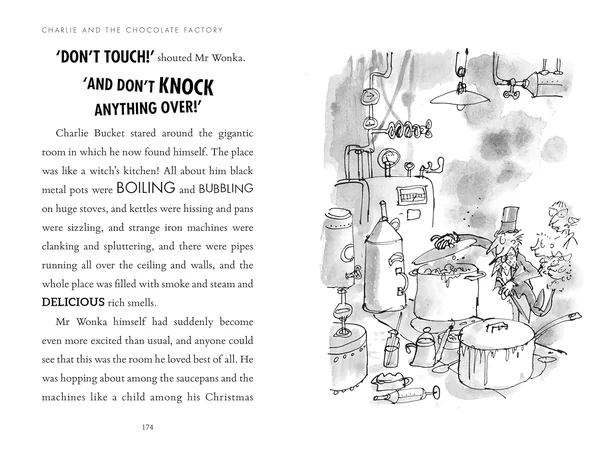
Charlie and the Chocolate Factory follows Charlie Bucket, a kind boy living in genuine poverty with his parents and all four grandparents, in a town home to the world-famous Wonka's Chocolate Factory. When its secretive, eccentric owner Willy Wonka announces that five Golden Tickets are hidden inside chocolate bars — each granting the finder a tour of his wondrous operation — Charlie's chances seem impossibly slim. What follows is a tour through rooms of edible wonder, with each stop punctuated by the misfortunes of four other ticket-winning children whose greed, vanity, or bad behaviour leads them astray, while Charlie's decency ultimately sets him apart. The novel blends genuine whimsy with a sharp moral framework, rooted in Dahl's real memories of Cadbury sending chocolate test packages to students at his school, Repton School in Derbyshire.

Follow up

Is there a sequel?
What happens to the other four children?
Is the factory inspired by a real place?

Synthesized from verified book data & published reviews · How we review

Press Enter to ask. Answers come from our editorial Q&A — start typing to see related questions.

Age & Reading Level

Recommended age

Ages 8–12

Reading level

Middle grade

Content to know about

punitive dark comedy — children meet fates played for satirical effect
controversial racial caricature in early editions (Oompa-Loompa depiction, revised in later editions)

Best for: Ages 8+ — the combination of satirical edge, chapter-book length, and darkly comic moral framework suits confident readers in this range; the punitive fates of the four wayward children and the Oompa-Loompa characterisation warrant a parental preview for younger readers.

Skip if you want a gentle, comforting children's story without caustic humour or punitive outcomes.

Editorial Review

Roald Dahl's children's novel Charlie and the Chocolate Factory follows the irresistibly poor-but-good-hearted Charlie Bucket, who wins a golden ticket granting him entry into the mysterious, magical factory of eccentric chocolatier Willy Wonka — a story that Britannica has called perhaps the most popular of Dahl's irreverent, darkly comic novels written for young people. Six decades on, it remains one of the most frequently ranked works in children's literature, a cultural touchstone that has launched films, stage productions, and an entire media franchise.

Read the Full Review

Books like Charlie and the Chocolate Factory

Curated picks for readers who enjoyed Charlie and the Chocolate Factory, with our reasoning for each match.

More by Roald Dahl
If you liked Charlie and the Chocolate Factory
Why It’s Trending

Roald Dahl's Books Back in the Spotlight After Ongoing Edits Controversy

Charlie and the Chocolate Factory keeps drawing readers back as debates continue over whether Roald Dahl's classic texts should be updated for modern sensibilities. The back-and-forth over editing his work has kept Dahl's books — and their characters — very much in the conversation.

Roald Dahl's estate and publisher Puffin made headlines in 2023 when it emerged that new editions of his books had been revised to remove or soften language deemed offensive — only for the original texts to then be kept in print alongside the updated versions after significant public pushback. That whole saga kicked off a broader debate about whether classic children's books should be edited at all, and Charlie and the Chocolate Factory was right at the center of it. The discussion hasn't really gone away, and it continues to send curious readers back to the book to see what all the fuss is about. For a lot of people, the controversy raised genuinely interesting questions: Where's the line between preserving a classic and making it accessible? Should we read these books with historical context in mind, or update them for today's kids? Charlie and the Chocolate Factory, with its Oompa Loompas and some of its more pointed character descriptions, sits right at the heart of that debate. The book's summary even acknowledges it — magical and meaningful, but with elements that feel dated. If you haven't revisited it as an adult, now's actually a great time. You'll likely read it with fresh eyes, noticing things that flew over your head as a kid. And if you're picking it up for a child, it's worth knowing what the conversation is about so you can talk through it together.
Charlie and the Chocolate Factory by Roald Dahl | LuvemBooks