

8 min read
Share This Review

Our review
Diary of a Wimpy Kid
Diary of a Wimpy Kid by Jeff Kinney Review: A Genre-Defining Middle-School Classic
Jeff Kinney's Diary of a Wimpy Kid is the illustrated children's novel that launched one of the best-selling book series in publishing history, introducing Greg Heffley — an ambitious, self-absorbed middle-schooler navigating popularity, family chaos, and the social minefield of junior high — to more than 250 million readers worldwide.


 Tap to enlarge
LuvemBooks Verdict
Best for
Children aged roughly 8–13 who are reluctant or early middle-grade readers, and parents or teachers looking for a high-engagement entry point to fiction that works just as well read aloud together as it does independently.
Worth it if
Worth reading if you want a fast, genuinely funny snapshot of middle-school social life told through an irresistibly self-unaware narrator whose escapades, as Kirkus Reviews notes, are "certain to elicit both gales of giggles and winces of sympathy."
Skip if
Skip it if you need a story built around escalating stakes and character growth, since the loosely connected diary entries are designed for laughs over depth and some reviewers note the book leans on stock archetypes and uneven jokes rather than narrative ambition.
Where reviewers agree and split
Readers rate it 4.6 on Amazon. The reviews we read that discuss it in depth agree:
All 3 reviews we read that discuss its humour find it consistently funny and laugh-out-loud.
Who says what
Humour
“Everything Greg seems to do has hilarious consequences and his family are very funny.”
— The Guardian · Trade review“The book is full of funny scenes, antics, mistakes, and missteps that are sure to make readers burst out laughing.”
— The Children's Book Review · Book blogWhat readers & critics say
Kirkus Reviews praised the book as certain to draw giggles and sympathy from young readers, highlighting its mix of hand-lettered text and cartoon illustrations as an effective vehicle for Greg's comic escapades. The Children's Book Review called the comic-book style and Kinney's wit "impressive," while bookbrowse.com described it as "the first of three installments, it is an excellent choice for reluctant readers, but more experienced readers will also find much to enjoy and relate to in one seventh grader's view of the everyday trials and tribulations of middle school."
“Certain to elicit both gales of giggles and winces of sympathy (not to mention recognition) from young readers.”
— Kirkus Reviews“My favourite character has to be Greg as he can be horrible but the audience always roots for him anyway!”
— The GuardianPreview the book

Ask LuvemBooks
Was this helpful?
- Is it worth reading?
- For its intended audience — particularly reluctant or early middle-grade readers — Diary of a Wimpy Kid is a genuinely landmark read. The unreliable, self-serving narration delivers comedy that works on two levels simultaneously: Greg's earnest attempts at spin entertain younger readers, while older readers and adults can enjoy reading against the grain of his obliviousness. One critical review called Greg's "slightly condescending, but also world-weary and sarcastic style" hysterically funny. The honest caveat is that the episodic structure means there's no sustained dramatic arc — it's "fun first," as one reviewer put it, and best paired with more substantive reading for children ready for greater complexity.
- Similar books
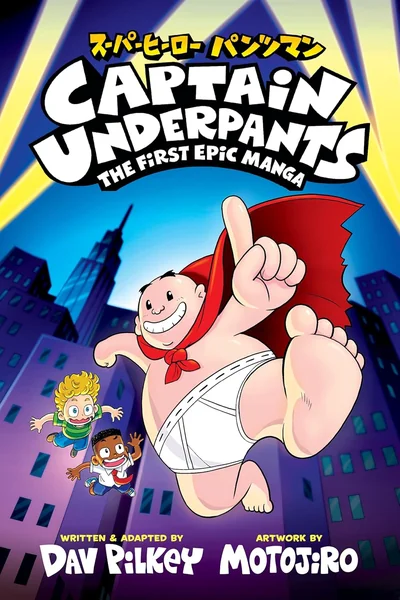
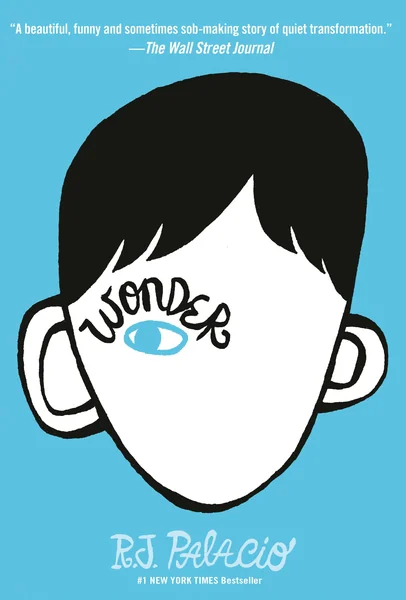
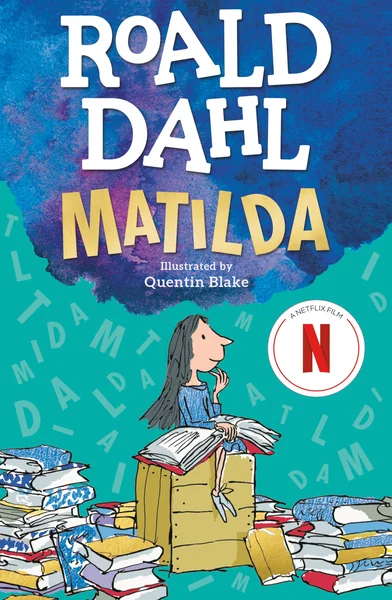
- Readers who love Diary of a Wimpy Kid tend to gravitate toward books that share its comic energy, accessible format, or middle-grade social dynamics. Dav Pilkey's Captain Underpants is a natural companion — similarly irreverent, illustration-heavy, and beloved by reluctant readers. R. J. Palacio's Wonder offers middle-school social navigation with greater emotional depth for readers ready for more layered characterization. Roald Dahl's Matilda delivers the same anarchic child-versus-adult comedy with a more sustained narrative arc. For readers who want more Greg Heffley, Partypooper (Diary of a Wimpy Kid Book #20) by Jeff Kinney continues the series. Katherine Paterson's Bridge to Terabithia and Jacqueline Wilson's The Bed and Breakfast Star round out the middle-grade range for readers moving between lighter and more emotionally resonant fare.
- Who should read this?
- Diary of a Wimpy Kid is most squarely aimed at middle-grade readers — particularly those in or approaching the middle-school years who will recognize Greg Heffley's social anxieties from the inside. It is especially well suited to reluctant readers, given its episodic structure, illustration-integrated format, and short diary entries that make the book feel far less daunting than a traditional novel. Adults and parents reading alongside children will find the two-level comedy — Greg's oblivious self-promotion is funny on its own and funnier still when read against the grain — makes this an unusually accessible shared read. Readers who need a sustained dramatic arc or layered character development should temper expectations accordingly.
- What age is it for?
- Best for ages 8 and up. The episodic structure, short diary entries, and cartoon illustrations make the book highly accessible for confident early readers, and the middle-school setting resonates most with readers aged roughly 8 to 12. The humor operates on multiple levels, meaning older readers and adults encounter it without issue — there are no heavy content concerns, and the reading level suits the middle-grade band comfortably.
- About Jeff Kinney
- Born in Fort Washington, Maryland in 1971, #1 New York Times bestselling author Jeff Kinney transformed children's literature when he brought middle-schooler Greg Heffley to life in his wildly popular Diary of a Wimpy Kid series.
- Tell me about the adaptation
- The Diary of a Wimpy Kid series has been adapted into both a live-action film series (running from 2010 to 2017) and animated adaptations. The live-action films brought Greg Heffley and Rowley Jefferson to a mainstream cinema audience and extended the franchise's cultural reach well beyond the page. The series also generated over $500 million in revenue across its various formats, reflecting how thoroughly Greg Heffley crossed from children's publishing into broader popular culture.
- How does this compare to later books in the series?
- As the first of twenty main entries, Diary of a Wimpy Kid establishes the core template — the diary-entry format, Greg's self-unaware narrator voice, and the ensemble of Rowley Jefferson, Rodrick, and other recurring characters — that every subsequent book builds on. The first book is widely regarded as the essential starting point because it introduces the "Cheese Touch," the school production of The Wizard of Oz, and the foundational dynamics of Greg's social world. LuvemBooks has also reviewed Partypooper (Diary of a Wimpy Kid Book #20), for readers curious about where the series stands.
Summarize this book
Follow up
Synthesized from verified book data & published reviews · How we review
What would you like to know about Diary of a Wimpy Kid?
Answers come from our editorial notes on this book. If we haven't covered something, we'll say so.
Readers often ask
Our Review
We review the evidence: published critics, reader verdicts and BookTube reviews, gathered and weighed with AI assistance and edited by LuvemBooks, rather than one reader's first-hand take.
What the Book Actually Is
Origin and Publishing History
Cultural Significance and Reception
Genuine Strengths
Honest Limitations
Sources & Further Reading
The key facts and claims in this review are grounded in the retrieved, verified sources listed below.
- Cited in this review
- 1
- Further reading
- 2
Jeff Kinney, LuvemBooks
- 3
en.wikipedia.org
- 4
- 5
- 6
- 7
joyfulicity.com
- 8
Kirkus Reviews
- 9
The Children's Book Review
Age & Reading Level
Our age band
Ages 8+
Reading level
Middle grade
Amazon listing
Ages 7+ (set by customers) · Grade 3–7
Our age band groups books for browsing; it isn't an age a review gave.
who it suits
Best for: Ages 8+ — the middle-grade reading level, episodic structure, and illustrated format suit confident readers aged 8 and up; the middle-school social setting resonates most strongly from around age 8 through 12.
Skip if you want a children's novel with a sustained dramatic arc and rising stakes rather than loosely connected comic episodes.
Reader reviews
Be one of the first readers to answer.
Read it? Was it right for you?
Books like Diary of a Wimpy Kid
Curated picks for readers who enjoyed Diary of a Wimpy Kid, with our reasoning for each match.

If you liked Diary of a Wimpy Kid

Related News
Diary of a Wimpy Kid Gets Book 21 and a New Disney+ Film
Jeff Kinney announces Fight or Flight, the 21st Diary of a Wimpy Kid book, releasing October 2026, alongside a new Disney+ animated film premiering December 2026.
Oct 17, 2026
Jeff Kinney to Keynote 2026 New Hampshire Book Festival for Kids
The Diary of a Wimpy Kid author will headline the New Hampshire Book Festival's school-day keynote on October 2, 2026, at the Capitol Center for the Arts in Concord.
Mar 30, 2026