

3 min read
4.2
· 34,885 Amazon ratingsFeatured In
Share This Review
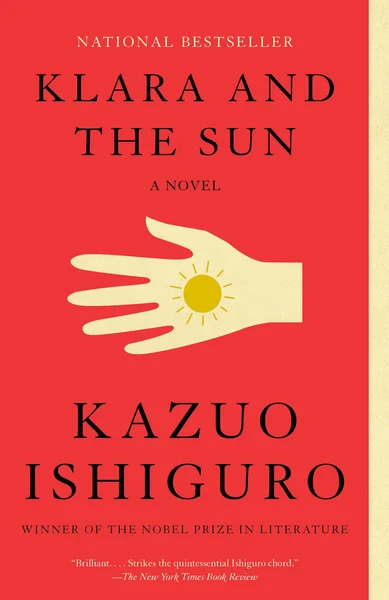
Klara and the Sun by Kazuo Ishiguro Review: A Haunting, Tender Dystopian Fable
Kazuo Ishiguro's eighth novel is a dystopian science fiction story narrated by Klara, a solar-powered Artificial Friend whose luminous innocence illuminates the deepest questions about love, loneliness, and what it means to be human — a number one Sunday Times bestseller that debuted at number six on the New York Times fiction best-seller list and earned a Booker Prize longlisting.
LuvemBooks Verdict
Best for
Readers who loved Never Let Me Go and are drawn to quiet, philosophically rich literary fiction that uses a speculative premise — here, an AI narrator — to explore mortality, love, and what it means to be human.
Worth it if
You're willing to surrender to Ishiguro's characteristically slow, ruminative pace and let the novel's emotional precision and formally inventive narrator — an AI whose incomplete understanding generates sustained, affecting dramatic irony — do their work on you.
Skip if
You come to science fiction primarily for rigorous world-building or propulsive plotting — the speculative scaffolding (particularly the genetic "lifting" process) is deliberately sketched rather than developed, and the measured, understated register demands patience that plot-driven readers may find unrewarding.
What readers & critics say
Bookshop.org's aggregated critical snapshot includes a starred critical coverage verdict calling it "a haunting fable of a lonely, moribund world that is entirely too plausible," while bluecypressbooks.com surfaces the Associated Press's description of the novel as "an intriguing take on how artificial intelligence might play a role in our futures… a poignant meditation on love and loneliness." Wikipedia's reception summary notes that critics found the dystopian future "entirely too plausible," and records the novel's longlisting for the 2021 Booker Prize alongside its debut at number six on the New York Times fiction best-seller list.
Sources: bookshop.org, bluecypressbooks.com, en.wikipedia.orgKlara and the Sun: A GMA Book Club Pick: A novel (Vintage International) by Kazuo Ishiguro is Trending
Jenna Ortega Stars in Taika Waititi's 'Klara and the Sun' Film — In Theaters October 23
A trailer just dropped for the film adaptation of Kazuo Ishiguro's novel, directed by Taika Waititi and starring Jenna Ortega as Klara alongside Amy Adams. The movie hits theaters October 23, making right now a great time to read the book first.
If you've been seeing *Klara and the Sun* pop up everywhere lately, here's why: the trailer for the film adaptation just landed, and it's a big one. Directed by Taika Waititi (*Thor: Ragnarok*, *Jojo Rabbit*) and starring Jenna Ortega as Klara — the solar-powered artificial companion at the heart of Ishiguro's novel — the movie is set for an exclusive theatrical release on October 23, 2026. Amy Adams also co-stars, which only adds to the buzz.
This is the kind of adaptation that gets book lovers paying attention. Waititi brings a distinctive, offbeat sensibility to everything he touches, and Jenna Ortega has serious cultural momentum right now. Seeing her take on a role this different — a robot navigating human emotion and loneliness — has a lot of people curious. The trailer has been making the rounds and generating real conversation about what the film will do with Ishiguro's quietly devastating story.
If you haven't read the book yet, now is the perfect window. *Klara and the Sun* is a relatively quick read, and going in with Ishiguro's original vision fresh in your mind will make the October theatrical experience a lot richer. It's the kind of novel that stays with you — and given the talent behind this film, the adaptation looks like it just might do the same.
In This Review
- What Works & What Doesn't
- What the Novel Is and What It Contains
- Narrative Voice and Craft
- Significance: Place in Ishiguro's Work and the Broader Conversation
- Reception and Reach
- Genuine Limitations and Who May Struggle
What Works & What Doesn't
What Works
- Klara's narrative voice — described by Cherwell as 'simultaneously robotic and infantile, scrupulous yet naïve' — is a formally inventive achievement that generates sustained dramatic irony throughout
- The Associated Press called it 'a poignant meditation on love and loneliness,' reflecting its emotional depth across questions of AI, illness, and human connection
- A major commercial and critical success: a number one Sunday Times bestseller and debuted at number six on the New York Times fiction best-seller list, with a Booker Prize longlisting
- Ian Thomson in the Evening Standard described its 'hushed intensity of emotion' as confirmation that Ishiguro is 'a master prose stylist'
- The novel's central image — Klara's near-religious devotion to the Sun — was specifically celebrated by Cherwell as one of the book's most distinctive and resonant conceits
What Doesn't
- Cherwell's review specifically criticised the novel's treatment of gene editing as 'overly vague,' leaving the speculative world-building less fully realised than the emotional core
- Ishiguro's characteristic understatement and slow, ruminative pacing make this a demanding read for those accustomed to more plot-driven or directly confrontational fiction
What the Novel Is and What It Contains
Narrative Voice and Craft
Significance: Place in Ishiguro's Work and the Broader Conversation
Reception and Reach
Genuine Limitations and Who May Struggle
Frequently Asked Questions
Sources & Further Reading
The key facts and claims in this review are grounded in the retrieved, verified sources listed below.
- Cited in this review
- 1
en.wikipedia.org
- 2
- 3
- Further reading
- 4
Kazuo Ishiguro, Wikipedia
- 5
- 6
- 7
- 8
Related Reviews
Reviews of books we picked for readers who enjoyed Klara and the Sun.
Reader Comments
No comments yet
Be the first to share your thoughts!