8 min read
4.2
· 34,885 Amazon ratingsFeatured In
Share This Review
Klara and the Sun by Kazuo Ishiguro Review: A Haunting, Tender Dystopian Fable
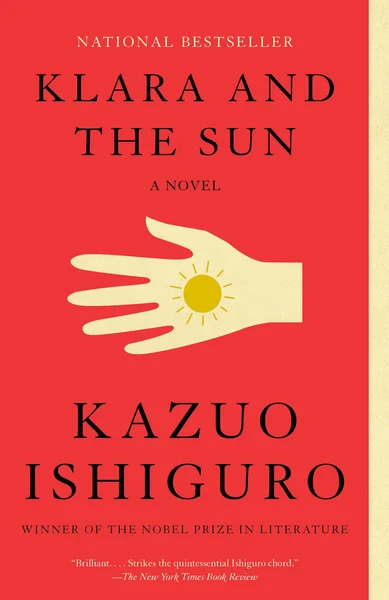
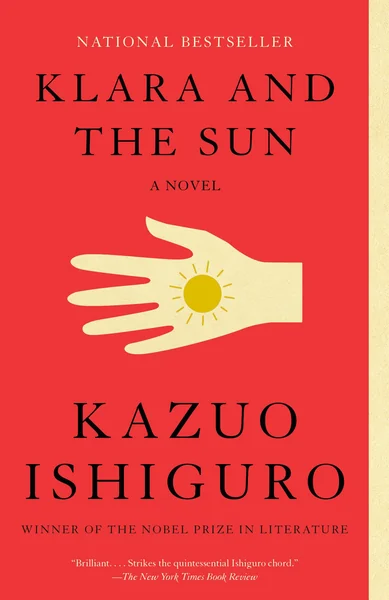
Kazuo Ishiguro's eighth novel is a dystopian science fiction story narrated by Klara, a solar-powered Artificial Friend whose luminous innocence illuminates the deepest questions about love, loneliness, and what it means to be human — a number one Sunday Times bestseller that debuted at number six on the New York Times fiction best-seller list and earned a Booker Prize longlisting.
LuvemBooks Verdict
Best for
Readers who loved Never Let Me Go and are drawn to quiet, philosophically rich literary fiction that uses a speculative premise — here, an AI narrator — to explore mortality, love, and what it means to be human.
Worth it if
You're willing to surrender to Ishiguro's characteristically slow, ruminative pace and let the novel's emotional precision and formally inventive narrator — an AI whose incomplete understanding generates sustained, affecting dramatic irony — do their work on you.
Skip if
You come to science fiction primarily for rigorous world-building or propulsive plotting — the speculative scaffolding (particularly the genetic "lifting" process) is deliberately sketched rather than developed, and the measured, understated register demands patience that plot-driven readers may find unrewarding.
What readers & critics say
Bookshop.org's aggregated critical snapshot includes a starred critical coverage verdict calling it "a haunting fable of a lonely, moribund world that is entirely too plausible," while bluecypressbooks.com surfaces the Associated Press's description of the novel as "an intriguing take on how artificial intelligence might play a role in our futures… a poignant meditation on love and loneliness." Wikipedia's reception summary notes that critics found the dystopian future "entirely too plausible," and records the novel's longlisting for the 2021 Booker Prize alongside its debut at number six on the New York Times fiction best-seller list.
Sources: bookshop.org, bluecypressbooks.com, en.wikipedia.orgAsk LuvemBooks
Was this helpful?
- Is it worth reading?
- For readers drawn to literary fiction that uses speculative premises to illuminate deeply human questions, Klara and the Sun is a rewarding and emotionally precise work. Ian Thomson in the Evening Standard praised its "hushed intensity of emotion" as confirmation that Ishiguro is "a master prose stylist," and the novel's commercial and critical performance — a number one Sunday Times bestseller, a debut at number six on the New York Times fiction best-seller list, and a Booker Prize longlisting — reflects genuine cross-audience reach. The key caveat is Ishiguro's characteristic understatement: this is a slow, ruminative novel, and readers expecting rigorous sci-fi world-building or propulsive plotting will likely be disappointed.
- Similar books
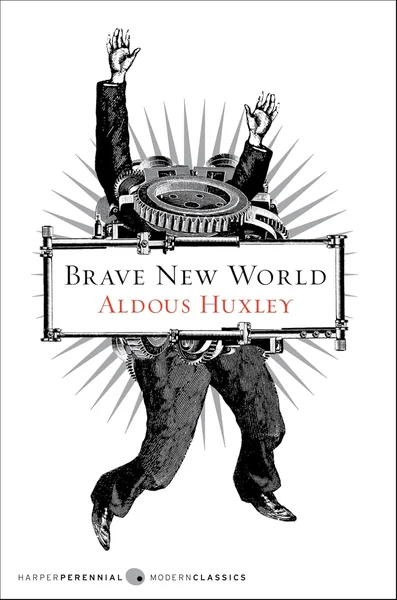
- Readers drawn to Klara and the Sun will find strong companions in several of the curated titles below. Station Eleven by Emily St. John Mandel shares the novel's elegiac, quietly literary approach to a destabilised near-future world, with a similar emphasis on human connection over spectacle. Brave New World by Aldous Huxley offers an earlier, more satirically direct treatment of genetic engineering and social stratification — a useful contrast to Ishiguro's emotional restraint. Among books not currently in the catalogue, Ishiguro's own Never Let Me Go and The Buried Giant are natural next reads, and Philip K. Dick's Do Androids Dream of Electric Sheep? engages directly with questions of artificial consciousness that Klara and the Sun reimagines through a more intimate, domestic lens.
- Who should read this?
- Klara and the Sun is best suited to adult readers of literary fiction who are comfortable with slow, ruminative prose and reward-at-the-end emotional payoffs. It will particularly resonate with fans of Ishiguro's earlier work — especially Never Let Me Go — and with anyone drawn to fiction that uses speculative premises (AI, genetic engineering) as a lens for deeply human questions about love, mortality, and identity. Readers seeking propulsive plotting or hard sci-fi world-building are likely to find it frustrating, as Cherwell specifically noted the novel's treatment of the genetic "lifting" process as "overly vague."
- About Kazuo Ishiguro
- Born in Nagasaki and raised in Britain from the age of five, Sir Kazuo Ishiguro has emerged as one of the most distinctive voices in contemporary literature.
- What are the main themes?
- The novel's principal themes are love and loneliness, artificial intelligence and consciousness, genetic engineering and its social consequences, mortality and grief, and the question of what makes a person irreplaceable. Klara's near-religious devotion to the Sun — which she believes holds the power to heal Josie — adds a layer of spiritual and philosophical inquiry that Cherwell singled out as one of the book's "most distinctive and resonant conceits." Threading through all of this is the central dramatic irony of Klara's narration: she notices everything but understands only so much, and the gap between her observations and their human meaning is where the novel's emotional force lives.
- Is it a good book club pick?
- Yes — Klara and the Sun carries a GMA Book Club Pick designation, reflecting its sustained mainstream reach and its suitability for group discussion. Its central questions — about AI consciousness, the ethics of genetic enhancement, Josie's mother's motivations, and what Klara ultimately understands about the humans around her — generate rich interpretive conversation without requiring specialist knowledge of science fiction. The novel's deliberate ambiguities and Ishiguro's characteristic indirection give book clubs plenty of territory to explore, and its compact scope makes it a manageable group read.
Summarize this book
Follow up
Synthesized from verified book data & published reviews · How we review
Press Enter to ask. Answers come from our editorial Q&A — start typing to see related questions.
Age & Reading Level
Recommended age
Adult
Reading level
Adult
2 content notes · who it suits
Content to know about
Skip if you want rigorous speculative world-building or a plot-driven narrative rather than quiet, ruminative literary fiction.
Our Review
What the Novel Is and What It Contains
Narrative Voice and Craft
Significance: Place in Ishiguro's Work and the Broader Conversation
Reception and Reach
Genuine Limitations and Who May Struggle
Sources & Further Reading
The key facts and claims in this review are grounded in the retrieved, verified sources listed below.
- Cited in this review
- 1
en.wikipedia.org
- 2
- 3
- Further reading
- 4
Kazuo Ishiguro, Wikipedia
- 5
- 6
- 7
- 8
Books like Klara and the Sun
Curated picks for readers who enjoyed Klara and the Sun, with our reasoning for each match.
If you liked Klara and the Sun