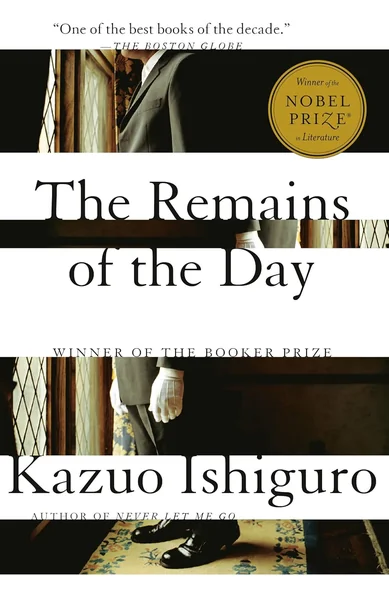
Kazuo Ishiguro's Booker Prize-winning novel follows Stevens, a devoted English butler at Darlington Hall, on a 1956 road trip that becomes an aching reckoning with loyalty, self-deception, and a life lived in service to others — widely regarded as one of the finest post-war British novels ever written.
Readers who relish literary fiction of the highest formal ambition — particularly those drawn to unreliable narrators, understated prose, and novels that use one man's emotional self-deception to illuminate questions of class, duty, and political complicity in twentieth-century England.
Worth it if
Worth reading if you are willing to inhabit a narrator whose formal reticence is itself the subject, and can find pleasure in irony, accumulation, and the slow revelation of what a character cannot bring himself to say.
Skip if
Skip it if you need conventional dramatic momentum or emotionally expressive characters — Stevens's scrupulous, almost bureaucratic voice is a deliberate structural obstacle, and readers expecting overt feeling or plot-driven tension are likely to find it a frustrating exercise in understatement.
What readers & critics say
The Booker Prizes site describes Ishiguro's tonal control of Stevens's repressive first-person voice as "dazzling" and his approach as "quietly subversive," using professional dignity to expose England's fixation on class. Kirkus Reviews acknowledges "the convincing voice and the carefully bleached prose" while offering a more cautionary note, suggesting Ishiguro can manage only "a small measure of pathos" for his self-censoring narrator — a minority view that nonetheless captures why the novel divides as well as it dazzles.
“One can certainly respect the convincing voice and the carefully bleached prose; yet there is something doomed about Ishiguro's effort to enlist sympathy for such a self-censoring stuffed shirt.”
The Remains of the Day is Kazuo Ishiguro's Booker Prize-winning masterwork of restraint and irony, following Stevens, a devoted English butler, on a 1956 road trip through the English countryside that becomes a quietly devastating reckoning with a life surrendered to duty, self-deception, and unrequited feeling. A benchmark of what literary fiction can achieve through understatement alone, it rewards readers who are willing to inhabit a narrator whose evasions and formal reticence are the very subject of the novel. The key caveat: those seeking conventional dramatic momentum or emotionally expressive prose will find Stevens's meticulous, bureaucratic voice a demanding — if entirely deliberate — obstacle.
Is it worth reading?
The Remains of the Day is widely regarded as one of the finest post-war British novels ever written — a winner of the 1989 Booker Prize, a central work in the Nobel Laureate Kazuo Ishiguro's legacy, and a book that has sold over two million copies while sustaining decades of both academic and popular engagement. Critics called it 'an intricate and dazzling novel,' and Salman Rushdie revisited it in The Guardian as a significant work that richly repays rereading. The honest caveat is that its pleasures are those of irony, accumulation, and indirection — not plot momentum or dramatic confrontation — so readers who prefer emotionally expressive or fast-moving fiction may find the payoff slow to arrive.
Similar books
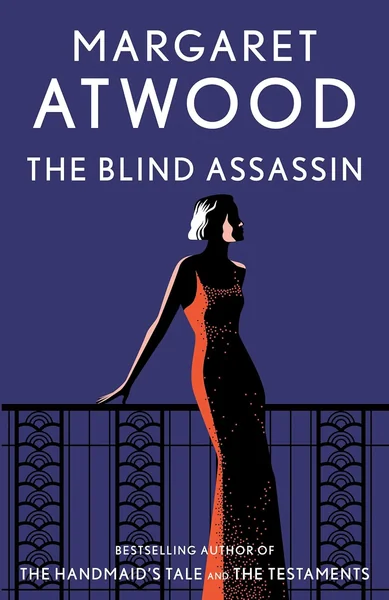
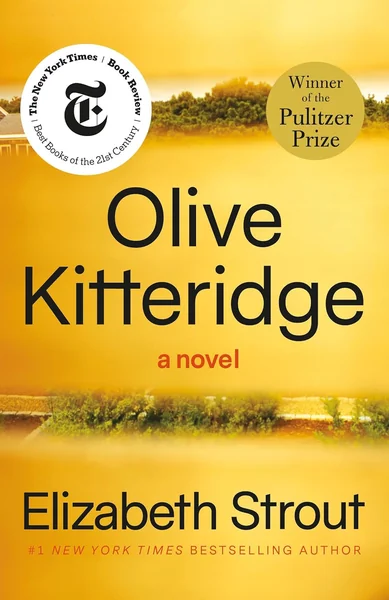
Readers drawn to The Remains of the Day's combination of restrained prose, moral seriousness, and cumulative emotional power will find much to admire in several kindred works. Margaret Atwood's The Blind Assassin similarly uses an unreliable narrator looking back over a life shaped by duty, loss, and things left unsaid. Wallace Stegner's Angle of Repose shares the retrospective structure and the weight of historical and personal reckoning. Elizabeth Strout's Olive Kitteridge offers the same quiet devastation in its portrait of a character whose emotional reticence defines and limits her relationships. Primo Levi's The Wrench — like Ishiguro's novel — uses the specificity of a working life and professional pride as a lens onto larger human questions. Ishiguro's own Never Let Me Go extends his preoccupation with memory, missed chances, and the quiet tragedy of lives shaped by forces beyond the characters' full understanding.
Who should read this?
The Remains of the Day is essential reading for lovers of literary fiction who are attuned to indirection, irony, and the slow accumulation of emotional meaning — readers who find pleasure in what a narrator reveals through evasion rather than declaration. It is particularly rewarding for those interested in questions of class, duty, and moral complicity in twentieth-century English history, or in the craft of unreliable narration. Readers who prefer plot-driven fiction or emotionally expressive prose are likely to find Stevens's formal, highly reticent voice more obstacle than invitation.
About Kazuo Ishiguro
Born in Nagasaki and raised in Britain from the age of five, Sir Kazuo Ishiguro has emerged as one of the most distinctive voices in contemporary literature.
Tell me about the adaptation
The 1993 Merchant Ivory film adaptation of The Remains of the Day stars Anthony Hopkins as Stevens and Emma Thompson as Miss Kenton, and earned eight Academy Award nominations — a remarkable haul that extended the novel's cultural reach well beyond the literary world. The film is widely regarded as a faithful and distinguished rendering of Ishiguro's source material, preserving the novel's period setting and emotional restraint while translating its interior, first-person retrospection into a necessarily more visible dramatic form. Viewers who find Stevens's narrative voice demanding on the page may find the film a useful companion piece, though the novel's full ironic architecture — built from what Stevens refuses to say — is arguably richer in prose form.
Is this a good book club pick?
The Remains of the Day is one of the more discussion-rich choices a book club could make. The novel's unreliable narrator generates immediate interpretive disagreement — readers differ on how sympathetically to view Stevens, how much self-awareness he ultimately achieves, and whether his loyalty to Lord Darlington constitutes tragedy or complicity. The historical and moral dimensions (Lord Darlington's pre-war political associations, the ethics of institutional deference) add further layers beyond the personal story, and the novel's deliberate understatement tends to leave readers with strong but differing emotional responses — exactly the conditions for a productive group conversation.
How does this compare to Klara and the Sun?
Both novels share Ishiguro's signature method — a first-person narrator who observes the world with scrupulous, slightly oblique precision, and whose emotional restraint gradually reveals enormous feeling beneath a composed surface. Where The Remains of the Day locates that method in post-war England and the world of a butler's professional dignity, Klara and the Sun applies it to a speculative near-future setting narrated by an artificial friend. Readers who respond to one are likely to find much to admire in the other; Klara and the Sun may be the more immediately accessible entry point, while The Remains of the Day is the more formally celebrated and widely studied of the two.
Summarize this book
Is it worth reading?
Who should read this?
About Kazuo Ishiguro
Tell me about the adaptation
Is this a good book club pick?
How does this compare to Klara and the Sun?
Summarize this book
Set in 1956, The Remains of the Day follows Stevens, a long-serving butler at Darlington Hall — a fictitious stately home near Oxford — as he undertakes a motoring journey through the English countryside to visit Miss Kenton, a former housekeeper. The journey becomes a sustained act of retrospection, with Stevens revisiting roughly thirty years of English history experienced from below stairs: his professional philosophy, his admiring loyalty to Lord Darlington (a well-meaning aristocrat whose pre-war sympathies led him into damaging associations), and his carefully suppressed feelings for Miss Kenton. The novel's real subject is what Stevens cannot bring himself to say — the emotional life buried beneath decades of professional dignity — making it simultaneously a personal confession and a wider reckoning with class, deference, and moral complicity in post-war England.
Synthesized from verified book data & published reviews · How we review
Press Enter to ask. Answers come from our editorial Q&A — start typing to see related questions.
Our Review
This is a novel of profound restraint and devastating emotional consequence — one that has earned its place among the most celebrated works of twentieth-century English literature.
What the Novel Is and What It Does
The Remains of the Day is Kazuo Ishiguro's third novel, first published in 1989. Its narrator and protagonist is Stevens, a butler of long standing at Darlington Hall, a fictitious stately home near Oxford.
The novel's present action unfolds in 1956, as Stevens undertakes a motoring journey through the English countryside to visit Miss Kenton, a former housekeeper at Darlington Hall. The journey provides the structural frame for a sustained act of retrospection: over the course of the trip, Stevens revisits roughly thirty years of English history as he experienced it from below stairs, meditating on his professional philosophy, his admiration for his former employer Lord Darlington, and his carefully suppressed feelings for Miss Kenton.
The publisher describes the novel as "a profoundly compelling portrait" of a butler examining class, identity, and what Stevens himself might call the remains of the day — the time that is left, and what, if anything, can be salvaged from it.
Its Place in the Canon
Few contemporary British novels have accumulated accolades as consistently as this one. The Remains of the Day won the Booker Prize in 1989, the same year of its publication, and Ishiguro was awarded the Nobel Prize in Literature in 2017 — with this novel frequently cited as central to his legacy.
The Booker Prize organisers have described how Ishiguro composed the manuscript during an intense four-week writing period. The novel has sold over two million copies, been translated as part of Ishiguro's body of work into more than forty languages, and was named among the BBC's 100 most inspiring novels in 2019.
The 1993 Merchant Ivory film adaptation, starring Anthony Hopkins and Emma Thompson, earned eight Academy Award nominations, extending the novel's cultural reach well beyond the literary world. Academic engagement has remained sustained: a 2022 collection of nine scholarly essays, Imagining Mr Stevens, attests to the novel's ongoing centrality in literary studies.
The Craft of Unreliable Narration
The novel's most celebrated technical achievement is its deployment of an unreliable narrator. Stevens narrates with scrupulous, almost bureaucratic precision — and it is precisely his meticulous self-presentation that exposes him.
His evasions, his professional pride, and his studied refusal to examine his own emotional life are laid bare not through authorial intrusion but through the gaps and contradictions in his own account. Critics called it "an intricate and dazzling novel," a description that captures the dual quality of Ishiguro's method: the prose is cool and controlled on the surface, while the underlying emotional architecture is quietly devastating.
Salman Rushdie, writing in The Guardian, revisited the novel as a significant work worthy of sustained reappraisal — a testament to how richly it repays rereading. The Booker Prize notes describe Ishiguro's approach as "quietly subversive," using Stevens's obsession with professional dignity to expose the English fixation on class.
A page featuring a pull quote in serif type with a decorative bracket, praising the novel's portrayal of an English butler in post-war England.
Themes of Duty, Complicity, and Lost Time
Beyond its formal brilliance, the novel engages seriously with questions of moral and political complicity. Stevens's loyalty to Lord Darlington — a well-meaning aristocrat whose pre-war sympathies led him into damaging associations — raises uncomfortable questions about the ethics of service, deference, and the surrender of personal judgment to institutional duty.
Academic work published in international journals of literature and linguistics has examined the novel's double narrative structure, reading it simultaneously as personal confession and as a wider reckoning with a particular strand of English history. The novel does not melodramatise these stakes; it lets them accumulate through Stevens's carefully composed understatement, which makes the eventual moments of self-recognition all the more wrenching.
Who This Novel Is For — and Where It Demands Patience
The Remains of the Day rewards readers who are attuned to indirection and willing to inhabit a narrator whose emotional reticence is the central subject of the book. Its pleasures are not those of plot momentum or dramatic confrontation; they are the pleasures of irony, accumulation, and the slow unfolding of what a character cannot bring himself to say.
Readers expecting conventional dramatic tension may find Stevens's highly formal narrative voice a deliberate obstacle rather than a style choice — and that response, in a sense, is part of what the novel intends. For those prepared to read closely and meet the text on its own terms, The Remains of the Day remains, more than three decades after publication, a benchmark of what literary fiction can achieve through restraint alone.
Sources & Further Reading
The key facts and claims in this review are grounded in the retrieved, verified sources listed below.
Ishiguro suggests that most people are functionally butlers because they don't run nations or vast corporations. They contribute their best efforts to an employer or cause without truly knowing how their work fits into the larger picture.
Finding dignity in limited perspective
Ishiguro explains that people often take pride and dignity in doing their job well, even if they must offer that devotion somewhat blindly to an employer who might not be honorable. He sees this ethical and political dilemma as a shared condition for most of humanity.
From our readers
Reader reviews
Be one of the first readers to answer.
Read it? Was it right for you?
Books like The Remains of the Day
Curated picks for readers who enjoyed The Remains of the Day, with our reasoning for each match.