
9 min read
4.3
· 72,080 Amazon ratingsShare This Review
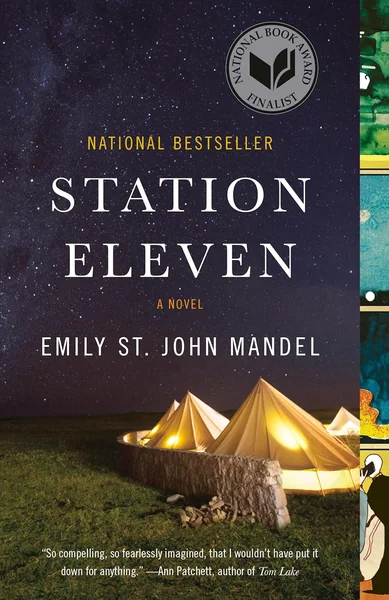
Station Eleven by Emily St. John Mandel Review: A Luminous, Award-Winning Post-Apocalyptic Novel
Emily St. John Mandel's Station Eleven is a post-apocalyptic literary novel that traces interconnected lives before and after a devastating influenza pandemic, anchored by a quiet insistence that art and human culture are worth preserving at any cost. Originally published in 2014, it won the Arthur C. Clarke Award and the Toronto Book Award, was a National Book Award finalist, and had sold 1.5 million copies as of 2020 — a testament to its broad and enduring appeal across literary and genre readerships alike.
 Tap to enlarge
LuvemBooks Verdict
Best for
Readers who want a single novel to satisfy both their literary and speculative fiction appetites — particularly those drawn to questions of art, memory, and what civilisation is actually for, rendered through interwoven human lives rather than genre mechanics.
Worth it if
You're willing to hold multiple timelines and a large ensemble cast in suspension while the novel's architecture slowly converges into something quietly devastating.
Skip if
You're coming to it for visceral survival drama or relentless plot momentum — its deliberately understated, elegiac register is closer to The Dog Stars than to The Road or World War Z.
What readers & critics say
Wikipedia's reception entry records that the novel was well received by critics, with the understated quality of Mandel's prose drawing particular and repeated praise, and it appeared on several best-of-year lists. The Guardian's review identifies what sets it apart: where most apocalyptic fiction follows a familiar script, Mandel makes "something subtle and unusual" out of elements that have become garishly overfamiliar.
“Mandel makes something subtle and unusual out of elements that have become garishly overfamiliar.”
— The GuardianAge & Reading Level
Recommended age
Adult
Reading level
Adult
2 content notes · who it suits
Content to know about
Skip if you want visceral survival action, relentless plot momentum, or a single linear protagonist carried through the narrative.
In This Review
- What Works & What Doesn't
- What the Novel Actually Is and Does
- Awards, Recognition, and Place in the Genre
- What Mandel Does Particularly Well
- Genuine Limitations and Who It May Frustrate
- Who This Novel Is For
What Works & What Doesn't
What Works
- Won the Arthur C. Clarke Award and the Toronto Book Award, and was a National Book Award finalist — a rare cross-genre critical achievement
- Wikipedia's reception summary notes that critics gave the novel a strong welcome, with Mandel's understated prose receiving particular and repeated praise
- The novel's structural ambition — weaving together multiple timelines and a large cast connected through Arthur Leander — is singled out by Masters Review as a genuine strength, with Mandel excelling at drawing these lives together as mystery and suspense propel the reader forward
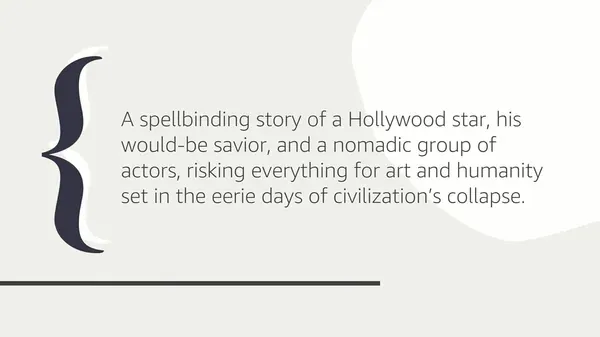
- The publisher describes it as 'fearlessly imagined,' and one blurb collected on the author's site calls it 'a novel that miraculously reads like equal parts page-turner and poem'
- Its thematic focus — on the survival of culture rather than merely of humanity — was specifically highlighted by the Arthur C. Clarke Award committee as what sets it apart from the field
What Doesn't
- The novel's nonlinear, multi-perspective structure, while praised for its ambition, may frustrate readers who prefer a single sustained narrative arc or a more conventional timeline
- The book's deliberately quiet, understated register — closer in spirit to Peter Heller's The Dog Stars than to high-action post-apocalyptic titles like World War Z — will not satisfy readers seeking visceral survival drama or relentless plot momentum
What the Novel Actually Is and Does

Awards, Recognition, and Place in the Genre
What Mandel Does Particularly Well
Genuine Limitations and Who It May Frustrate
Who This Novel Is For
Frequently Asked Questions
Sources & Further Reading
The key facts and claims in this review are grounded in the retrieved, verified sources listed below.
- Cited in this review
- 1
en.wikipedia.org
- 2
emilymandel.com
- 3
- Further reading
- 4
Emily St. John Mandel, Wikipedia
- 5
- 6
bookbrowse.com
- 7
- 8
- 9
grimdarkmagazine.com
Related Reviews
Reviews of books we picked for readers who enjoyed Station Eleven.
Reader Comments
No comments yet
Be the first to share your thoughts!