7 min read
4.8
· 1,379 Amazon ratingsShare This Review
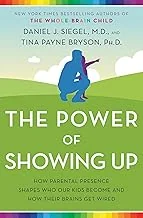
The Power of Showing Up by Daniel J. Siegel & Tina Payne Bryson Review: Science-Backed Parenting Guide Built on Presence
The Power of Showing Up is an encouraging parenting guide from psychiatrist Daniel J. Siegel and clinical social worker Tina Payne Bryson, published by Ballantine Books, that argues consistent parental presence — physical and emotional — is the single most important factor in shaping a child's brain development and lifelong wellbeing. Built around the "Four S's" framework and grounded in attachment science, the book earned praise from Publishers Weekly as an "encouraging and empowering" work that delivers an "empathetic and helpful philosophy" for caregivers at any stage.
LuvemBooks Verdict
Best for
Parents and caregivers — especially those without a secure attachment background themselves — who want a neuroscience-grounded, conceptually clear framework for understanding how consistent emotional presence shapes a child's developing brain.
Worth it if
The Four S's structure (Safe, Seen, Soothed, Secure) appeals and you want a research-backed, reflective guide to the relational foundations of parenting rather than a situational how-to manual.
Skip if
You've already worked through Siegel and Bryson's earlier titles and are looking for age-specific or diagnosis-specific behavioural strategies beyond what their established neuroscientific framework covers.
What readers & critics say
Publishers Weekly called it "this encouraging and empowering book," praising Siegel and Bryson for giving readers an accessible, empathetic philosophy to apply to their own parenting. The authors' own site (tinabryson.com) surfaces endorsements describing it as "their best book yet," crediting the duo as "master teachers" who help parents simplify the process without adding pressure.
“In this encouraging and empowering book, Siegel and Bryson provide steps for parents to help children 'feel at home in the world.'”
— Publishers WeeklyAsk LuvemBooks
Was this helpful?
- Is it worth reading?
- For parents and caregivers who want a clear theoretical foundation for their parenting choices — and who may be grappling with their own childhood attachment history — The Power of Showing Up is a notably strong choice. Publishers Weekly praised it as 'encouraging and empowering' and described it as delivering an 'empathetic and helpful philosophy,' which reflects the book's consistent supportive tone. The Four S's framework gives the relational science a trackable, practical shape rather than leaving it at the level of abstract theory. The main caveat is for readers already deeply familiar with Siegel and Bryson's earlier titles: the neuroscientific underpinning overlaps considerably with The Whole-Brain Child.
- Similar books
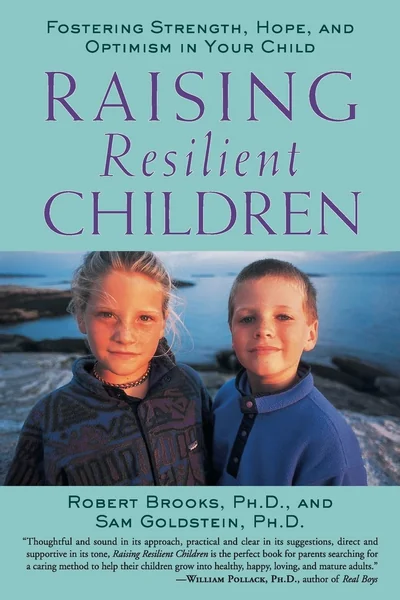
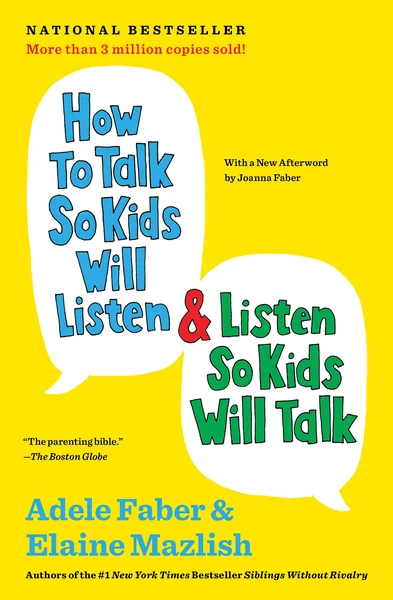
- Readers drawn to The Power of Showing Up will find natural next reads among Siegel and Bryson's own catalog: No-Drama Discipline: The Whole-Brain Way to Calm the Chaos and Nurture Your Child's Developing Mind applies the same brain-based framework to managing difficult behavior, while The Whole-Brain Child: 12 Revolutionary Strategies to Nurture Your Child's Developing Mind laid the neuroscientific groundwork that this book builds on. For a resilience-focused angle, Raising Resilient Children: Fostering Strength, Hope, and Optimism in Your Child by Robert Brooks and Sam Goldstein offers complementary research on what helps children thrive long-term. How to Talk So Kids Will Listen & Listen So Kids Will Talk by Adele Faber and Elaine Mazlish is an enduring classic for caregivers who want to pair the relational philosophy here with concrete communication techniques. For readers interested in how attachment shapes adult relationships, Attached: The New Science of Adult Attachment and How It Can Help You Find — and Keep — Love by Amir Levine and Rachel Heller extends the attachment science lens into adulthood.
- Who should read this?
- The Power of Showing Up is designed for parents and caregivers at any stage of a child's life who want to understand the relational and neurological basis of healthy development — not just what to do, but why presence matters at a foundational level. It is particularly well-suited to caregivers who did not experience secure attachment in their own childhoods, as the book includes reflective questions in each section specifically designed to help readers examine their formative experiences. Readers already deeply familiar with Siegel and Bryson's earlier brain-based parenting titles may find the neuroscientific framework covers familiar ground. Those seeking age-specific behavioral scripts or guidance for specific diagnoses will want additional resources alongside this one.
- Where should I start with Siegel and Bryson?
- Siegel and Bryson's collaborative work forms a coherent series: The Whole-Brain Child introduced the brain-based parenting framework and is widely regarded as the natural entry point. No-Drama Discipline applied those ideas specifically to managing challenging behavior, and The Power of Showing Up zooms out to focus on the foundational importance of consistent parental presence and attachment. A reader new to their work could start with any title, but reading The Whole-Brain Child first gives the clearest grounding in the neuroscientific concepts that all three books share.
- Does it address parents with difficult childhoods?
- This is one of the book's most distinctive and praised features. Rather than treating a reader's own difficult upbringing as a disqualifier from effective parenting, Siegel and Bryson build in a reflective mechanism: each section includes questions designed to help parents examine their formative experiences and understand how those shape their current parenting style. Publishers Weekly specifically highlighted this intergenerational lens as part of what makes the book 'encouraging and empowering.' The goal, as the authors frame it, is not perfection but the repair of ruptures — the idea that consistent reconnection matters more than an unbroken record of ideal responses.
- What are its limitations?
- The Power of Showing Up has two main limitations worth knowing in advance. First, readers already familiar with Siegel and Bryson's earlier titles — particularly The Whole-Brain Child — may find that the attachment-science and interpersonal-neurobiology foundation covers well-trodden ground, as the neuroscientific underpinning overlaps significantly across their body of work. Second, the book is deliberately focused on the relational and neurological dimensions of parenting; it does not offer exhaustive, age-specific behavioral strategies or diagnosis-specific guidance, so parents seeking that kind of granular, situation-by-situation advice will need to supplement it with additional resources.
Summarize this book
Follow up
Synthesized from verified book data & published reviews · How we review
Press Enter to ask. Answers come from our editorial Q&A — start typing to see related questions.
Age & Reading Level
Recommended age
Adult
Reading level
Adult
who it suits
Skip if you're looking for age-specific behavioral scripts or diagnosis-focused strategies rather than a relational and conceptual framework.
Our Review
What the Book Actually Argues
The Four S's Framework
The Authors' Credentials and the Book's Place in the Field
What the Book Does Well
Who Will Get the Most from This Book — and Where It Has Limits
Sources & Further Reading
The key facts and claims in this review are grounded in the retrieved, verified sources listed below.
- Cited in this review
- 1
- 2
- 3
- Further reading
- 4
tinabryson.com
- 5
Books like The Power of Showing Up
Curated picks for readers who enjoyed The Power of Showing Up, with our reasoning for each match.
More by Daniel J. Siegel and Tina Payne Bryson
If you liked The Power of Showing Up