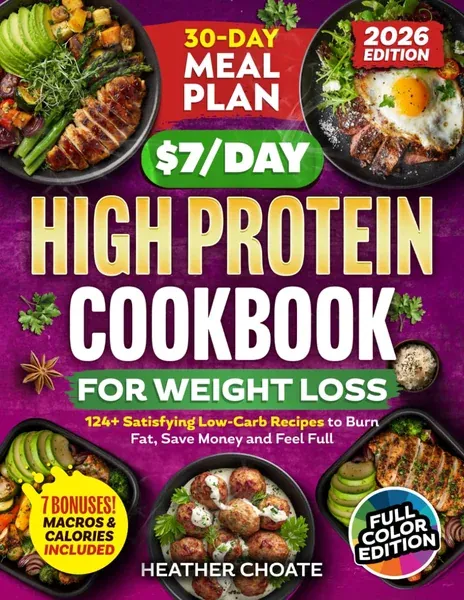
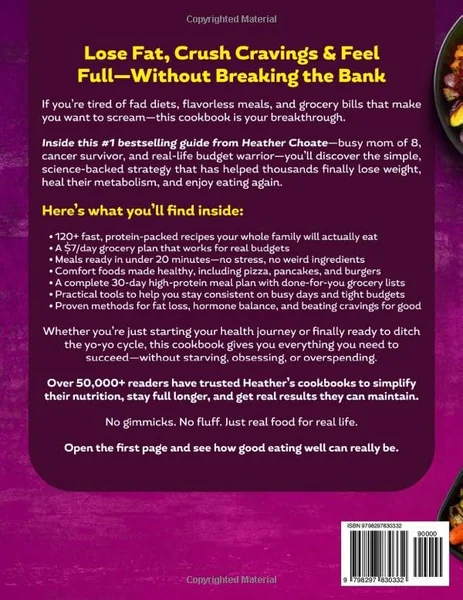
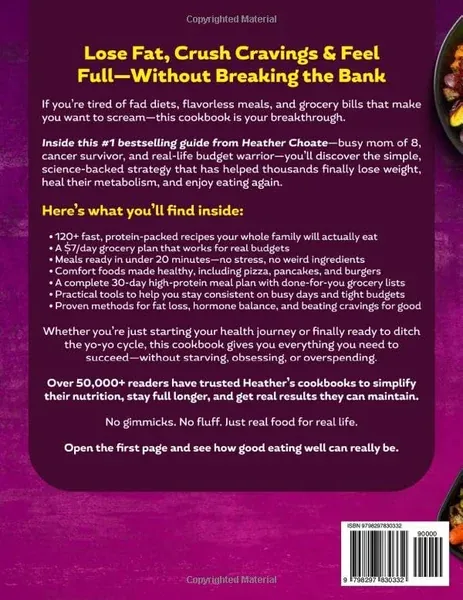
Is The $7/Day High Protein Cookbook worth your grocery budget? In a world where healthy eating often comes with premium prices, Heather Choate promises high-protein, weight-loss-friendly meals for just seven dollars per day. The bold claim immediately raises questions: Can quality nutrition really fit such a tight budget, or is this another case of cookbook math that doesn't add up in real kitchens?
The vibrant cover showcases appetizing food photography in pink and purple tones, suggesting the meals inside might actually look as good as they taste. For those comparing budget-friendly options, this cookbook positions itself as a practical alternative to expensive meal delivery services or complex diet programs that require specialty ingredients.
The Core Promise and Methodology
Heather Choate structures her approach around the intersection of high protein intake and strict budget constraints. The cookbook contains 124 recipes designed to keep daily food costs at seven dollars while maintaining protein levels that support weight loss and muscle preservation. The 30-day meal plan serves as the cookbook's backbone, providing users with a complete roadmap rather than leaving them to piece together random recipes.
Choate emphasizes "eating healthy without the stress," suggesting this isn't just about saving money but simplifying the entire meal planning process. Each recipe includes nutritional information and cost breakdowns, allowing users to track both their macros and their spending. This dual focus on nutrition and economics sets it apart from cookbooks that ignore the financial reality of healthy eating.
Recipe Quality and Practical Application
The 124 recipes span breakfast, lunch, dinner, and snack options, with particular attention to protein-rich ingredients that deliver satiety. The book includes guidance to help users adapt recipes to their local grocery prices and seasonal availability. Heather Choate recognizes that a seven-dollar budget in rural Montana differs significantly from the same amount in downtown San Francisco.
The recipes emphasize accessible proteins like eggs, canned tuna, chicken thighs, and legumes rather than expensive cuts of meat or exotic ingredients. This approach makes the cookbook suitable for beginners to both budget cooking and high-protein eating. The instructions are straightforward, assuming basic kitchen skills without requiring specialized equipment or techniques.
However, the recipe variety faces inevitable constraints from the tight budget. While 124 recipes sounds substantial, many rely heavily on similar protein sources and preparation methods. Cooks seeking culinary adventure may find the options repetitive after the first few weeks.
The 30-Day Meal Plan Structure
The meal plan provides the cookbook's greatest value, offering day-by-day guidance that eliminates decision fatigue. Heather Choate maps out exactly which recipes to prepare when, includes shopping lists organized by week, and provides prep-ahead strategies to maximize efficiency. This systematic approach addresses the primary challenge most cookbook users face: translating individual recipes into coherent meal planning.
The plan accounts for batch cooking and strategic ingredient reuse, showing how a whole chicken can provide protein for multiple meals throughout the week. For cooks who want detailed guidance rather than creative freedom, this structure proves invaluable. The shopping lists include cost estimates for different regions, though these figures will require adjustment based on local prices and seasonal fluctuations.
Where the Budget Math Gets Complicated
The main weakness lies in the cookbook's relationship with grocery price reality. While Choate provides cost estimates, actual prices vary dramatically by location, season, and store choice. The seven-dollar daily target becomes more challenging in areas with higher food costs or limited access to discount grocery options.
The cookbook also doesn't fully account for the initial investment in pantry staples. While recipes call for common spices and cooking basics, users starting from scratch may find their first shopping trips exceed the daily budget significantly. The bottom line is that this cookbook works best for people who already have basic pantry items and access to reasonably priced grocery stores.
Additionally, some recipes stretch the definition of "easy" by requiring multiple steps or extended cooking times. While the techniques aren't complex, the time investment may challenge busy cooks who expected truly simple meal solutions.
Nutritional Approach and Weight Loss Claims
Heather Choate combines high protein intake with moderate carbohydrate restriction, following established principles for weight management and appetite control. The recipes generally provide 25-35 grams of protein per serving, which aligns with research on protein's role in satiety and muscle preservation during weight loss.
However, the cookbook makes bold claims about "burning fat naturally" and "boosting metabolism" that aren't fully supported by the nutritional content alone. While high-protein diets do offer metabolic advantages, users should expect gradual weight loss through calorie control rather than dramatic metabolic transformation. The cookbook works best for those with cooking experience who understand that sustainable weight loss requires consistent calorie management alongside protein optimization.
Our Take
The $7/Day High Protein Cookbook delivers on its core promise of budget-conscious, protein-rich recipes, though with important caveats about regional price variations and realistic expectations. Highly recommended for cooks who prioritize meal planning structure and don't mind limited recipe variety in exchange for financial discipline.
The cookbook shines brightest as a meal planning system rather than a traditional recipe collection. Those seeking culinary inspiration or extensive recipe variety should look elsewhere, but cooks who want practical guidance for budget management combined with solid nutritional principles will find genuine value.
Not recommended for those in high-cost living areas without access to discount grocery stores, or those expecting gourmet meals on a shoestring budget. The seven-dollar target requires strategic shopping and realistic expectations about ingredient quality and variety.
Where to Buy
You can find The $7/Day High Protein Cookbook for Weight Loss at Amazon, local bookstores, or directly from the publisher for the most current pricing and availability.