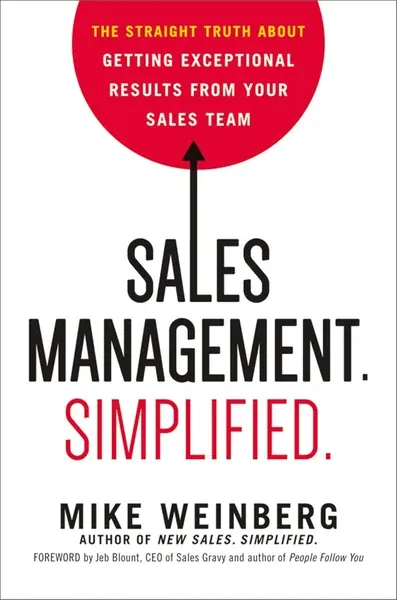
No-Nonsense Management Philosophy
Weinberg's central thesis challenges the overly analytical approach many organizations take toward sales management. He argues that effective sales management requires clear priorities, consistent execution, and the courage to make difficult decisions. Rather than drowning managers in complex methodologies, the book emphasizes fundamental principles that often get overlooked in corporate environments.
The author's framework centers on three core responsibilities: selecting the right people, creating focused activity plans, and maintaining accountability through regular coaching. This simplified approach deliberately avoids the feature-heavy management systems that often overwhelm new sales leaders. Weinberg contends that most sales teams fail not because they lack sophisticated tools, but because they lack disciplined execution of basic management practices.
His writing style matches his management philosophy—direct, conversational, and free from unnecessary jargon. Each chapter builds logically toward specific action items, making the content accessible to managers at various experience levels. The tone remains professional while acknowledging the frustrations many sales leaders experience when dealing with underperforming teams.
Practical Frameworks That Actually Work
The book's strength lies in its actionable advice that managers can implement within weeks rather than months. Weinberg provides specific templates for sales meetings, performance reviews, and territory planning that eliminate guesswork from critical management tasks. His approach to pipeline management emphasizes simplicity over sophistication, focusing on metrics that directly correlate with revenue generation.
For managers struggling with team accountability, Weinberg offers a structured coaching model that balances support with performance expectations. His methodology for conducting effective one-on-one meetings provides a framework that ensures consistent communication without micromanaging individual salespeople. The book includes specific conversation starters and follow-up strategies that help managers maintain productive relationships while driving results.
The territory and account planning sections deliver particularly valuable insights for managers overseeing multiple sales representatives. Weinberg's approach to resource allocation helps leaders make strategic decisions about where to invest time and energy for maximum impact. His frameworks for evaluating sales opportunities provide practical tools for forecasting accuracy.
Where Theory Meets Street-Level Reality
Unlike most sales management books that assume ideal conditions, Weinberg addresses the messy realities of leading sales teams in competitive environments. He tackles common scenarios like managing underperformers, dealing with demanding clients, and navigating organizational politics that affect sales outcomes. This practical focus makes the book particularly valuable for managers who need immediate solutions rather than long-term strategic planning.
The author's discussion of hiring practices provides concrete guidance for building effective sales teams from the ground up. His interview techniques and evaluation criteria help managers avoid common recruiting mistakes that lead to expensive turnover. Weinberg emphasizes cultural fit alongside skill assessment, recognizing that technical competence alone doesn't guarantee sales success.
The main weakness of this approach is its limited applicability to complex B2B sales environments that require sophisticated relationship management. Managers overseeing enterprise sales cycles or technical product sales may find the frameworks too simplified for their specific challenges. The book assumes relatively straightforward sales processes that don't always match modern business realities.
Implementation Challenges and Limitations
While Weinberg's strategies offer clear direction, the book provides limited guidance for managers operating within larger organizational constraints. For readers working in heavily regulated industries or companies with established sales methodologies, implementing these recommendations may require significant adaptation. The author's emphasis on simplicity sometimes conflicts with compliance requirements or corporate reporting standards.
The book also shows its 2015 publication date in its limited discussion of digital selling tools and remote team management. Modern sales managers dealing with distributed teams or social selling strategies will need to supplement this guidance with more current resources. Weinberg's frameworks remain sound, but the tactical execution may require updating for contemporary sales environments.
The bottom line: this book excels at providing fundamental management principles but may leave experienced sales leaders wanting more sophisticated approaches to complex challenges. New managers will find tremendous value in the basic frameworks, while seasoned leaders might use it primarily as a back-to-basics resource during team restructuring periods.