

8 min read
4.6
· 20 Amazon ratingsShare This Review
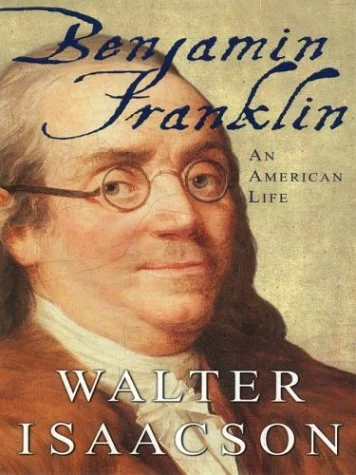
Benjamin Franklin: An American Life by Walter Isaacson Review: A Richly Researched Portrait of a Founding Father
Walter Isaacson's Benjamin Franklin: An American Life is a comprehensive biography of Benjamin Franklin — statesman, scientist, printer, and Founding Father — that traces the full arc of his remarkable life while arguing for his enduring relevance to American identity, pragmatism, and political thought.
LuvemBooks Verdict
Best for
Readers who want a single, sweeping authoritative biography of Benjamin Franklin that covers his full range as printer, scientist, inventor, diplomat, and Founding Father — and who are drawn to narrative-driven, accessible biography over academic scholarship.
Worth it if
Worth reading if you want an enthusiastic, well-sourced portrait of Franklin that also advances a compelling thesis about how each era reinterprets his legacy as a reflection of its own values.
Skip if
Skip it if you're seeking a skeptical or revisionist account of Franklin — Isaacson's openly admiring stance and the biography's ambitious breadth mean critical distance and granular depth in any single area are occasionally sacrificed.
What readers & critics say
Kirkus Reviews called it "a solid contribution to Frankliniana" and a "nicely done life" of Franklin, while noting it is "a little less sophisticated" than H.W. Brands's competing biography. Wikipedia's summary of critical reception records praise from multiple publications including Foreign Affairs and The Guardian, and the New York Times review (retrieved via thebestbiographies.com) observed that Isaacson engages in "a bit of scholarly overkill" with its extensive apparatus of appendices and notes.
“A little less sophisticated than H.W. Brands's The First American, but a solid contribution to Frankliniana all the same.”
— Kirkus ReviewsAge & Reading Level
Recommended age
Adult
Reading level
Adult
who it suits
Skip if you want a skeptical, revisionist, or critically distanced account of Franklin's life and legacy.
Benjamin Franklin: An American Life by Walter Isaacson is Trending
Benjamin Franklin Biography Sees Renewed Reader Interest Ahead of 2026 U.S. Elections
With American political identity and civic values front of mind for a lot of readers right now, Isaacson's biography of Franklin is drawing fresh attention. It's the kind of book people reach for when they want grounding in what the American experiment was actually supposed to look like.
We're in a period where a lot of readers are turning to Founding Father biographies — not out of nostalgia, but out of genuine curiosity about the ideas and compromises that shaped American democracy. Isaacson's Franklin fits that mood well. It's thorough without being dry, and it presents Franklin as a practical, self-made thinker rather than a marble statue — which feels surprisingly relevant right now.
Franklin, in Isaacson's telling, was someone who believed in negotiation, civic responsibility, and building things that actually worked. Those themes resonate differently depending on the political moment, and right now, a lot of readers are hungry for that kind of perspective. This book has been around since 2003, but it keeps finding new audiences whenever Americans are asking big questions about who they are and where they came from.
If you haven't read it yet, it's a solid entry point — accessible enough for casual readers but detailed enough for history buffs. And if you've already read it, this might be a good time to revisit it.
In This Review
- What Works & What Doesn't
- What the Book Is and What It Argues
- Scope and the Breadth of Franklin's Legacy
- Isaacson's Central Thesis on Franklin's Enduring Resonance
- Critical Reception and Strengths
- Who This Book Is For and One Noted Limitation
What Works & What Doesn't
What Works
- Praised by Critics as 'a lively, readable, and affecting book,' and also commended by Foreign Affairs
- Engages Franklin's full range — as printer, scientist, inventor, diplomat, and statesman — rather than reducing him to a single role
- Advances a thought-provoking thesis about how each era reinterprets Franklin as a reflection of its own values
- Presents a nuanced personal portrait, addressing both Franklin's emotional distance as a father and his genuine intellectual warmth in friendship
- Publisher describes the narrative as 'colorful and intimate,' designed to convey the full sweep of Franklin's life
What Doesn't
- Isaacson's deep admiration for Franklin has been noted as tipping toward celebration over critical distance, which may disappoint readers seeking a more skeptical biographical perspective
- The biography's ambitious scope — spanning science, politics, printing, and diplomacy — means individual areas receive less granular depth than a more focused study might provide
What the Book Is and What It Argues
Scope and the Breadth of Franklin's Legacy
Isaacson's Central Thesis on Franklin's Enduring Resonance
Critical Reception and Strengths
Who This Book Is For and One Noted Limitation
Frequently Asked Questions
Sources & Further Reading
The key facts and claims in this review are grounded in the retrieved, verified sources listed below.
- Cited in this review
- 1
classicbooksandephemera.com
- 2
theinvestorspodcast.com
- 3
- Further reading
- 4
Walter Isaacson, Wikipedia
- 5
- 6
en.wikipedia.org
- 7
repositories.lib.utexas.edu
- 8
nytimes.com
- 9
- 10
- 11
Related Reviews
Reviews of books we picked for readers who enjoyed Benjamin Franklin.

Reader Comments
No comments yet
Be the first to share your thoughts!