BOOKS
Published

Read Time

3 min read

Curated & edited by

LuvemBooks Editorial

How we create our reviews →
Share This Review

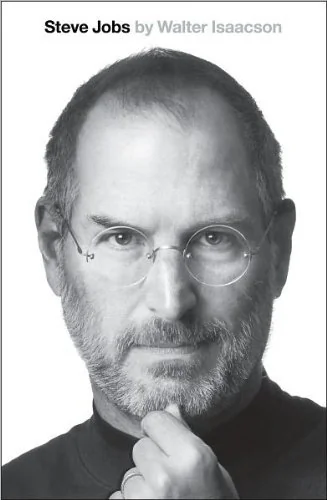
Steve Jobs by Walter Isaacson Review: A Monumental Authorized Biography Worth Reading

Walter Isaacson's *Steve Jobs* is the authorized biography of Apple co-founder Steve Jobs, built on more than forty interviews with Jobs over two years and over one hundred additional interviews with family members, friends, colleagues, competitors, and adversaries. Released by Simon & Schuster on October 24, 2011 — nineteen days after Jobs's death — it stands as a comprehensive, unflinching account of a figure who reshaped personal computers, animated movies, music, phones, tablet computing, and digital publishing. A worldwide bestseller, it is essential reading for anyone seeking to understand both the creative genius and the deeply flawed humanity of one of the most consequential figures in modern technological history.

LuvemBooks Verdict

Best for

Readers who want the most authoritative, access-rich account of Steve Jobs's life — from Apple's founding through his death — including the internal workings of Silicon Valley's most mythologised company and the personal costs of Jobs's relentless perfectionism.

Worth it if

You want to understand not just what Jobs built but how he actually operated — and you value vivid, anecdote-driven biography grounded in more than 140 interviews conducted with Jobs's own encouragement to speak honestly.

Skip if

You're seeking a rigorous critical deconstruction of the Jobs mythology rather than a deeply sourced but ultimately subject-adjacent portrait that The Guardian noted was "designed to serve the cult" around him.

What readers & critics say

The Guardian called the book "monumental" and "studded with moments that make you go 'wow,'" while also noting that corporate PR language — particularly the word "passion" — periodically pulls Isaacson's prose toward press-release register. The New York Times found it does "its solid best" to match its extraordinary subject, describing Jobs as "a brilliant and protean creator," and Kirkus Reviews concluded that Isaacson's "impeccably researched, vibrant biography" amounts to a portrait that is, "to quote Jobs, insanely great," even if the narrative could have used a tighter edit in places.

The empty vocabulary of corporate PR sometimes seeps into Isaacson's prose, as exemplified by the recurrence of the word 'passion.'

The Guardian

Jobs, the brilliant and protean creator… He gave Mr. Isaacson a chance to play by the same rules. 'Steve Jobs' does its solid best.

The New York Times

Isaacson's portrait of this complex, often unlikable genius is, to quote Jobs, insanely great.

Kirkus Reviews

Steve Jobs is not literature, but it is a good book, but alas with several holes and egregious errors.

Daring Fireball
Sources: The Guardian, The New York Times, Kirkus Reviews
4.6from 140 Amazon ratings— reader ratings, not a LuvemBooks score
In This Review
  • What Works & What Doesn't
  • What the Book Is and How It Was Made
  • The Subject: A Businessman of Astonishing Flair
  • Strengths: Access, Candor, and Defining Anecdotes
  • Limitations: Prose and Framing
  • Who This Book Is For

What Works & What Doesn't

What Works
  • Built on more than forty interviews with Jobs himself and over one hundred interviews with family, colleagues, adversaries, and competitors, giving it a depth of access rare in authorized biography
  • Jobs waived editorial control over content and encouraged interviewees to speak honestly, lending the book unusual candor for an authorized account
  • Captures Jobs's personality through vivid, specific anecdotes — such as the famous hospital mask episode — rather than abstraction
  • Chronicles major milestones in concrete detail, including the Apple IPO, the 1997 turnaround from a $1.04 billion loss, and the iTunes Store's launch figures
  • Recognized as a worldwide bestseller and reviewed as a 'monumental' work by The Guardian
What Doesn't
  • The Guardian's review noted that corporate PR language — particularly the word 'passion' — periodically weakens the prose, pulling it toward press-release register
  • As The Guardian observed, the book was structured to serve the considerable cultural 'cult' around Jobs, which readers seeking sustained critical distance from his mythology may find limiting
A worldwide bestseller grounded in extraordinary access, Steve Jobs is the definitive authorized account of a man who transformed six industries and left a polarizing legacy that this biography neither sanitizes nor sensationalizes.

What the Book Is and How It Was Made

Steve Jobs is an authorized biography, written at the request of Jobs himself, by Walter Isaacson — a former executive at CNN and Time who had previously written bestselling biographies of Benjamin Franklin and Albert Einstein. Isaacson was granted what Wikipedia's summary of the book's production describes as "unprecedented" access to Jobs's life, conducting more than forty interviews with him over two years. Jobs additionally encouraged the more than one hundred family members, friends, adversaries, competitors, and colleagues whom Isaacson interviewed to speak honestly. Crucially, Jobs sought no control over the book's content beyond approval of the cover design, and waived the right to read it before publication. That editorial independence — rare in an authorized biography of a living subject — gives the book a credibility that distinguishes it from a hagiography. The book was published by Simon & Schuster on October 24, 2011, nineteen days after Jobs's death.

The Subject: A Businessman of Astonishing Flair

The biography traces Jobs across the full arc of his life: his early years, the founding of Apple, the spectacular Apple IPO that made the twenty-five-year-old Jobs $256 million, his ousting from the company, and his return as CEO in 1997 — when, in the previous fiscal year, Apple had lost $1.04 billion, and Jobs returned it to profit within his first quarter. Isaacson also chronicles the launch of the iTunes Store, which was expected to sell one million songs in six months and sold one million songs in six days. As The Guardian observed in its review, Isaacson makes clear that Jobs was not a visionary engineer in the technical sense, but rather "a businessman of astonishing flair and focus, a marketing genius" with an intuitive sense of what customers would want before they knew it themselves — a man obsessed with products over profit, who discovered that getting the products right made the profit follow.

Strengths: Access, Candor, and Defining Anecdotes

The book's greatest asset is the depth and candor of its sourcing. Because Jobs encouraged interviewees to speak without restraint, and because Isaacson explicitly aimed, in his own words, to take a balanced view that "did not sugarcoat Jobs's flaws," the biography captures dimensions of Jobs that authorized accounts rarely deliver. The Guardian's review highlighted one emblematic anecdote: in 2009, recovering from a liver transplant and barely able to speak, Jobs ripped a medical mask off his face mid-sedation, declared he hated the design, and demanded that five different options be brought so he could choose one he approved of. That single scene encapsulates the biography's ability to illuminate Jobs's personality — his perfectionism, his control, his abrasiveness — through the texture of lived moments rather than abstract characterization. The Guardian described the book as "monumental" and noted it is "studded with moments that make you go 'wow.'" The New York Times characterized it as doing "its solid best" to meet the standard set by its subject, calling Jobs "a brilliant and protean creator."

Limitations: Prose and Framing

No biography of this scale is without fault, and critics have identified specific weaknesses in the writing itself. The Guardian's review noted that "the empty vocabulary of corporate PR sometimes seeps into Isaacson's prose," pointing to the repeated use of the word "passion" — Jobs's "passion for perfection," "passion for industrial design," "passion for awesome products" — as a symptom of language that occasionally slips into the register of a press release rather than serious biography. The Guardian also observed that, while the book does not whitewash Jobs, it was "designed to serve the cult" that sprang up around him, and readers approaching it expecting sustained critical distance from its subject's mythology may find that framing a limitation. The New York Times similarly noted that the book does its "solid best" rather than fully achieving the clean elegance that Jobs's own aesthetic would have demanded of it.

Who This Book Is For

Steve Jobs is a landmark work of business and technological biography, essential for readers interested in the history of Silicon Valley, the development of Apple, and the nature of creative leadership. Simon & Schuster's synopsis credits the book with documenting how Jobs's "passion for perfection and ferocious drive revolutionized six industries: personal computers, animated movies, music, phones, tablet computing, and digital publishing." For readers who want to understand not just what Jobs built but how he operated — and at what personal and professional cost to those around him — this biography, grounded in more than 140 interviews and the subject's own cooperation, remains the primary record. It was adapted into a 2015 film written by Aaron Sorkin and directed by Danny Boyle, with Michael Fassbender in the title role, a testament to the reach of the narrative Isaacson assembled.

Sources & Further Reading

The key facts and claims in this review are grounded in the retrieved, verified sources listed below.

  1. Cited in this review
  2. 1
  3. 2
    Steve Jobs by Walter IsaacsonHigh-authority source

    ig.ft.com

  4. Further reading
  5. 3

    Walter Isaacson, Wikipedia

  6. 4
  7. 5
  8. 6
  9. 7
  10. 8
  11. 9
  12. 10
  13. 11
  14. 12
  15. 13
  16. 14
Related Reviews

Reviews of books we picked for readers who enjoyed Steve Jobs.