
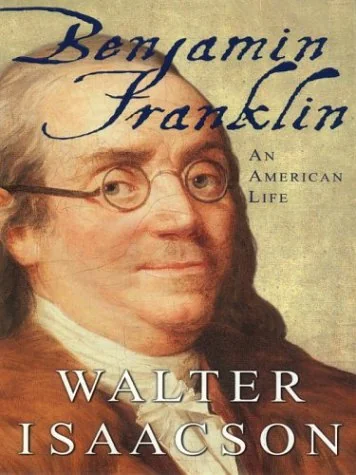
At a glance
LuvemBooks Verdict
Best for: Readers who want a single, sweeping authoritative biography of Benjamin Franklin that covers his full range as printer, scientist, inventor, diplomat, and Founding Father — and who are drawn to narrative-driven, accessible biography over academic scholarship.
Worth it? Skip it? Read the full verdict →Ask LuvemBooks
Was this helpful?
- Is it worth reading?
- For readers seeking a single, authoritative, and highly readable account of Franklin's full life, the LuvemBooks assessment is that this biography delivers. Critics called it "a lively, readable, and affecting book" and noted that Isaacson "makes us admire [Franklin] too," while Foreign Affairs also published a praising commentary from historian Walter Russell Mead. The primary caveat is that Isaacson's deep admiration for his subject tips the portrait toward celebration rather than critical distance, so readers wanting a more skeptical or revisionist account of Franklin may find the fundamentally appreciative stance a constraint.
- Similar books
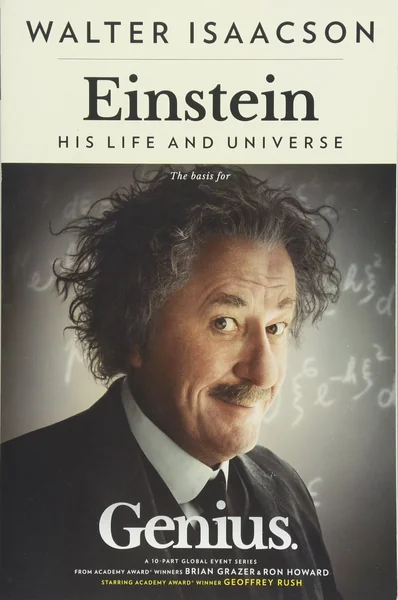
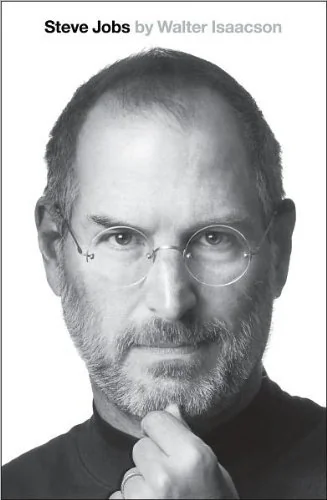
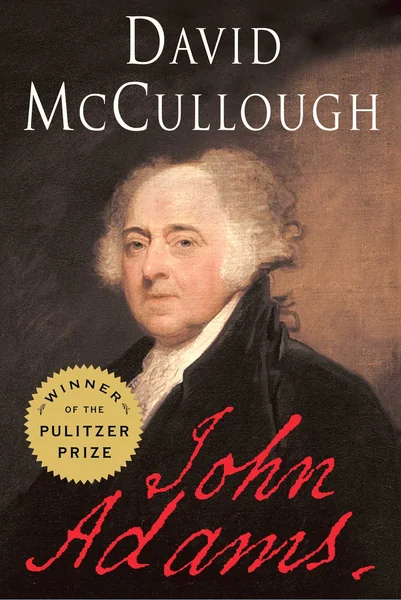
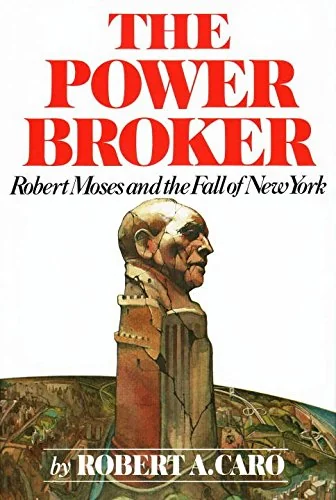
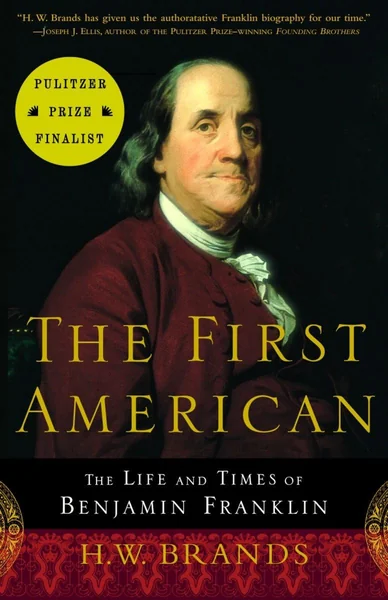
- Readers who enjoy this biography will find much to explore in the curated selections below. Walter Isaacson brings the same sweeping, narrative-driven approach to Einstein: His Life and Universe and Steve Jobs — both of which trace a multifaceted genius across his full life and legacy. For comparable treatment of other Founding-era figures, David McCullough's John Adams and Ron Chernow's Alexander Hamilton offer similarly authoritative, large-scale portraits. H. W. Brands' The First American: The Life and Times of Benjamin Franklin provides an alternative scholarly take on Franklin himself, while Robert A. Caro's The Power Broker: Robert Moses and the Fall of New York and Martin Gilbert's Churchill: A Life represent the pinnacle of exhaustive, narrative biography in the broader tradition.
- Who should read this?
- This biography is best suited to general adult readers who want a single, comprehensive, and narrative-driven account of Benjamin Franklin's life spanning his roles as printer, scientist, inventor, diplomat, and Founding Father. It is particularly valuable as an entry point for readers new to Franklin or to Revolutionary-era biography, given its accessible prose and breadth of coverage. Readers who already have deep specialist knowledge of one aspect of Franklin's career — his science, say, or his diplomacy — may find the broad scope means individual areas receive less granular depth than a more focused study, but as a panoramic portrait it is widely praised as authoritative.
- About Walter Isaacson
- Walter Seff Isaacson is an American journalist who has written biographies of Henry Kissinger, Benjamin Franklin, Leonardo da Vinci, Albert Einstein, Steve Jobs, Jennifer Doudna, and Elon Musk. LuvemBooks has also reviewed his biographies Steve Jobs and Einstein: His Life and Universe.
- Why is this book trending?
- Benjamin Franklin: An American Life is experiencing a resurgence as readers turn to it amid current national conversations about American identity, economic inequality, and the role of government. Franklin — the self-made pragmatist who helped shape the philosophical foundations of the United States — feels newly relevant as those same foundational questions are debated today. Isaacson's biography has become the go-to starting point for anyone wanting to understand where American ideas about money, power, and democracy originated.
- How does this compare to his other biographies?
- Benjamin Franklin: An American Life shares the sweeping, narrative-driven approach Isaacson brought to Einstein: His Life and Universe and Steve Jobs — in each case, he resists reducing a multifaceted figure to a single role and instead treats the various dimensions of a life as interlocking. The Franklin biography is distinctive for its analytical thesis about reputation across time: the argument that Franklin "has been vilified in romantic periods and lionised in entrepreneurial ones" gives it a historiographical depth that goes beyond pure chronicle. As with his other subjects, the noted limitation is Isaacson's tendency toward admiration over critical distance.
- What are the main themes?
- The biography's central themes are American pragmatism, self-invention, and the relationship between individual achievement and civic responsibility. Isaacson argues that Franklin embodied a philosophy of "practical benevolence" — a pragmatic approach to existence that distinguishes his legacy from other strands of American thought. The book also engages deeply with how historical reputations are constructed and reconstructed: the argument that each era appraises Franklin anew as a reflection of its own values elevates the biography beyond chronicle into a meditation on American identity itself.
Summarize this book
Follow up
Synthesized from verified book data & published reviews · How we review
Press Enter to ask. Answers come from our editorial Q&A — start typing to see related questions.
Age & Reading Level
Recommended age
Adult
Reading level
Adult
who it suits
Skip if you want a skeptical, revisionist, or critically distanced account of Franklin's life and legacy.
Editorial Review
Walter Isaacson's Benjamin Franklin: An American Life is a comprehensive biography of Benjamin Franklin — statesman, scientist, printer, and Founding Father — that traces the full arc of his remarkable life while arguing for his enduring relevance to American identity, pragmatism, and political thought.
Read the Full ReviewBooks like Benjamin Franklin
Curated picks for readers who enjoyed Benjamin Franklin, with our reasoning for each match.
More by Walter Isaacson
If you liked Benjamin Franklin
Why It’s Trending
Benjamin Franklin Biography Sees Renewed Reader Interest Ahead of 2026 U.S. Elections
With American political identity and civic values front of mind for a lot of readers right now, Isaacson's biography of Franklin is drawing fresh attention. It's the kind of book people reach for when they want grounding in what the American experiment was actually supposed to look like.