Exploring Death-Cast's Launch Day
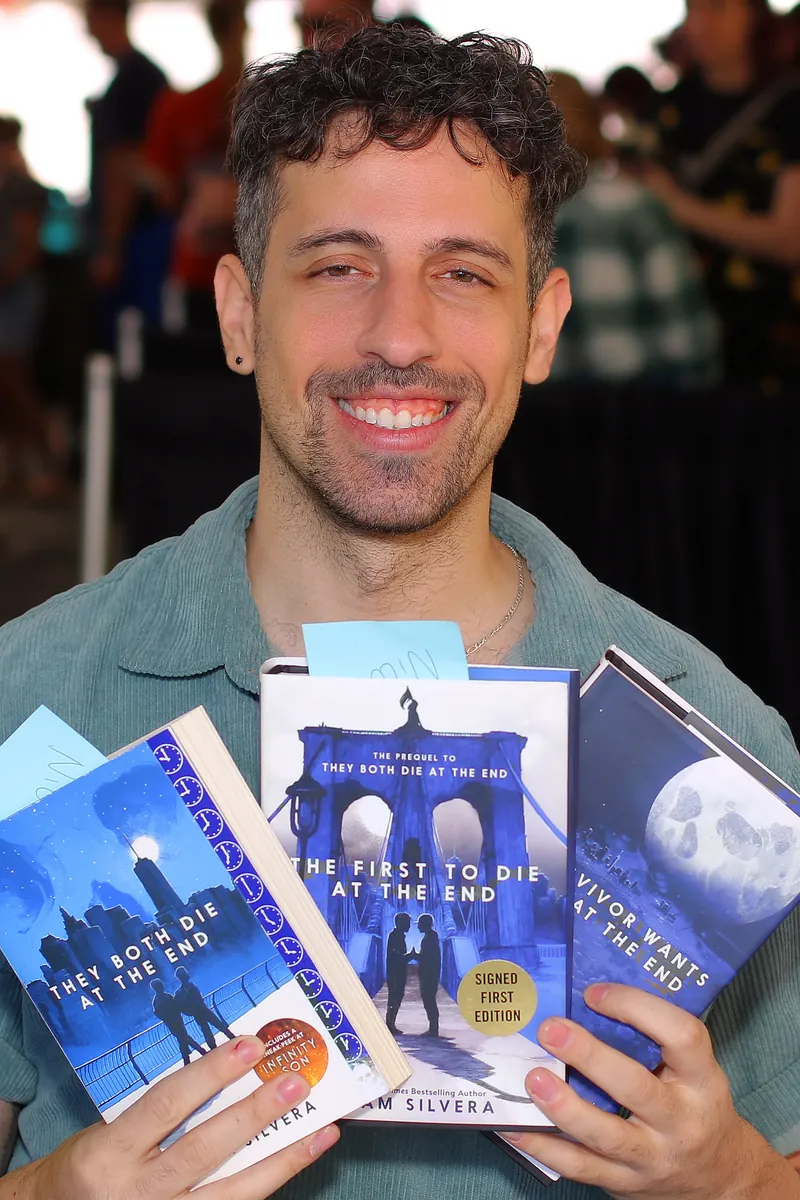
Silvera explains that he had not initially intended to write a prequel, but was intrigued to depict the chaos, doubts, and enthusiasm of Death-Cast's very first day.

9 min read
4.6
· 2,903 Amazon ratings
The First to Die at the End by Adam Silvera Review: A Bittersweet Prequel That Earns Its Heartbreak
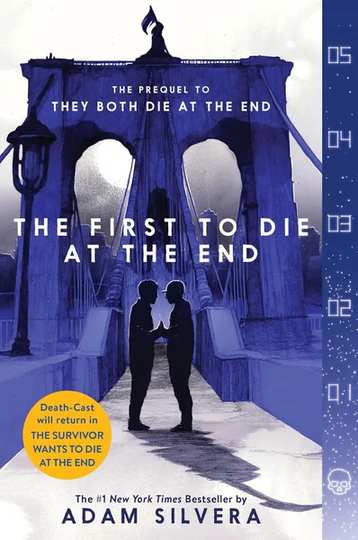
A #1 New York Times bestselling prequel to They Both Die at the End, The First to Die at the End follows two strangers who find each other on the night Death-Cast first goes live — one receiving the fateful call, one not — and choose to spend what may be their last hours together. Adam Silvera's signature bittersweet storytelling and a tightly wound single-day structure make this a compelling, emotionally charged work of speculative YA fiction for readers 14 and up.
Best for
Readers aged 14 and up who loved They Both Die at the End and want more of Silvera's emotionally precise, bittersweet YA fiction — particularly those drawn to queer romance, speculative world-building, and stories that wrestle with mortality and the urgency of living fully.
Worth it if
Worth reading if you respond to high-concept speculative premises that double as intimate character studies, and if you find catharsis — rather than exhaustion — in emotionally heavy, compressed narratives about love and loss.
Skip if
Skip it if you find sustained emotional weight draining rather than cathartic, or if you prefer YA fiction with structural variety and narrative breathing room across a longer arc — the single-day format and the built-in inevitability of loss leave little room for relief.
What readers & critics say
Reviewers at bookishelf.com praised Silvera's pacing, noting that "even in a novel set within one day, every moment feels earned, measured, and memorable," and highlighted dialogue that "feels lived-in, not performed." Hisandhersbookclub.com described it as "a tender, tense, and quietly devastating story that earns every emotional beat," adding that "the romance is genuine, not a trendy checkbox." Funfandomblog.wordpress.com and utopia-state-of-mind.com both independently flagged Silvera's signature heartbreak as the novel's defining quality, with the latter calling it "incredibly emotional" and crediting him with "a signature type of heartbreak."
Sources: bookishelf.com, hisandhersbookclub.com, funfandomblog.wordpress.com, utopia-state-of-mind.com, audible.comPrequel · 3 books + 1 announced
Was this helpful?
Summarize this book
Follow up
Synthesized from verified book data & published reviews · How we review
Answers come from our editorial notes on this book. If we haven't covered something, we'll say so.
Readers often ask
The key facts and claims in this review are grounded in the retrieved, verified sources listed below.
Adam Silvera, LuvemBooks
hisandhersbookclub.com
towniebookscb.indielite.org
Recommended age
Ages 14+
Reading level
Young adult
Tropes
From how readers describe it, not our own reading.
2 content notes · who it suits
Content to know about
Best for: Ages 14+ — the novel's emotional architecture of grief, mortality, and romantic connection under existential pressure suits readers with the maturity for sustained, bittersweet YA storytelling.
Skip if you need narrative relief or a hopeful resolution — the Death-Cast premise makes loss inevitable and the emotional weight is relentless by design.
Author Adam Silvera discusses writing 'The First to Die at the End', exploring the origins of Death-Cast, and introducing characters Orion and Valentino.
Uploaded by Headliner Chicago, 2023 · Watch on YouTube
Silvera explains that he had not initially intended to write a prequel, but was intrigued to depict the chaos, doubts, and enthusiasm of Death-Cast's very first day.
Silvera shares that the story follows Orion and Valentino meeting in Times Square on Death-Cast Eve before one receives the company's inaugural death alert, turning their day into an unexpected love story.
Silvera explains that he wanted to explore Dalma Young's teenage years as Orion's tech-savvy best friend who conceives the idea for the Last Friend app.
Be one of the first readers to answer.
Read it? Was it right for you?
Curated picks for readers who enjoyed The First to Die at the End, with our reasoning for each match.
If you liked The First to Die at the End