BOOKS
Published

Read Time

3 min read

Curated & edited by

LuvemBooks Editorial

How we create our reviews →
Share This Review

LuvemBooks Verdict

Best for

Readers navigating a conscious life transition — a new year, career change, or personal reinvention — who want a low-friction daily practice of self-reflection rather than a cover-to-cover reading commitment.

Worth it if

You're drawn to incremental, habit-based personal growth and respond well to Wiest's accessible, affirmation-forward voice — or are simply looking for a motivational daily companion to return to across a full year.

Skip if

You're seeking sustained philosophical argument, narrative depth, or ideas that break fresh ground beyond Wiest's earlier works like The Mountain Is You — the single-page-per-day format is deliberately brief by design, and the thematic territory will feel familiar to existing readers of her catalogue.

What readers & critics say

Shopcatalog.com quotes Yoga Journal praising Wiest's daily meditations as something that "drew us into her world and compelled us to remain long enough to start to understand how to elicit more from yourself than you perhaps thought was there." Independent reader commentary, as captured on mwendekyalobookreviews.wordpress.com, describes the book's central focus as growth, change, and pivoting — with one reviewer noting they highlighted "almost the whole of it" before reluctantly finishing.

Sources: shopcatalog.com, mwendekyalobookreviews.wordpress.com, dianneglavas.com, readinista.com, collective.world
4.7from 3,284 Amazon ratings— reader ratings, not a LuvemBooks score

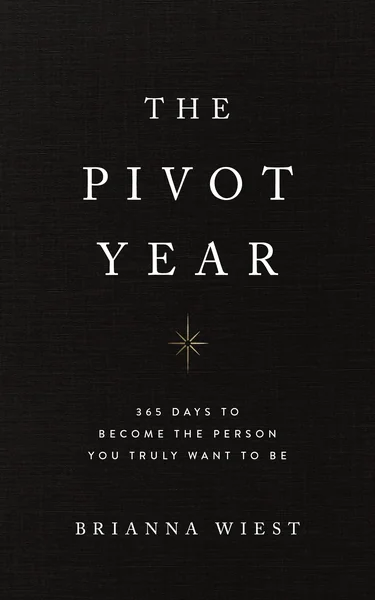
The Pivot Year by Brianna Wiest Review: A Daily Meditation Guide for Personal Transformation

by Brianna Wiest

·

3 min read

In This Review
  • What Works & What Doesn't
  • What the Book Actually Is
  • Significance and Place in Wiest's Body of Work
  • Strengths: Reception and Resonance
  • Limitations and Who May Be Frustrated
  • Who This Book Is For

What Works & What Doesn't

What Works
  • Structured as 365 standalone daily meditations, making it easy to integrate into an existing routine without large time commitments
  • Praised by Harper's Bazaar, Yoga Journal, and Hoda Kotb in People Magazine, reflecting broad cross-audience appeal
  • Named one of the best books of the 2020s by Women.com and one of the most helpful self-development books by Harper's Bazaar
  • Builds on themes from Wiest's acclaimed earlier works, offering a natural continuation for existing fans and an accessible entry point for new readers
  • The year-long format is designed to foster lasting habit formation rather than one-time reading, matching the book's core argument about daily practice
What Doesn't
  • Single-page daily entries are deliberately brief, which will frustrate readers seeking sustained argument or in-depth analytical exploration
  • Thematically continuous with Wiest's previous books — readers already familiar with her catalogue may find the ideas familiar rather than fresh
The Pivot Year is one of the most recognized self-help releases of the early 2020s, earning placement on Women.com's list of the best books of the decade and named by Harper's Bazaar as one of the most helpful self-development books available today.

What the Book Actually Is

The Pivot Year: 365 Days to Become the Person You Want to Be is structured as a year-long companion, delivering one page of reflection, advice, or meditation for each day of the calendar year. It is not a linear narrative memoir or a conventional how-to manual — it is a collection of 365 discrete entries, each written to stand alone as a daily touchpoint. The book's stated premise, as its publisher frames it, is that transformative change doesn't come from reaching for a bookshelf in a moment of crisis, but from having already internalized new ways of thinking. The daily format is the mechanism through which Wiest attempts to facilitate that internalization, encouraging readers to build the habit of reflection into the rhythm of their lives over twelve months.

Significance and Place in Wiest's Body of Work

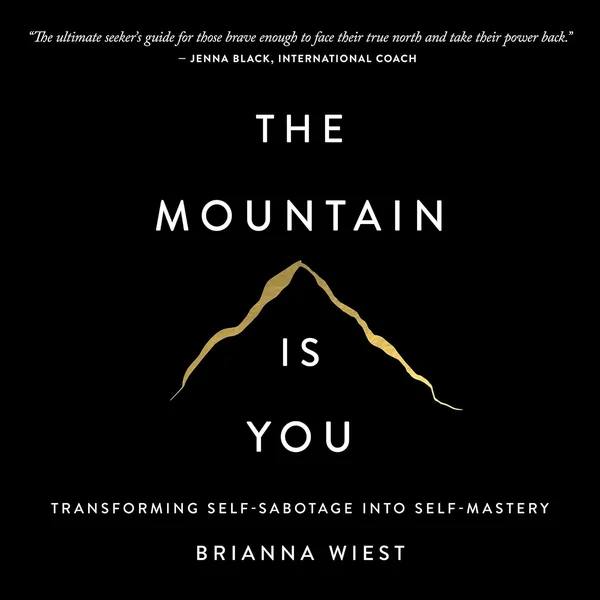
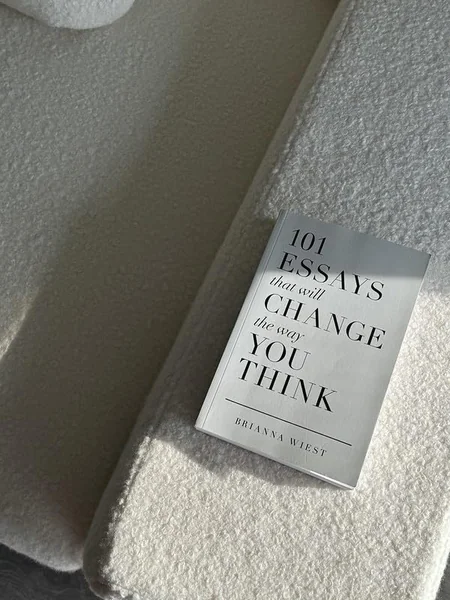
Brianna Wiest arrives at The Pivot Year with an established track record in the self-help space, having previously authored The Mountain Is You: Transforming Self-Sabotage Into Self-Mastery and 101 Essays That Will Change the Way You Think, among other works. According to SuperSummary's analysis, The Pivot Year echoes themes running throughout her catalogue — the role of mindfulness in achieving goals, the power of daily practice in personal transformation, and overcoming barriers to authenticity. This continuity means the book both deepens and extends conversations Wiest has been building across her body of work, making it a natural next step for existing readers while also serving as an accessible entry point for those new to her writing. Its structure — bite-sized daily entries — suits the social-media-native readership that has made Wiest one of the most widely shared voices in contemporary personal development.

Strengths: Reception and Resonance

The book has attracted notable praise from a range of outlets. Harper's Bazaar described it as a guide that "might just help you finish that project or land that new job by encouraging a different way of thinking." Yoga Journal called Wiest's collection of everyday meditations something that "drew us into her world and compelled us to remain long enough to start to understand how to elicit more from yourself than you perhaps thought was there." Hoda Kotb, writing in People Magazine, offered the more personal verdict: "She speaks to your soul." Across these sources, a consistent theme emerges — the book's value is not in delivering new information so much as in reorienting how readers relate to themselves and their capacity for change. Some readers, as noted in independent reader commentary, have found the meditations so engaging that they highlighted passages throughout the entire volume, describing the collection's focus on growth, change, and pivoting as its animating core.

Limitations and Who May Be Frustrated

The same structural choice that gives The Pivot Year its accessibility — short, standalone daily entries — is also its primary constraint. Readers who seek sustained argument, narrative development, or deep analytical rigour will find the format deliberately shallow by design: each entry is a single page, not a chapter-length exploration. The book is also thematically consistent with Wiest's other works to a degree that SuperSummary notes directly, meaning readers already familiar with The Mountain Is You or 101 Essays may find the territory familiar. Those expecting a wholesale departure in ideas, rather than a new structural vehicle for similar themes, may feel the book covers well-trodden ground. It is, by design, a motivational companion rather than a comprehensive psychological or philosophical treatment of personal change.

Who This Book Is For

The Pivot Year is designed for readers who want to engage with personal growth incrementally, day by day, rather than through sustained deep reading. Its year-long structure rewards consistency and makes it particularly well suited to moments of transition — a new year, a career change, or any period when a person is consciously trying to reorient their life. The publisher notes a recommended reading age of 12 and up, broadening its potential audience considerably. Readers who have responded to Wiest's previous work, or who enjoy authors in the tradition of reflective, accessible self-help writing, are the clearest audience. Harper's Bazaar's framing — "anyone who needs an extra dose of motivation" — captures the book's practical pitch well: it is not a crisis manual or an academic text, but a daily dose of perspective for those willing to show up for it, 365 days running.

Sources & Further Reading

The key facts and claims in this review are grounded in the retrieved, verified sources listed below.

  1. 1
  2. 2
  3. 3
  4. 4
  5. 5
  6. 6
  7. 7
  8. 8