
10 min read
4.7
· 18,779 Amazon ratingsShare This Review
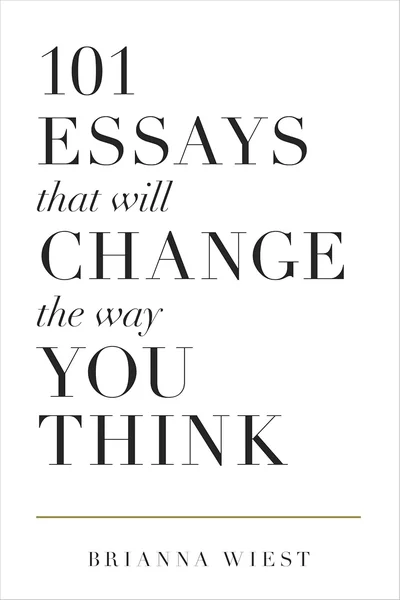
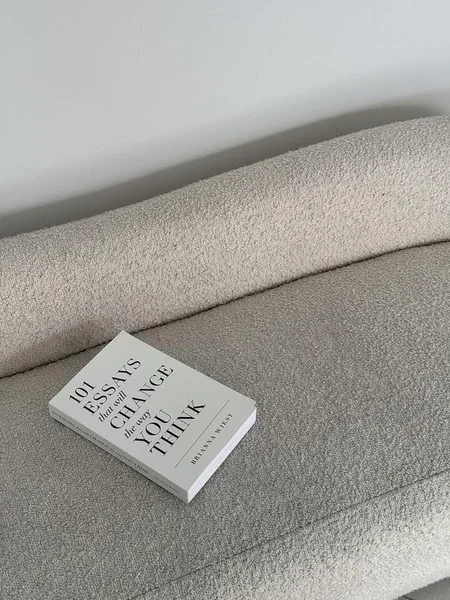
101 Essays That Will Change The Way You Think by Brianna Wiest Review: A Dense, Ambitious Self-Help Collection
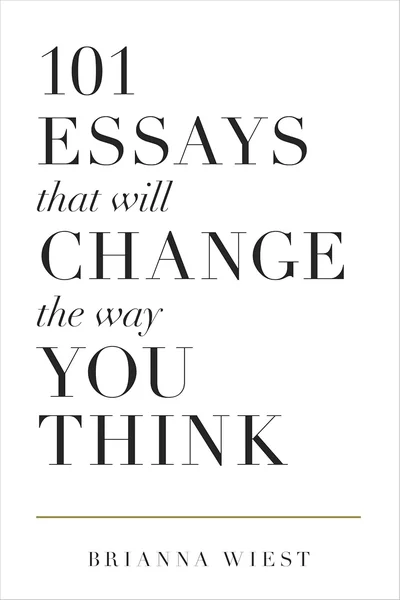
101 Essays That Will Change The Way You Think is a wide-ranging collection of short essays by Brianna Wiest, edited by Thought Catalog, designed to prompt introspection on mental health, emotional intelligence, personal growth, and the nature of happiness. Originally compiled from Wiest's best articles — including pieces previously published in digital outlets such as Thought Catalog and Huffington Post — the collection is unified by a central argument: that self-knowledge and self-compassion are within every person's reach, and that true happiness arises from purposeful living and ongoing self-actualization rather than external achievement. The review below is based on the book's contents and published reader commentary, not hands-on application.
 Tap to enlarge
LuvemBooks Verdict
Best for
Readers drawn to reflective, philosophically inflected self-help who prefer dipping in and out of standalone pieces rather than following a linear, prescriptive programme — particularly those interested in examining their own emotional patterns, assumptions, and relationship with happiness.
Worth it if
Worth reading if you're comfortable sitting with ideas and returning to individual essays at your own pace, and you respond to an accessible, conversational register over a formally structured self-help methodology.
Skip if
Skip it if you're looking for a tightly argued, step-by-step framework for personal development, or if you're new to self-help and need clear scaffolding to guide you from one concept to the next.
What readers & critics say
Reader reviewers broadly praise the collection's accessibility and capacity for genuine self-reflection — LinkedIn reviewer Biswas describes the essays as "eloquently written, each with simple and easy to read points," awarding the book 4.5 out of 5, while Audible's summary notes Wiest's consistent critique of consumerism and pursuit of happiness through external success as core strengths. The most recurring criticism, flagged at marloyonocruz.com, is that the sheer density of 101 standalone essays — each packed with "several nuggets of wisdom" — makes the collection hard to absorb in sustained stretches, with some readers needing to pause regularly between chapters.
Sources: LinkedIn (Biswas review), marloyonocruz.com, Audible, lifeinlines.substack.com, app.thestorygraph.com, brandoncannon.comPreview the book
Ask LuvemBooks
Was this helpful?
- Is it worth reading?
- For readers drawn to reflective, philosophically inflected self-help, the collection offers substantial material across a genuinely wide range of questions about how people live and why. Reader commentary describes the essays as eloquently written, easy to read, and capable of prompting genuine self-reflection — one skeptical reviewer who expected a generic self-help title concluded it delivers something more engaged and personal. The main caveat is pacing: with 101 essays each dense with ideas, reading in sustained stretches can become cognitively overwhelming, and readers seeking a tightly argued, single-methodology book may find the open-ended format leaves them wanting more structure.
- Similar books
- Readers who connect with Wiest's reflective, self-knowledge-focused approach may also enjoy The Subtle Art of Not Giving a F*ck by Mark Manson, which similarly critiques the pursuit of happiness through external validation, and Daring Greatly by Brené Brown, which shares Wiest's emphasis on vulnerability and emotional honesty. The Courage to Be Disliked by Ichiro Kishimi and Fumitake Koga offers a philosophically grounded challenge to inherited social expectations, much as Wiest does. For readers drawn to the short, punchy format, You Are a Badass® by Jen Sincero and The Four Agreements by Don Miguel Ruiz are also strong companions. Wiest's own The Pivot Year, also reviewed on LuvemBooks, is a natural next read for those who want to stay within her body of work.
- Who should read this?
- The collection is designed for readers drawn to reflective, philosophically inflected self-help — those more interested in examining their own assumptions and emotional patterns than in following a prescriptive programme. Its non-linear essay format suits readers who prefer to dip in and out rather than commit to a linear reading experience, and its origins in digital journalism give it an approachability that more academic treatments of mindfulness or emotional intelligence often lack. Readers who want a single, tightly argued book-length case for a specific methodology, or who are new to self-help and looking for clear step-by-step guidance, may find the open-ended, stand-alone structure leaves them wanting more scaffolding.
- About Brianna Wiest
- Brianna Wiest is an internationally bestselling author whose books have sold millions of copies and regularly appear on global bestseller lists. Her titles include 101 Essays That Will Change The Way You Think, The Mountain Is You, The Pivot Year, When You're Ready This Is How You Heal, Salt Water, Ceremony, and more. She has over one million followers on Instagram.
- How should I approach reading it?
- Because the essays are not grouped thematically and were not conceived as a sequential whole, the collection is best approached as a book to dip in and out of rather than read cover-to-cover in sustained stretches. Reader commentary specifically flags the density of ideas — one reviewer of the audiobook edition described needing to pause regularly between essays to absorb each piece's content. Treating the book as a long-term companion, returning to individual essays as circumstances call for them, is likely to be more rewarding than attempting to read all 101 essays in sequence.
- What sets it apart from other self-help books?
- Unlike most self-help books, 101 Essays That Will Change The Way You Think makes no attempt to prescribe a single methodology or step-by-step programme — it is designed to prompt self-reflection rather than passive consumption. Its roots in digital journalism give it a conversational register that distinguishes it from more formally structured or academically inflected treatments of mindfulness and emotional intelligence. The collection also brings a consistent philosophical through-line — critiquing external success, consumerism, and inherited social narratives — that anchors its wide-ranging subject matter in a coherent worldview rather than leaving it as a disconnected series of tips.
Summarize this book
Follow up
Synthesized from verified book data & published reviews · How we review
Press Enter to ask. Answers come from our editorial Q&A — start typing to see related questions.
Age & Reading Level
Recommended age
Adult
Reading level
Adult
Skip if you want a structured, step-by-step personal development framework with a single coherent methodology.
Our Review
What the Book Is and How It Came Together
The Central Argument Across 101 Essays
Reception and Perceived Strengths
A Real and Recurring Limitation: Density and Digestibility
Who This Collection Is Genuinely For
Sources & Further Reading
The key facts and claims in this review are grounded in the retrieved, verified sources listed below.
- Cited in this review
- 1
- 2
- Further reading
- 3
- 4
- 5
- 6
lifeinlines.substack.com
- 7
- 8
app.thestorygraph.com
- 9
Related reading
Adjacent titles worth exploring. We haven't reviewed these yet, so they link out to Amazon.