8 min read
Share This Review
The End of Thinking by Taha Maarouf Review: A Practical Self-Help Guide to Mental Clarity
Taha Maarouf's self-help guide The End of Thinking: How to Stop Letting Everything Affect You targets readers caught in cycles of overthinking, anxiety, and emotional overwhelm, offering tools drawn from positive psychology to help them reclaim mental clarity and inner peace. This review is based on publisher descriptions and publicly available source material, not hands-on use of the book.
LuvemBooks Verdict
Best for
Readers who feel mentally overwhelmed by everyday anxiety, emotional contagion, or self-sabotage and want a short, action-oriented framework rooted in positive psychology rather than a lengthy clinical text.
Worth it if
You want a concise, no-detour entry point into managing overthinking and emotional reactivity — particularly if you prefer positive psychology's strengths-based lens over CBT or mindfulness-centred approaches.
Skip if
You're seeking deep clinical grounding, extended case studies, or support for acute anxiety disorders — this guide is designed for general emotional overwhelm, and those with more serious needs are better served alongside professional mental health support.
What readers & critics say
Retailer listings on Amazon (amazon.co.uk, amazon.de, amazon.ca) describe the book as a practical guide for readers battling chronic anxiety, emotional exhaustion, and cycles of self-sabotage, framing it as a science-backed tool to reclaim mental clarity using positive psychology. No independent critical reviews were available among the retrieved sources.
Sources: Amazon UK, Amazon DE, Amazon CAAsk LuvemBooks
Was this helpful?
- Is it worth reading?
- For readers who have bounced off denser, more academic treatments of anxiety and cognitive overload, The End of Thinking offers a genuinely accessible entry point: concise, structured, and oriented toward action. Its grounding in positive psychology gives it a more distinct framework than many generic overthinking guides. The trade-off is depth — covering overthinking, anxiety, emotional contagion, and self-sabotage in 136 pages means no single subject receives exhaustive treatment. Readers with clinical anxiety or those seeking extended case studies will likely need additional resources alongside it.
- Who should read this?
- The End of Thinking is aimed squarely at readers caught in cycles of chronic overthinking, anxiety, and emotional overwhelm who want practical tools rather than a lengthy clinical text. It speaks directly to those who feel drained by absorbing other people's emotional energy and to anyone ready to stop letting minor setbacks derail their day. Readers who respond well to direct, no-detour writing and who want a framework rooted in positive psychology — rather than cognitive behavioural therapy or mindfulness traditions — will find Maarouf's approach a meaningful alternative angle. It is not the right fit for readers seeking deep clinical grounding or those managing acute anxiety disorders.
- Similar books
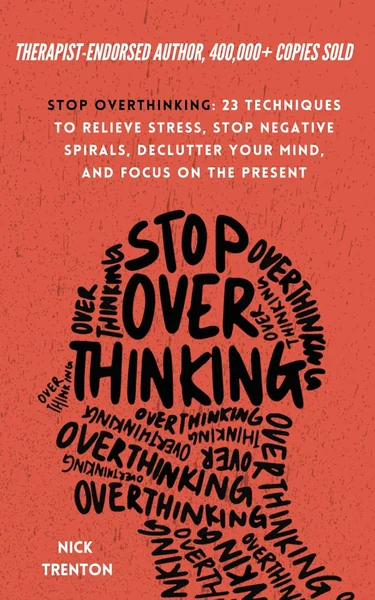
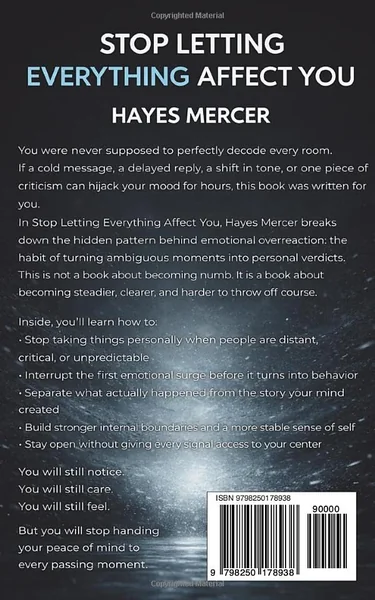
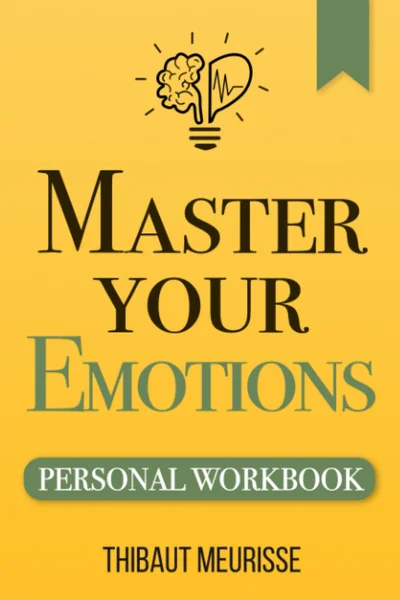
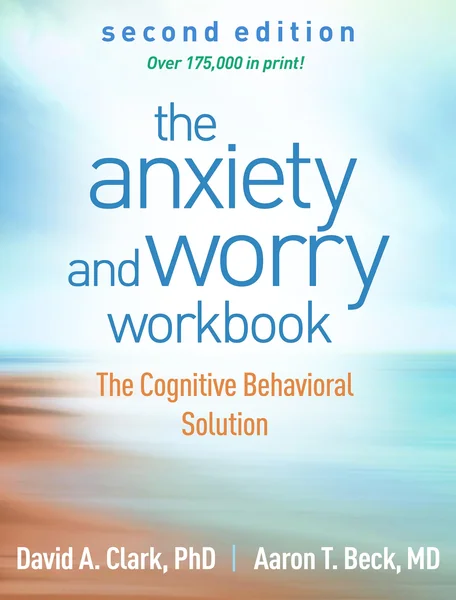
- Readers drawn to The End of Thinking will find strong companions in several titles on the same shelf. Nick Trenton's Stop Overthinking: 23 Techniques to Relieve Stress, Stop Negative Spirals offers a similarly technique-focused approach to breaking thought loops, while Karl Wiedermann's Break Free From Overthinking: How To Stop Letting Everything Affect You shares almost identical subject matter and framing. For the emotional regulation angle, Thibaut Meurisse's Master Your Emotions: A Practical Guide to Overcome Negativity is a close match. Mel Robbins' The Let Them Theory and Ichiro Kishimi and Fumitake Koga's The Courage to Be Disliked approach the 'stop letting others affect you' theme from a broader philosophical perspective. Readers who want a more clinically structured resource can look to The Anxiety and Worry Workbook: The Cognitive Behavioral Solution by David A. Clark and Aaron T. Beck, which brings a CBT framework where Maarouf brings positive psychology.
- About Taha Maarouf
- Taha Maarouf is the author of The End of Thinking: How to Stop Letting Everything Affect You, a book focused on breaking free from overthinking, emotional chaos, and self-sabotage, and letting go of anxiety. It is available as a Kindle eBook on Amazon.
- What are the main themes?
- The End of Thinking organises itself around several interlocking themes: chronic overthinking, emotional reactivity, self-sabotage, and the inner critic. The concept of emotional contagion — feeling drained by absorbing other people's emotional energy — is a specific focus, as is the tendency to let minor setbacks cascade into larger distress. Overarching all of these is the positive psychology principle that these are learnable, interruptible patterns rather than fixed traits, and that readers can actively build what the publisher calls 'inner strength, clarity, and freedom.'
- Is it practical or theoretical?
- The End of Thinking is explicitly designed to be practical rather than theoretical. Maarouf's author profile consistently emphasises a 'direct and actionable style,' and the book's stated design intent is to give readers tools they can use to stop overthinking and, in the publisher's words, 'start living on your own terms.' The positive psychology framework it draws on is a research-backed tradition, but the book's goal is applying those ideas rather than introducing new theory — readers already familiar with positive psychology's foundational concepts are unlikely to encounter new academic ground.
Summarize this book
Follow up
Synthesized from verified book data & published reviews · How we review
Press Enter to ask. Answers come from our editorial Q&A — start typing to see related questions.
Age & Reading Level
Recommended age
Adult
Reading level
Adult
who it suits
Skip if you are looking for deep clinical treatment of anxiety or extended case studies rather than a concise, practical overview.
Our Review
What the Book Is and What It Sets Out to Do

The Author's Background and Positioning in the Genre
Strengths: Focus, Scope, and Accessibility
Limitations and Audience Fit
Who This Book Is For and How It Reads Today
Sources & Further Reading
The key facts and claims in this review are grounded in the retrieved, verified sources listed below.
- Cited in this review
- 1
- 2
- Further reading
- 3
Books like The End of Thinking
Curated picks for readers who enjoyed The End of Thinking, with our reasoning for each match.
If you liked The End of Thinking