
8 min read
Share This Review
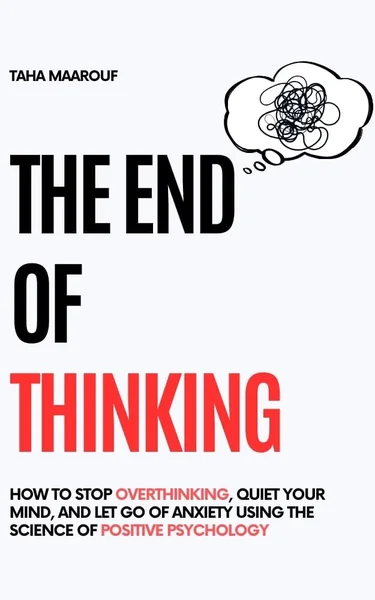
The End of Thinking by Taha Maarouf Review: A Practical Self-Help Guide to Mental Clarity
Taha Maarouf's self-help guide The End of Thinking: How to Stop Letting Everything Affect You targets readers caught in cycles of overthinking, anxiety, and emotional overwhelm, offering tools drawn from positive psychology to help them reclaim mental clarity and inner peace. This review is based on publisher descriptions and publicly available source material, not hands-on use of the book.
LuvemBooks Verdict
Best for
Readers who feel mentally overwhelmed by everyday anxiety, emotional contagion, or self-sabotage and want a short, action-oriented framework rooted in positive psychology rather than a lengthy clinical text.
Worth it if
You want a concise, no-detour entry point into managing overthinking and emotional reactivity — particularly if you prefer positive psychology's strengths-based lens over CBT or mindfulness-centred approaches.
Skip if
You're seeking deep clinical grounding, extended case studies, or support for acute anxiety disorders — this guide is designed for general emotional overwhelm, and those with more serious needs are better served alongside professional mental health support.
What readers & critics say
Retailer listings on Amazon (amazon.co.uk, amazon.de, amazon.ca) describe the book as a practical guide for readers battling chronic anxiety, emotional exhaustion, and cycles of self-sabotage, framing it as a science-backed tool to reclaim mental clarity using positive psychology. No independent critical reviews were available among the retrieved sources.
Sources: Amazon UK, Amazon DE, Amazon CAIn This Review
- What Works & What Doesn't
- What the Book Is and What It Sets Out to Do
- The Author's Background and Positioning in the Genre
- Strengths: Focus, Scope, and Accessibility
- Limitations and Audience Fit
- Who This Book Is For and How It Reads Today
What Works & What Doesn't
What Works
- Tightly focused and concise at 136 pages, designed for readers who want practical guidance without a lengthy clinical text
- Grounded in positive psychology, offering a distinct framework compared to generic overthinking guides
- Covers several discrete, recognizable challenges — inner critic, emotional contagion, self-sabotage — in a single structured volume
- Author's cross-disciplinary background in applied fields lends a pragmatic, action-oriented design intent
- Kindle format aligns naturally with its target audience of readers seeking on-demand mental wellness tools
What Doesn't
- The breadth of topics covered — anxiety, overthinking, emotional chaos, self-sabotage — is ambitious for a 136-page volume, which may limit depth on any single subject
- Positioned for general emotional overwhelm rather than clinical anxiety; readers with more acute needs will require additional professional support beyond this guide
What the Book Is and What It Sets Out to Do
The Author's Background and Positioning in the Genre
Strengths: Focus, Scope, and Accessibility
Limitations and Audience Fit
Who This Book Is For and How It Reads Today
Frequently Asked Questions
Sources & Further Reading
The key facts and claims in this review are grounded in the retrieved, verified sources listed below.
- Cited in this review
- 1
- 2
- Further reading
- 3
Related Reviews
Reviews of books we picked for readers who enjoyed The End of Thinking.

Reader Comments
No comments yet
Be the first to share your thoughts!