8 min read
4.7
· 11,401 Amazon ratingsShare This Review
Rising Strong by Brené Brown Review: A Practical Framework for Bouncing Back
Rising Strong is a #1 New York Times bestseller in which social scientist Brené Brown presents a structured, three-part process for recovering from failure and struggle — making the case that the ability to rise after falling is the defining act of a courageous life. This review is based on published sources and verified reception; it does not reflect hands-on use of the book's framework.
LuvemBooks Verdict
Best for
Readers who found meaning in Brown's earlier work on vulnerability and shame — or anyone navigating a significant personal, professional, or relational setback — who want a structured, research-grounded framework for processing failure rather than avoiding it.
Worth it if
You're drawn to qualitative, storytelling-driven social science and want a concrete, named process (Reckoning, Rumble, Revolution) for turning failure into deliberate growth across life, work, and relationships.
Skip if
You prefer tightly quantitative research methodologies, or you're facing a highly specific or acute loss and need guidance more precisely tailored than a broad, universally framed framework can offer.
What readers & critics say
Kirkus Reviews notes that the revolution phase gives readers "energy to stand back up as a changed person," describing the rising strong process as capable of leading to "deep, tumultuous, groundbreaking, no-turning-back transformation." A blurb surfaced by bookseller Diane's Books from critical coverage credits Brown with offering "compassion while delivering thought-provoking ideas about relationships — with others and with oneself," while also citing The Huffington Post's view that Brown "empowers us each to be a little more courageous."
“The rising strong process can lead to deep, tumultuous, groundbreaking, no-turning-back transformation.”
— Kirkus ReviewsAsk LuvemBooks
Was this helpful?
- Is it worth reading?
- For readers open to qualitative, storytelling-driven social science, Rising Strong delivers on its promise: a concrete, named vocabulary for processing failure that many readers report struggling to articulate on their own. Its status as a #1 New York Times bestseller reflects genuinely broad readership across personal, professional, and parenting contexts. The main caveat is for readers who prefer heavily empirical methodology or who are navigating a highly specific acute hardship — the framework's universal framing may feel insufficiently tailored to those situations.
- Similar books
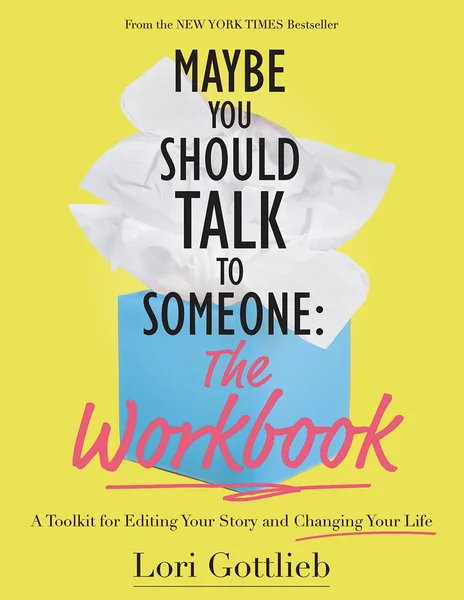
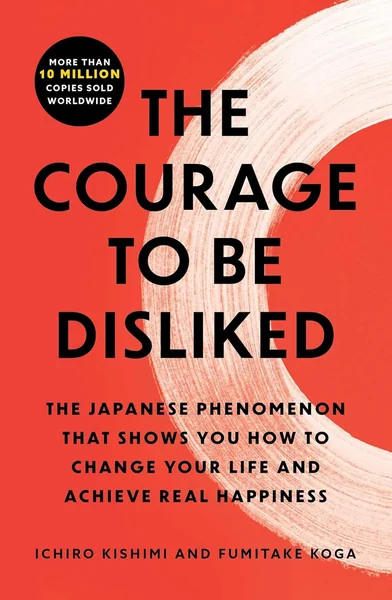
- Readers drawn to Rising Strong will find natural companions in Brown's own back catalogue: Daring Greatly, which establishes the vulnerability foundation that Rising Strong builds on, and The Gifts of Imperfection, which addresses wholehearted living with a similar research-meets-storytelling approach. For those interested in resilience through a spiritual or faith-based lens, It's Not Supposed to Be This Way by Lysa TerKeurst covers related ground. Maybe You Should Talk to Someone by Lori Gottlieb offers a narrative-driven look at emotional reckoning from a therapist's perspective, while The Courage to Be Disliked by Ichiro Kishimi and Fumitake Koga approaches personal freedom and change through an Adlerian philosophical dialogue.
- Who should read this?
- Rising Strong is explicitly written for people across multiple roles — parents, leaders, partners — rather than a single narrow audience, making it unusually broad in its intended reach. It is particularly well suited to readers already persuaded by Brown's earlier work on vulnerability and shame who are ready for a structured framework to apply those ideas after a setback. Readers encountering Brown for the first time through a specific struggle with failure or disappointment will also find a clear entry point. Those who prefer rigorous quantitative research or who are dealing with highly specific, acute forms of loss may find the universal framing less satisfying.
- About Brené Brown
- Casandra Brené Brown is an American academic and podcaster who holds the Huffington Foundation's Brené Brown Endowed Chair at the University of Houston's Graduate College of Social Work. She is also a visiting professor in management at the McCombs School of Business at the University of Texas at Austin.
- How does this compare to Brown's other books?
- Rising Strong is best understood as the third major movement in Brown's research arc. The Gifts of Imperfection introduced wholehearted living, Daring Greatly made the case that vulnerability is essential to connection and courage, and Rising Strong answers the inevitable question those books leave open: what do you actually do when vulnerability leads to failure? Where the earlier books focus on the decision to show up, Rising Strong focuses on the structured recovery process — the Reckoning, the Rumble, and the Revolution — that follows when things go wrong after you do.
- How do you use the Rising Strong framework?
- Brown presents the rising strong process as a daily practice rather than a one-time exercise. The Reckoning phase asks readers to recognise and get curious about the emotions triggered by a fall instead of suppressing them. The Rumble phase involves getting honest about the stories being constructed around a struggle — identifying what is truth, what is self-protection, and what needs to change. The Revolution phase then involves writing a new, more courageous ending to that story. Brown applies this sequence across personal relationships, parenting, leadership, and civic participation.
Summarize this book
Follow up
Synthesized from verified book data & published reviews · How we review
Press Enter to ask. Answers come from our editorial Q&A — start typing to see related questions.
Age & Reading Level
Recommended age
Adult
Reading level
Adult
who it suits
Skip if You prefer quantitative, data-driven social science over narrative-led qualitative research.
Our Review
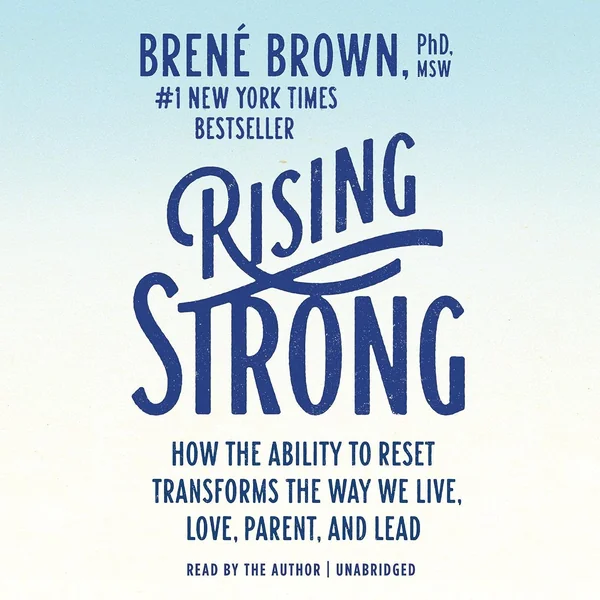
What the Book Is and What It Argues
The Three-Part Framework: Reckoning, Rumbling, and Revolution
Reception and Cultural Standing
The Audiobook Format and Brown as Narrator
Who This Book Is For — and Where It May Fall Short
Sources & Further Reading
The key facts and claims in this review are grounded in the retrieved, verified sources listed below.
- Cited in this review
- 1
- 2
- 3
brenebrown.com
- Further reading
- 4
Brené Brown, Wikipedia
- 5
- 6
meaningfulhq.com
- 7
megvlaun.com
- 8
scottholleran.substack.com
- 9
- 10
Books like Rising Strong
Curated picks for readers who enjoyed Rising Strong, with our reasoning for each match.
If you liked Rising Strong