7 min read
4.4
· 43 Amazon ratingsShare This Review
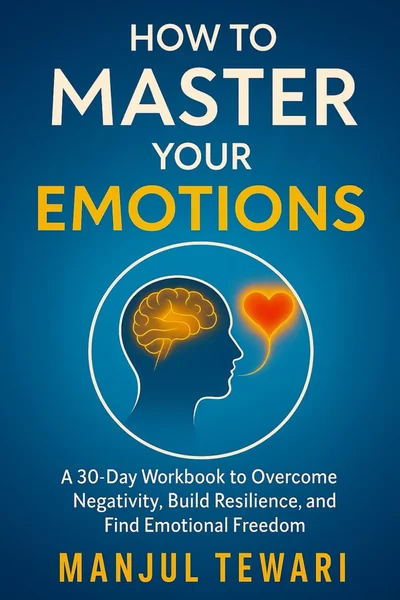
How to Master Your Emotions by Manjul Tewari Review: A Structured 30-Day Emotional Workbook
How to Master Your Emotions: A 30-Day Workbook to Gain Emotional Freedom is the eighth installment in Manjul Tewari's Ultimate Mindset Mastery Series — a self-published companion workbook designed to guide readers through emotional awareness, negativity bias, positive psychology, and mental well-being across a structured 30-day program. This review draws on the book's verified contents and published descriptions; it does not reflect hands-on use or application of the material.
 Tap to enlarge
LuvemBooks Verdict
Best for
Readers who prefer an active, pen-in-hand approach to personal development and respond well to consistent, time-bounded daily commitments — particularly those interested in applied positive psychology and everyday emotional patterns rather than clinical intervention.
Worth it if
You want a structured, exercise-driven 30-day program that moves logically from understanding emotions and negativity bias through to leveraging emotions for growth, and you're prepared to engage with it daily rather than read it passively.
Skip if
You're working through complex or acute emotional challenges that require clinical depth or therapeutic flexibility, or you're seeking peer-reviewed rigour that a self-published, streamlined workbook format cannot provide.
What readers & critics say
No substantive independent critical reviews of this specific title were retrieved. The amazon.co.uk listing confirms its placement as Book 8 in the Ultimate Mindset Mastery Series and describes Tewari as "a blogger, best-selling author, and versatile writer" behind the series available on Amazon; the whatispersonaldevelopment.org resource corroborates the workbook's internal structure and its emphasis on daily reconditioning for at least 30 days.
Sources: whatispersonaldevelopment.org, amazon.co.ukAsk LuvemBooks
Was this helpful?
- Is it worth reading?
- For readers who benefit from external structure and consistent daily practice, How to Master Your Emotions offers genuine architectural clarity: its four-part progression builds logically from concept to behavioral application, and the 30-day container lowers the activation energy often associated with open-ended self-development work. The negativity-bias section gives the material a credible conceptual foundation in behavioral science. The key caveat is that, as a self-published workbook without a credited clinical or academic co-author, the treatment of complex emotional topics is necessarily streamlined — readers expecting peer-reviewed therapeutic depth should calibrate their expectations accordingly.
- Similar books
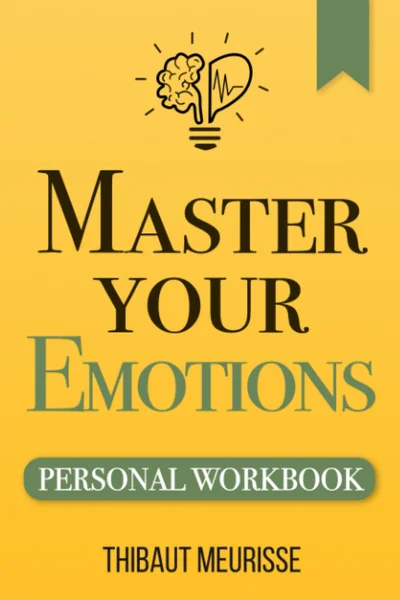
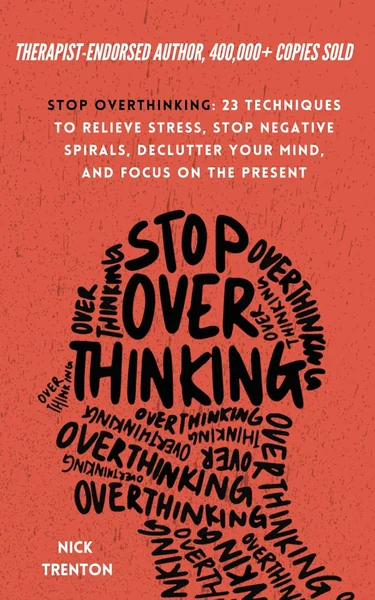
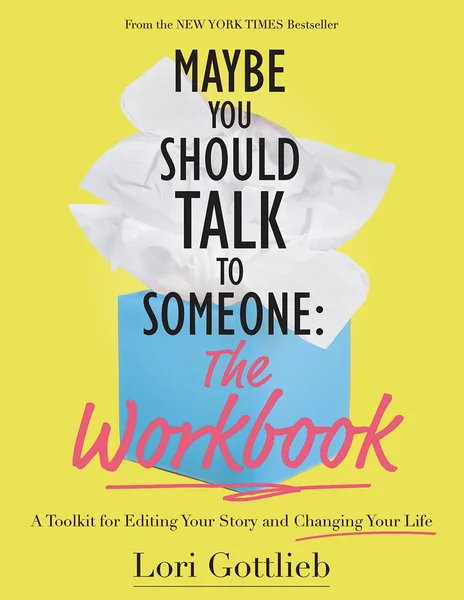
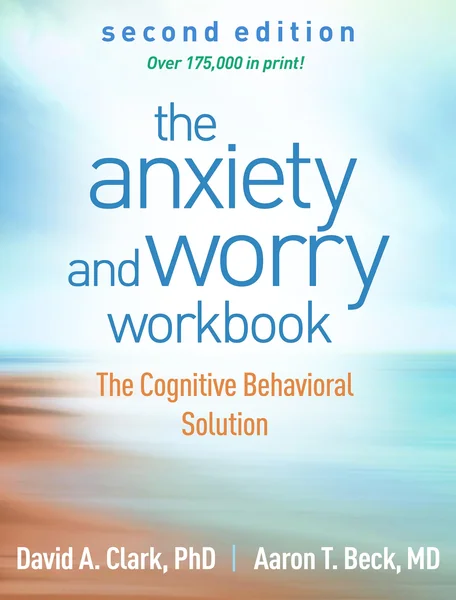
- Readers drawn to How to Master Your Emotions may also find value in Thibaut Meurisse's Master Your Emotions: A Practical Guide to Overcome Negativity, which covers closely related territory with a similarly accessible self-help lens. For a more clinically grounded workbook approach, The Anxiety and Worry Workbook: The Cognitive Behavioral Solution by David A. Clark and Aaron T. Beck brings peer-reviewed CBT structure to emotional regulation. Nick Trenton's Stop Overthinking: 23 Techniques to Relieve Stress, Stop Negative Spirals offers a technique-focused alternative for readers targeting rumination and stress. Lori Gottlieb's Maybe You Should Talk to Someone: The Workbook and The Mindful Way through Depression by Mark Williams, John Teasdale, Zindel Segal, and Jon Kabat-Zinn round out the options for readers seeking deeper or mindfulness-based frameworks.
- Who should read this?
- How to Master Your Emotions is designed for general adult readers interested in applied positive psychology and emotional well-being who prefer an active, pen-in-hand approach over passive reading. The daily structure suits people who respond well to consistent, time-bounded commitments, and the written-reflection format is particularly well-matched to readers who process experience through journaling or structured writing. Readers already invested in Tewari's Ultimate Mindset Mastery Series will find this volume a coherent extension of the work they have already begun. Those seeking clinical depth, peer-reviewed therapeutic frameworks, or a fully flexible self-paced program are less well served.
- Where does this fit in the series?
- How to Master Your Emotions is Book 8 of 12 in Tewari's Ultimate Mindset Mastery Series — a collection built around unlocking mindset and communication skills. It represents a deepening of the emotional intelligence thread that runs through the broader collection, and readers already familiar with earlier volumes will find it a natural continuation. For newcomers, it is written to stand alone, though the eighth-book context means some elements of Tewari's methodology may be assumed rather than fully re-introduced.
- What are the exercises like?
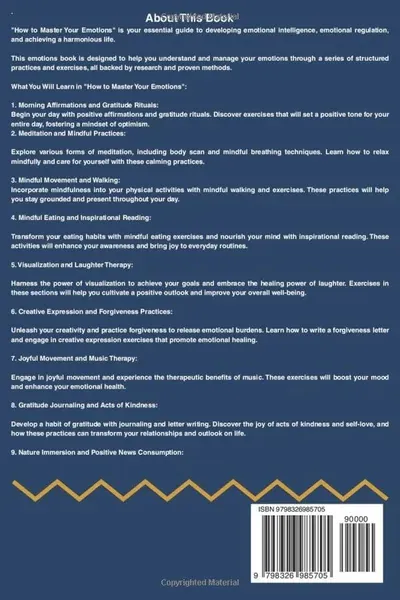
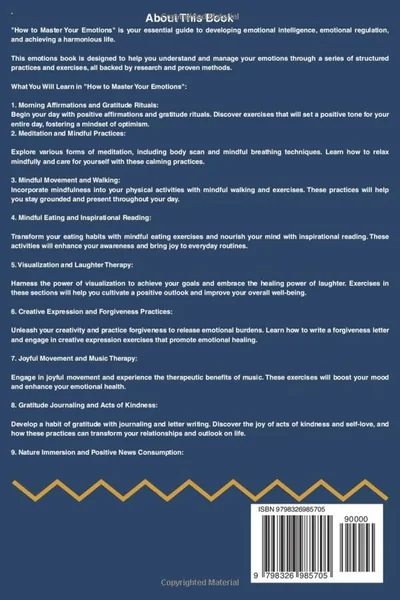
- The exercises are specific and written directly into the workbook format, supporting active reflection rather than passive reading. For example, readers are prompted to identify a personal example of an imaginary threat produced by the brain's survival mechanism, then reflect in writing directly on the page. The design intent is cumulative: each exercise builds on the conceptual content paired alongside it, and the 30-day daily-engagement structure means the program is intended to be worked through consistently rather than dipped into at random.
- Are there any content warnings?
- How to Master Your Emotions carries no notable heavy-content advisories. It is a general adult self-help workbook focused on everyday emotional patterns — negativity, happiness, and the mechanics of emotional change — rather than clinical diagnoses or crisis intervention. Readers working through significant or acute emotional challenges should note that the workbook is positioned as a self-guided personal development tool, not a clinically validated intervention, and may wish to supplement it with professional support.
Summarize this book
Follow up
Synthesized from verified book data & published reviews · How we review
Press Enter to ask. Answers come from our editorial Q&A — start typing to see related questions.
Age & Reading Level
Recommended age
Adult
Reading level
Adult
who it suits
Skip if you're looking for a clinically validated, peer-reviewed emotional health program or a flexible self-paced format without a fixed daily structure.
Our Review
What the Book Is and What It Sets Out to Do
Place in the Series and the Author's Platform
Structural Strengths: A Clear, Actionable Framework
Honest Limitations and Who May Find It Frustrating
Who This Workbook Is Genuinely For
Sources & Further Reading
The key facts and claims in this review are grounded in the retrieved, verified sources listed below.
- 1
s1.papyruspub.com
- 2
whatispersonaldevelopment.org
- 3
Books like How to Master Your Emotions
Curated picks for readers who enjoyed How to Master Your Emotions, with our reasoning for each match.
If you liked How to Master Your Emotions