
7 min read
4.4
· 43 Amazon ratingsShare This Review
How to Master Your Emotions by Manjul Tewari Review: A Structured 30-Day Emotional Workbook
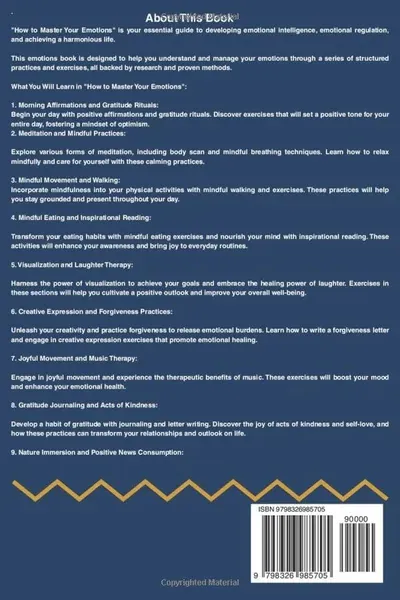
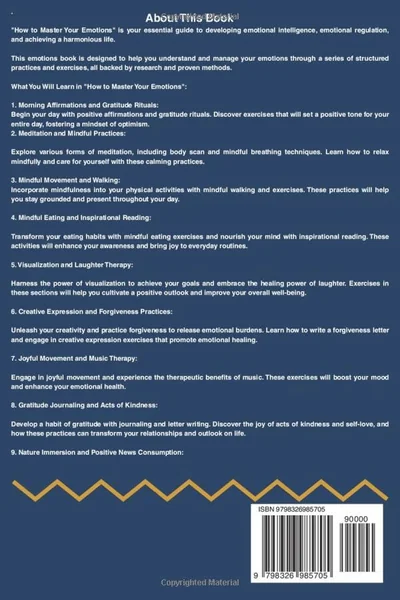
How to Master Your Emotions: A 30-Day Workbook to Gain Emotional Freedom is the eighth installment in Manjul Tewari's Ultimate Mindset Mastery Series — a self-published companion workbook designed to guide readers through emotional awareness, negativity bias, positive psychology, and mental well-being across a structured 30-day program. This review draws on the book's verified contents and published descriptions; it does not reflect hands-on use or application of the material.
 Tap to enlarge
LuvemBooks Verdict
Best for
Readers who prefer an active, pen-in-hand approach to personal development and respond well to consistent, time-bounded daily commitments — particularly those interested in applied positive psychology and everyday emotional patterns rather than clinical intervention.
Worth it if
You want a structured, exercise-driven 30-day program that moves logically from understanding emotions and negativity bias through to leveraging emotions for growth, and you're prepared to engage with it daily rather than read it passively.
Skip if
You're working through complex or acute emotional challenges that require clinical depth or therapeutic flexibility, or you're seeking peer-reviewed rigour that a self-published, streamlined workbook format cannot provide.
What readers & critics say
No substantive independent critical reviews of this specific title were retrieved. The amazon.co.uk listing confirms its placement as Book 8 in the Ultimate Mindset Mastery Series and describes Tewari as "a blogger, best-selling author, and versatile writer" behind the series available on Amazon; the whatispersonaldevelopment.org resource corroborates the workbook's internal structure and its emphasis on daily reconditioning for at least 30 days.
Sources: whatispersonaldevelopment.org, amazon.co.ukIn This Review
- What Works & What Doesn't
- What the Book Is and What It Sets Out to Do
- Place in the Series and the Author's Platform
- Structural Strengths: A Clear, Actionable Framework
- Honest Limitations and Who May Find It Frustrating
- Who This Workbook Is Genuinely For
What Works & What Doesn't
What Works
- Organized into a clear four-part structure — covering emotional basics, negativity bias, changing emotions, and using emotions for growth — that builds logically from concept to application.
- The 30-day daily-engagement model provides a defined, time-bounded framework that suits readers who benefit from structured, consistent practice.
- Exercise prompts are specific and written directly into the workbook format, supporting active reflection rather than passive reading.
- Sits within a 12-volume Mindset Mastery Series, offering readers a broader ecosystem of connected personal development content if they wish to continue.
- The negativity-bias section grounds the workbook in a well-established behavioral science concept, giving its exercises a recognizable conceptual foundation.
What Doesn't
- As a self-published title without a credited clinical or academic co-author, the treatment of complex emotional topics is necessarily streamlined — readers seeking peer-reviewed depth may find it insufficient.
- The fixed 30-day pace may feel prescriptive for readers working through more complex emotional challenges who need a more flexible approach.
- Being the eighth installment in a series means some elements of Tewari's broader methodology may be assumed rather than fully re-introduced for first-time readers.
What the Book Is and What It Sets Out to Do
Place in the Series and the Author's Platform
Structural Strengths: A Clear, Actionable Framework
Honest Limitations and Who May Find It Frustrating
Who This Workbook Is Genuinely For
Frequently Asked Questions
Sources & Further Reading
The key facts and claims in this review are grounded in the retrieved, verified sources listed below.
- 1
s1.papyruspub.com
- 2
whatispersonaldevelopment.org
- 3
Related Reviews
Reviews of books we picked for readers who enjoyed How to Master Your Emotions.
Reader Comments
No comments yet
Be the first to share your thoughts!