8 min read
4.7
· 24,777 Amazon ratingsShare This Review

Get Out of Your Head by Jennie Allen Review: A Faith-Based Guide to Reclaiming Your Mind
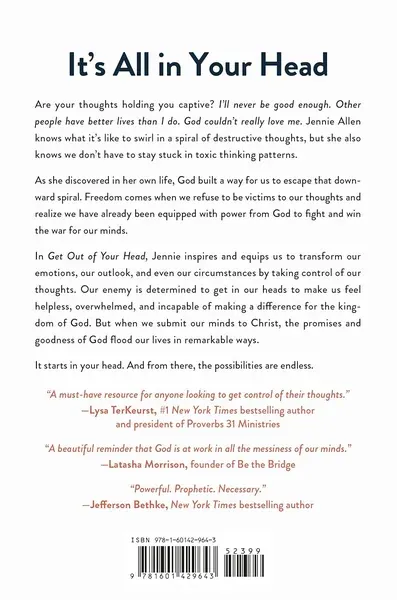
Jennie Allen's Get Out of Your Head is a New York Times bestseller and ECPA bestseller that has sold over one million copies, blending biblical teaching with neuroscience to help readers identify and disrupt toxic thought patterns such as victimhood, anxiety, and distraction. Published by WaterBrook on January 28, 2020, it is Christian nonfiction designed for readers who want practical, spiritually grounded tools for transforming how they think — and, by extension, how they live.
 Tap to enlarge
LuvemBooks Verdict
Best for
Christian readers — particularly those inside a faith community — who recognise specific thought traps like unworthiness, comparison, or anxious rumination in themselves and want a structured, biblically grounded framework for breaking those patterns in everyday life.
Worth it if
The book rewards readers who want more than passive devotional reading: its combination of named toxic-thought categories, neuroscience framing, and interactive exercises like the thought-mapping worksheet gives the spiritual argument a repeatable, practical shape.
Skip if
Readers outside a Christian worldview, or those seeking clinical depth on the order of cognitive-behavioural therapy, will find that the neuroscience component serves the theological argument rather than standing independently — and the book's core solution simply does not translate beyond a faith framework.
What readers & critics say
Baptist Messenger describes the book as "life-changing" and highlights Allen's central contention that "the greatest spiritual battle of our generation is being fought between our ears," praising her passion for helping readers capture false, destructive thoughts. ChristPulse notes that readers praise it as a life-changing resource for confronting negative thinking, and specifically commends how Allen equips readers to identify the toxic thought patterns that hold them captive.
Sources: Baptist Messenger, ChristPulseAsk LuvemBooks
Was this helpful?
- Is it worth reading?
- For readers already inside a Christian faith community, Get Out of Your Head offers a well-structured, immediately applicable framework that distinguishes itself from both purely devotional and purely self-help offerings by combining biblical grounding with repeatable, practical exercises. Its record — a New York Times bestseller, ECPA bestseller, 2021 Christian Book Award Finalist, and over one million copies sold — reflects genuine resonance rather than marketing momentum. The key caveat is audience: readers outside a faith framework or those seeking clinical-grade psychological treatment will find that the book's core solution simply does not translate to their worldview.
- Similar books
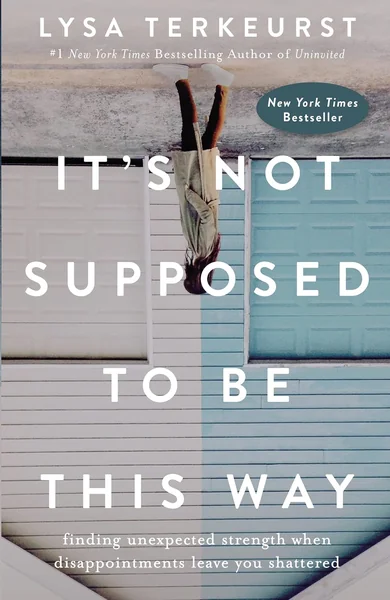
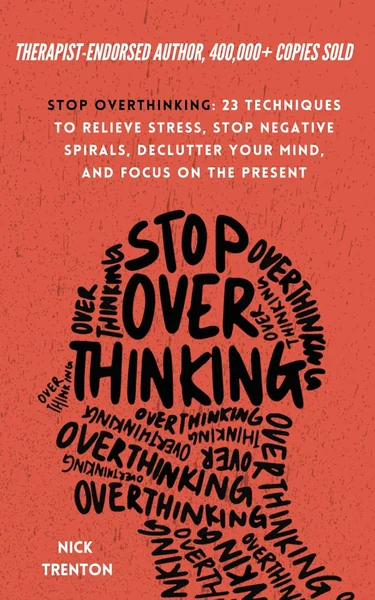
- Readers drawn to Get Out of Your Head for its Christian emotional-health angle will find a natural companion in Lysa TerKeurst's It's Not Supposed to Be This Way, which addresses disappointment and unmet expectations from a similarly faith-grounded perspective. For the anxiety and overthinking dimension without the theological framework, Nick Trenton's Stop Overthinking and The Anxiety and Worry Workbook by David A. Clark and Aaron T. Beck offer more clinically grounded alternatives. Brené Brown's Daring Greatly shares Allen's focus on shame, comparison, and vulnerability, while Mark Williams, John Teasdale, Zindel Segal, and Jon Kabat-Zinn's The Mindful Way through Depression provides a mindfulness-based clinical approach for those dealing with rumination and low mood.
- Who should read this?
- Get Out of Your Head is designed specifically for Christian readers who want to change, repair, or replace toxic thinking patterns and are willing to engage with a theologically grounded solution. It is particularly well-suited to readers who recognise themselves in specific thought traps — comparison, unworthiness, anxious rumination, victimhood, or distraction — and want tools that are immediately applicable within a faith community context. Readers outside a Christian framework, or those seeking clinical-grade psychological treatment, are not the intended audience and will likely find the book's core premises incompatible with their worldview.
- What are the main themes?
- The central theme of Get Out of Your Head is the mind as spiritual battleground: Allen argues that toxic thought patterns — specifically unworthiness, comparison, anxious rumination, victimhood, and distraction — are not passive bad habits but active battlegrounds requiring intentional, faith-based resistance. A second major theme is the intersection of neuroscience and biblical truth, with Allen using brain-science vocabulary to make the case that thoughts are malleable and that Scripture provides the primary tool for reshaping them. Undergirding both is the conviction that freedom from toxic thinking is a winnable fight, not a permanent condition to be managed.
- How was it received critically?
- Get Out of Your Head achieved remarkable cross-audience reach for a work rooted in Christian theology: it is a New York Times and ECPA bestseller with over one million copies sold, a 2021 Christian Book Award Finalist, and was named one of the best books of the year by Cosmopolitan — an unusual accolade for explicitly faith-based nonfiction. It also appeared on Barnes & Noble's Best Religion Books of 2020. Endorsements from prominent evangelical voices including Lysa TerKeurst, Jefferson Bethke, and Shelley Giglio further cemented its standing in mainstream Christian life-change literature.
- Who is Jennie Allen and what is IF:Gathering?
- According to the review, Jennie Allen is the founder of IF:Gathering, a community-based women's ministry movement with over one million members. That platform context is relevant to understanding the book's reach: Allen writes from a position of established ministry leadership, and Get Out of Your Head reflects both the theological concerns and the practical, accessible style that have characterised her work with IF:Gathering.
Summarize this book

Follow up
Synthesized from verified book data & published reviews · How we review
Press Enter to ask. Answers come from our editorial Q&A — start typing to see related questions.
Age & Reading Level
Recommended age
Adult
Reading level
Adult
who it suits
Skip if you're seeking a secular, clinically grounded approach to anxiety or cognitive restructuring rather than a faith-based one.
Our Review
What the Book Actually Is and Argues

Scope, Structure, and Practical Design
Reception and Cultural Standing
Genuine Strengths
Limitations and Who May Find It Frustrating
Sources & Further Reading
The key facts and claims in this review are grounded in the retrieved, verified sources listed below.
- Cited in this review
- 1
- 2
- Further reading
- 3
- 4
- 5
- 6
- 7
Books like Get Out of Your Head
Curated picks for readers who enjoyed Get Out of Your Head, with our reasoning for each match.
If you liked Get Out of Your Head