8 min read
Share This Review

Break Free From Overthinking by Karl Wiedermann Review: A Compact Self-Help Guide on Emotional Resilience
Break Free From Overthinking: How To Stop Letting Everything Affect You is a short, independently published self-help paperback by Karl Wiedermann, designed for readers caught in cycles of overthinking, emotional reactivity, and self-sabotage — offering practical strategies for building boundaries, shifting mindset, and reclaiming daily well-being. This review is based on published product and source descriptions, not hands-on use.
 Tap to enlarge
LuvemBooks Verdict
Best for
Adults at the beginning or middle of their self-help journey who recognise themselves in cycles of rumination, emotional over-reactivity, and difficult interpersonal dynamics, and want a concise, immediately actionable framework for interrupting those patterns.
Worth it if
You want a short, direct, practically structured guide — covering boundary-setting, guilt, self-sabotage, and emotional reactivity — without wading through extended theoretical preamble or clinical scaffolding.
Skip if
You have already read widely in emotional regulation literature, or you need clinical depth, case-study richness, or nuanced coverage of overthinking as it intersects with anxiety disorders or trauma.
What readers & critics say
No substantive third-party critical reviews were available for this title. Walmart.com's product listing details the book's core teachings — stopping self-sabotage, setting healthy boundaries, differentiating real guilt from manipulation, and breaking overthinking cycles — and highlights emotional control strategies and a mindset-shift orientation as central to its approach.
Sources: walmart.comAsk LuvemBooks
Was this helpful?
- Is it worth reading?
- For the right reader, yes. Break Free From Overthinking delivers a clear, accessible framework for interrupting cycles of rumination and emotional reactivity in a format that respects the reader's time. Its coverage of both internal habits (rumination, mindset) and interpersonal dynamics (manipulation, boundary-setting, toxic patterns) gives it broader real-world relevance than titles focused on only one dimension. However, readers already well-versed in emotional regulation literature may find the core concepts familiar, and those managing overthinking rooted in anxiety disorders or trauma will need a more clinically robust resource alongside or instead of this one.
- Who should read this?
- Break Free From Overthinking is most clearly suited to readers at the beginning or middle of their self-help journey who recognise themselves in the pattern of letting external events, relationships, or intrusive thoughts consume disproportionate mental energy. It has particular relevance for readers navigating difficult interpersonal dynamics — specifically those dealing with manipulation, boundary erosion, or toxic relational patterns — alongside their internal thought habits. Its short format also makes it a practical choice for those who struggle to sustain engagement with longer texts, whether due to the very overwhelm the book addresses or a preference for distilled, immediately implementable guidance.
- Similar books
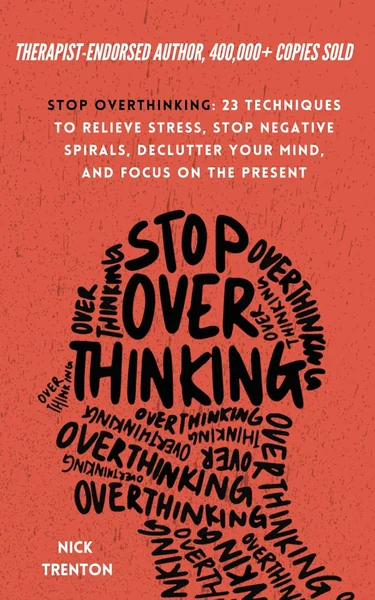
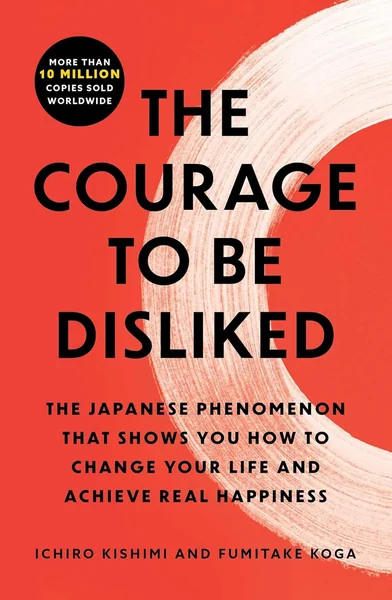
- Readers drawn to Break Free From Overthinking will find strong companion reads among several titles on the LuvemBooks shelf. Stop Overthinking: 23 Techniques to Relieve Stress, Stop Negative Spirals by Nick Trenton offers a similarly practical, technique-driven approach to rumination, while The Magic of Mindful Self-Awareness by Matt Tenney addresses the mindfulness dimension of clearing mental noise. For the emotional regulation thread specifically, Master Your Emotions: A Practical Guide to Overcome Negativity by Thibaut Meurisse is a close thematic parallel. The End of Thinking: How to Stop Letting Everything Affect You by Taha Maarouf shares near-identical territory in its very title, and The Courage to Be Disliked by Ichiro Kishimi and Fumitake Koga provides a deeper philosophical framework for releasing the emotional weight of others' judgments. Readers seeking a more clinically structured resource may also consider The Anxiety and Worry Workbook by David A. Clark and Aaron T. Beck.
- What are the main themes?
- The book organises its material around several interconnected themes: self-sabotage and how to recognise and stop it; healthy personal boundary-setting; the distinction between genuine guilt and guilt manufactured through manipulation; breaking habitual cycles of overthinking and rumination; and reducing emotional reactivity to everyday events. A unifying thread is the shift from what the book frames as a victimhood orientation toward active self-empowerment — building an internal locus of control so that minor events and external relationships no longer consume disproportionate mental energy.
- Is the short format a weakness?
- It depends entirely on the reader. At 80 pages, the brevity is a deliberate design choice — the book prioritises actionable takeaways over extended theoretical groundwork, making it well-suited to readers who want direct guidance or who struggle to sustain engagement with longer texts. For readers seeking clinical depth, extended case studies, or nuanced exploration of how overthinking intersects with anxiety disorders or trauma, the short format is a real limitation. LuvemBooks frames it plainly: the concision is an asset for some and a significant constraint for others.
- Is there any expert backing for this book?
- As an independently published title released in October 2025, Break Free From Overthinking has no documented third-party critical reviews that LuvemBooks could identify to benchmark its approach against comparable titles. There is no noted clinical credential or peer-reviewed backing cited in connection with the author. LuvemBooks is transparent about this: the absence of an external critical benchmark means the book's specific framing of concepts cannot be formally compared to clinically informed alternatives — readers should weigh this accordingly, particularly if their overthinking has a clinical dimension.
Summarize this book
Follow up
Synthesized from verified book data & published reviews · How we review
Press Enter to ask. Answers come from our editorial Q&A — start typing to see related questions.
Age & Reading Level
Recommended age
Adult
Reading level
Adult
who it suits
Skip if you're looking for clinical depth, case studies, or a comprehensive treatment of overthinking as it intersects with anxiety disorders or trauma.
Our Review
What the Book Actually Is and Covers

Scope, Focus, and Structural Approach
Core Strengths: Practical Orientation and Accessibility
Genuine Limitations and Who It May Frustrate
Who This Book Is Genuinely For
Sources & Further Reading
The key facts and claims in this review are grounded in the retrieved, verified sources listed below.
- Cited in this review
- 1
- Further reading
- 2
Books like Break Free From Overthinking
Curated picks for readers who enjoyed Break Free From Overthinking, with our reasoning for each match.
If you liked Break Free From Overthinking