BOOKS
Published

Read Time

3 min read

Curated & edited by

LuvemBooks Editorial

How we create our reviews →
Share This Review

Break Free From Overthinking by Karl Wiedermann Review: A Compact Self-Help Guide to Emotional Resilience

Break Free From Overthinking: How To Stop Letting Everything Affect You by Karl Wiedermann is an independently published self-help paperback designed for readers caught in cycles of overthinking, emotional reactivity, and self-sabotage — offering practical strategies aimed at shifting readers from emotional chaos toward greater daily self-control.

LuvemBooks Verdict

Best for

Readers new to the conversation around emotional reactivity and self-sabotage who want a concise, action-oriented entry point they can return to during periods of heightened stress — without committing to a lengthy or clinician-heavy text.

Worth it if

You're looking for a compact, structured starting point with named, practical frameworks — such as the Witness Practice, Attention Restoration, and Thought Containment — to begin shifting overthinking and emotional reactivity habits.

Skip if

You already have a grounding in cognitive behavioural or mindfulness-based tools, or you need deep clinical exploration of any single topic — at 80 pages, the treatment of complex subjects like gaslighting, neural habit formation, and Jungian concepts is necessarily introductory.

What readers & critics say

No substantive critical reviews were retrieved. Retailer listings on walmart.com describe the book's core teachings as covering self-sabotage, healthy boundaries, guilt versus manipulation, and emotional reactivity, while books.google.com's index confirms the presence of psychological concepts including the amygdala, cognitive load, dopamine, locus of control, and references to Carl Jung.

Sources: Walmart, Google Books
In This Review
  • What Works & What Doesn't
  • What the Book Is and What It Sets Out to Do
  • Scope and Subject Matter
  • Strengths: Practical Frameworks and Accessible Design
  • Limitations: Brevity and a Crowded Genre
  • Who This Book Is For

What Works & What Doesn't

What Works
  • Offers named, actionable frameworks — including the Witness Practice, Attention Restoration, and Thought Containment — rather than relying on general advice alone
  • Covers a broad range of interconnected issues including self-sabotage, boundary-setting, guilt-vs.-manipulation, and toxic relationship patterns in a single compact volume
  • The 80-page format makes it approachable for readers experiencing the very exhaustion and mental overload the book addresses
  • Tackles emotionally nuanced territory such as gaslighting and the locus of control, drawing on psychological concepts to frame its practical guidance
What Doesn't
  • At 80 pages, the treatment of complex psychological topics is necessarily introductory — readers seeking depth on any single framework will need to look elsewhere
  • Operates in a heavily crowded self-help genre; readers already familiar with cognitive behavioral or mindfulness-based tools may find the core material covers familiar ground
A focused, independently published self-help guide, Break Free From Overthinking addresses overthinking, emotional reactivity, and self-sabotage for readers seeking actionable change without a lengthy commitment.

What the Book Is and What It Sets Out to Do

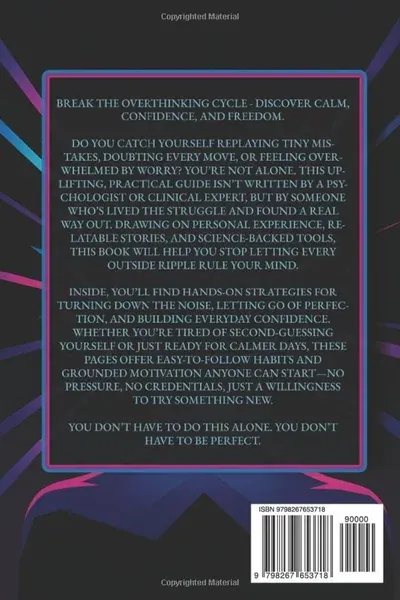
Back cover with synopsis, ISBN barcode, and motivational text about breaking overthinking cycles.
Break Free From Overthinking: How To Stop Letting Everything Affect You by Karl Wiedermann is an independently published self-help paperback released in October 2025. The book is designed as a practical guide for readers who find themselves derailed by overthinking, trapped in cycles of emotional reactivity, and prone to self-sabotage. Its stated aim is a mindset shift: moving readers away from patterns that drain energy and erode self-trust toward a greater sense of control and daily well-being. The book's organizing premise, as described in its promotional materials, is that over-caring and overthinking are self-reinforcing habits — not fixed personality traits — and that they can be unlearned through deliberate practice and the establishment of healthy boundaries.

Scope and Subject Matter

The book covers a range of interconnected topics within the self-help and emotional-regulation space. According to the publisher's description, readers are guided through how to stop self-sabotaging, set healthy boundaries, differentiate between genuine guilt and guilt used as manipulation, and break recurring cycles of overthinking. A significant portion of the book addresses emotional control: strategies for stopping the habit of taking things personally, reducing emotional reactivity, and recognizing toxic relationship dynamics including gaslighting. The book also engages with concepts drawn from psychology — including references to the amygdala, cognitive load, neural networks, dopamine, and the locus of control — as well as ideas associated with figures such as Carl Jung. This breadth of reference signals that the book is positioned at the intersection of pop psychology and practical self-improvement.

Strengths: Practical Frameworks and Accessible Design

The book's clearest strength, based on its described contents, is its commitment to concrete, named techniques. Among the tools it offers are the Witness Practice — a method of labeling and observing emotions rather than identifying with them — Attention Restoration, which involves brief, low-stimulation breaks, and Thought Containment, a structure combining scheduled worry time with journaling to challenge negative narratives. These named frameworks give readers specific entry points rather than broad advice alone. The book also takes on emotionally complex territory, including the distinction between real guilt and guilt-as-manipulation, an area that can be particularly difficult for readers enmeshed in unhealthy relationship dynamics. The guide's compact format — 80 pages — makes it accessible for readers who may themselves be experiencing the exhaustion and mental overload the book addresses.

Limitations: Brevity and a Crowded Genre

The same brevity that makes the book accessible also represents its most significant structural constraint. At 80 pages, the treatment of topics as layered as gaslighting, neural habit formation, self-sabotage, and Carl Jungian concepts is necessarily introductory. Readers looking for deep clinical grounding or extended exploration of any single framework will find the format limiting. The self-help genre addressing overthinking and emotional resilience is also notably crowded, and an independently published title without major-outlet critical reviews faces a higher bar to stand out. Readers with prior familiarity with cognitive behavioral tools or mindfulness-based approaches may find the core material covers familiar ground, and those seeking a heavily research-cited or clinician-authored resource may want to supplement this guide with longer-form texts.

Who This Book Is For

Break Free From Overthinking is most directly suited to readers who are new to the conversation around emotional reactivity and self-sabotage, or who want a streamlined, entry-level resource to return to during periods of heightened stress. The book's framing — that overthinking and over-caring are habits that drain energy, destabilize mood, and erode presence and self-trust — positions it as a starting point for behavioral change rather than a comprehensive therapeutic resource. Its practical, chapter-by-chapter structure, focus on daily well-being, and the empowerment-oriented arc from victimhood mindset to self-agency make it a reasonable fit for readers who prefer concise, action-oriented self-help over academic or narrative-heavy approaches. Those already well-versed in the field, or those navigating serious mental health challenges, are better served by longer, clinician-authored works.

Sources & Further Reading

The key facts and claims in this review are grounded in the retrieved, verified sources listed below.

  1. Cited in this review
  2. 1
  3. Further reading
  4. 2
  5. 3
Related Reviews

Reviews of books we picked for readers who enjoyed Break Free From Overthinking.