Matthew Brenden Wood
2
Books Reviewed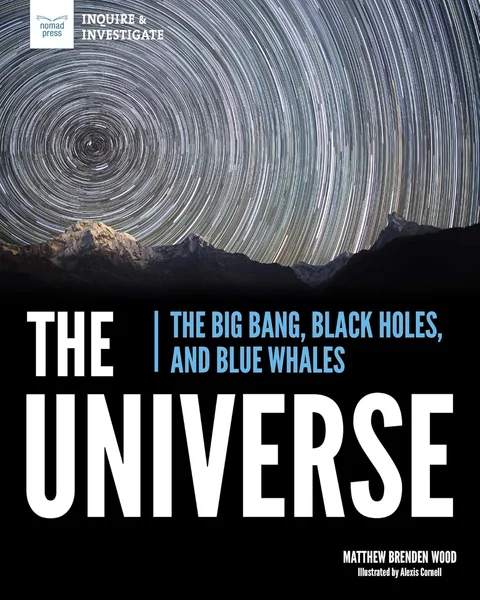
The Universe: The Big Bang, Black Holes, and Blue Whales
4.8/5
reader rating · 60 ratingsPublished by Nomad Press in April 2021 as part of the Inquire & Investigate series, this illustrated nonfiction title for readers ages 12–15 guides young learners from the moment of the Big Bang through the large-scale structure and eventual fate of the universe, pairing content with hands-on STEM activities and research projects throughout.
Reviewed Apr 29, 2026
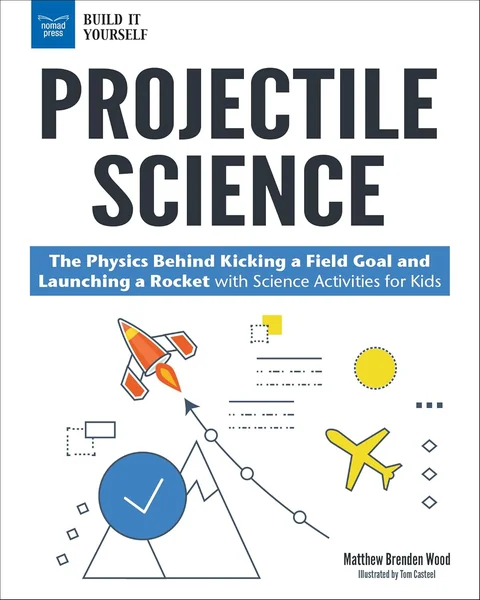
Projectile Science: The Physics Behind Kicking a Field Goal
4.6/5
reader rating · 46 ratingsProjectile Science: The Physics Behind Kicking a Field Goal and Launching a Rocket with Science Activities for Kids by Matthew Brenden Wood, illustrated by Tom Casteel, is a STEAM-focused nonfiction title from Nomad Press targeting readers ages 10 to 15. It unpacks the physics of ballistics — from three-pointers and field goals to rocket trajectories — through hands-on science activities, essential questions, and real-world examples. Barnes & Noble's product listing notes it as "an extremely readable yet factually accurate account of mechanics and its applications to projectiles," and it sits within Nomad Press's four-title Technology for Today set alongside titles on industrial design, big data, and artificial intelligence.
Reviewed Jun 6, 2026
Ask LuvemBooks about Matthew Brenden Wood
- Where should I start?
- The Universe: The Big Bang, Black Holes, and Blue Whales is the strongest entry point, holding a reader rating of 4.8/5 from 60 Amazon ratings and covering an impressively broad range of science — from cosmology to scale comparisons that ground abstract ideas in something tangible. It best represents Wood's approach of making large, complex topics approachable for young readers. If the reader has a specific interest in physics and sports, Projectile Science is a compelling alternative with a tighter, application-focused lens.
- What's their writing style?
- Wood writes in a clear, instructional voice shaped by his years in the classroom — explanations tend to be structured and purposeful rather than conversational or narrative-driven. He favors concrete anchors to make abstract science accessible, such as using a football field goal to explain projectile motion, or invoking blue whales alongside black holes to give cosmic scale a human reference point. His style prioritises clarity and curiosity over dramatic flair, which suits readers who want to genuinely understand a subject rather than just be entertained by it.
- Books we've reviewed
- We have reviewed two books by Matthew Brenden Wood on LuvemBooks. The Universe: The Big Bang, Black Holes, and Blue Whales (Science & Nature) is a wide-ranging exploration of cosmology and scale for middle-grade readers, rated 4.8/5 by readers on Amazon. Projectile Science: The Physics Behind Kicking a Field Goal (Children's Books) applies physics principles to sports scenarios, rated 4.6/5 by readers on Amazon.
- How do his books compare?
- The two reviewed titles take noticeably different approaches to science writing. The Universe casts a wide net, moving across cosmology, scale, and natural phenomena in a way that suits readers drawn to big-picture thinking. Projectile Science is narrower and more applied, using the specific scenario of a field goal kick to unpack physics concepts — it's a better fit for readers who learn well through real-world examples. Both share Wood's clear, structured voice, but the choice between them largely comes down to whether a reader prefers breadth or focus.
- What genre does he write?
- Wood writes nonfiction science books for young readers, sitting at the intersection of Science & Nature and Children's/Middle-Grade educational publishing. His books are not narrative or story-driven — they are content-focused works designed to explain real scientific concepts, informed by his background as a STEAM educator. Readers who enjoy authors like Nate Ball or titles from the 'Ologies series may find his work similarly appealing.
- What should I read after The Universe?
- After The Universe: The Big Bang, Black Holes, and Blue Whales, the natural next step within Wood's reviewed catalogue is Projectile Science: The Physics Behind Kicking a Field Goal — it shifts from cosmological scale to hands-on applied physics, offering a satisfying contrast while staying within the same clear, instructional style. Readers wanting to stay in the cosmology and big-science space might also explore titles like Bill Bryson's A Short History of Nearly Everything (for a more narrative approach) or DK's Space Encyclopedia for visual depth.
Who is Matthew Brenden Wood?
Follow up
Synthesized from verified book data & published reviews · How we review
Press Enter to ask. Answers come from our editorial Q&A — start typing to see related questions.
Authors Like Matthew Brenden Wood
Quinn Quest

Madeleine L'Engle
Will Gater
Petite Dreamer
Petite Dreamer is an author with a background in multicultural education and a passion for diverse heritages, who crafts books designed to make language learning an enjoyable experience for children. Their work includes bilingual educational titles such as *Quickly & Easily Teach 500 Bilingual Food Words for Kids*, aimed at making multilingual learning accessible and fun.
1 book reviewed
Scay WiseHeart
Scay WiseHeart is the author behind the Scay imprints on Scay Fun, where they create illustrated science comics and preschool workbooks for children. Their works include titles featuring stories, experiments, and comics designed to make learning engaging and interactive for young readers.
1 book reviewed

Randall Munroe