8 min read
4.6
· 3,482 Amazon ratingsShare This Review

Our review
Salt Sugar Fat
Salt Sugar Fat: How the Food Giants Hooked Us by Michael Moss Review: A Landmark Exposé of Big Food
Michael Moss's Salt Sugar Fat: How the Food Giants Hooked Us is a rigorously reported investigative nonfiction book — a #1 New York Times bestseller and James Beard Foundation Award winner for Writing and Literature — that dismantles the processed food industry's deliberate engineering of hyper-palatable products, tracing how Kraft, Frito-Lay, Nestlé, Coca-Cola, and others have spent decades manipulating salt, sugar, and fat to override human appetite at a calculated "bliss point."
LuvemBooks Verdict
Best for
Readers drawn to corporate accountability journalism and public health — particularly those who want a rigorously sourced, named-source investigation into how Kraft, Frito-Lay, Nestlé, Coca-Cola, and their peers deliberately engineered processed food to override human self-regulation.
Worth it if
Worth reading if you want to understand the precise mechanisms — the "bliss point," the tobacco-industry marketing parallels, the insider admissions — by which a $2 trillion processed food industry shaped American eating habits, backed by hundreds of on-record industry interviews rather than impressionistic advocacy.
Skip if
Skip it if you are already well-versed in food advocacy literature (the core thesis that Big Food exploits salt, sugar, and fat was not new territory even in 2013), or if you need up-to-date nutritional science on saturated fat — the book's fat sections have not aged as well as its sugar and salt reporting.
What readers & critics say
The Guardian's review describes Moss's findings as "chilling," noting his access to hundreds of current and former food industry insiders — chemists, executives, lobbyists — who revealed an industry laser-focused on keeping consumers "hooked on ever more ingenious junk foods." The Penguin Random House synopsis records that The Washington Post declared any doubt about the food industry's complicity in the obesity epidemic will "evaporate" upon reading the book, and The Boston Globe praised it as "propulsively written [and] persuasively argued"; the book was a #1 New York Times bestseller in 2013 and won the James Beard Foundation Award for Writing and Literature in 2014.
“What he uncovered is chilling: a hard-working industry of smart professionals, all keenly focused on keeping us hooked on ever more ingenious junk foods.”
— theguardian.comAsk LuvemBooks
Was this helpful?
- Is it worth reading?
- For readers interested in public health, food policy, or corporate accountability journalism, Salt Sugar Fat is considered a foundational text — and its accolades reflect that standing. It became a #1 New York Times bestseller in 2013 and won the James Beard Foundation Award for Writing and Literature in 2014; The Washington Post stated that if readers held any doubt about the food industry's complicity in the obesity epidemic, the book would dispel it. The key caveat is that the fat science has aged unevenly — The Guardian's review noted the book's characterization of saturated fat lagged behind evolving nutrition research even at the time of publication — and readers already versed in food-advocacy literature may find the core thesis familiar. Those coming to the subject fresh, however, will find the named reporting, direct executive admissions, and concrete statistics (Americans consuming seventy pounds of sugar and 8,500 milligrams of salt per day, nearly double the recommended amount) make for a dense and persuasive read.
- Similar books
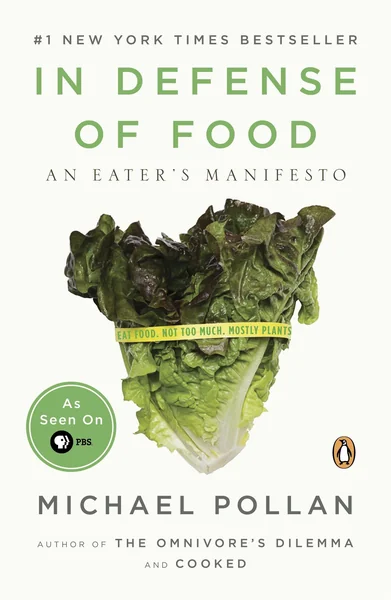
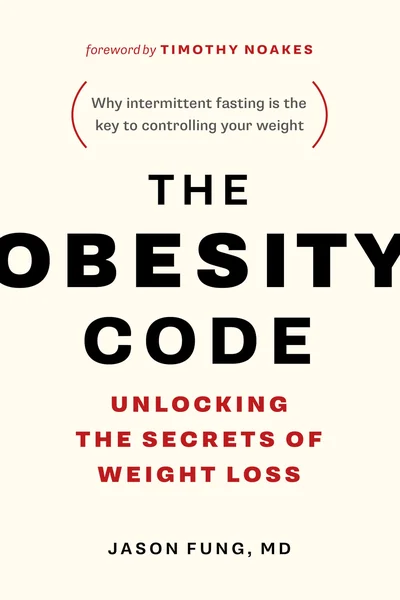
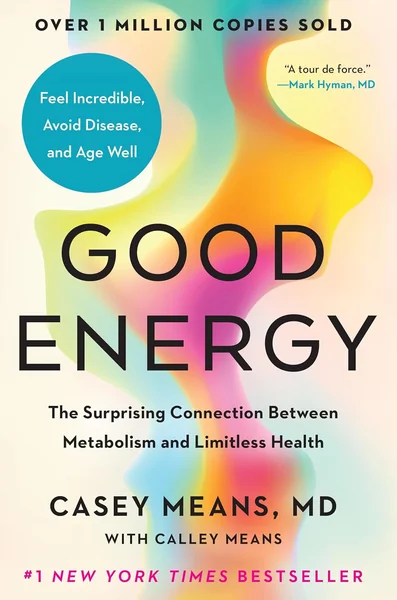
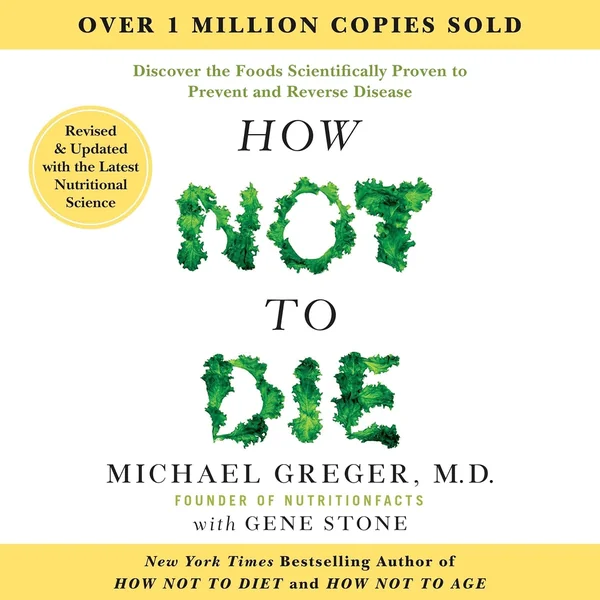
- Readers drawn to Salt Sugar Fat will find a natural companion in Michael Pollan's In Defense of Food: An Eater's Manifesto, which challenges industrial food from a cultural and philosophical angle, and Jason Fung's The Obesity Code: Unlocking the Secrets of Weight Loss, which examines the metabolic science behind weight and insulin resistance. Casey Means and Calley Means's Good Energy: The Surprising Connection Between Metabolism approaches the relationship between food systems and metabolic health from a contemporary clinical perspective, while T. Colin Campbell and Thomas M. Campbell's The China Study offers a large-scale nutritional epidemiology argument with overlapping concerns about the Western diet. Michael Greger's How Not to Diet: The Groundbreaking Science of Healthy, Permanent Weight Loss rounds out the list with evidence-based dietary guidance that picks up where Moss's diagnosis leaves off.
- Who should read this?
- Salt Sugar Fat is aimed squarely at adult readers interested in public health, food policy, corporate accountability journalism, or the science of appetite and addiction. It functions as a reference as much as a narrative — specific companies, products, and scientists are named throughout, and the statistics are concrete rather than impressionistic — making it particularly useful for readers who want documented evidence rather than general advocacy. Those who prefer books with strong prescriptive solutions may find it diagnostically heavy; it is best suited to readers who want to understand the mechanisms behind the $2 trillion processed food industry's influence on American eating habits before seeking remedies elsewhere.
- About Michael Moss
- Michael Moss is an American journalist, author, and public speaker.
- What are the key revelations?
- Among the book's most striking findings is that executives at the world's largest food companies directly acknowledged — on record — that their singular job was to maximize sales and profits by deliberately loading products with salt, sugar, and fat, in full knowledge of the health consequences. Moss also reveals that Big Food companies drew on marketing techniques from tobacco industry playbooks, a documented parallel that reframes the processed food crisis as a corporate ethics problem rather than merely a nutritional one. The book further surfaces concrete statistics — the average American consumes seventy pounds of sugar and 8,500 milligrams of salt per day, nearly double the recommended amount, almost entirely from processed food — and shows that these outcomes were engineered, not incidental.
- Has it won any awards?
- Salt Sugar Fat became a #1 New York Times bestseller in 2013 and won the James Beard Foundation Award for Writing and Literature in 2014. It was named a best book of the year by Kirkus Reviews, Publishers Weekly, HuffPost, and Men's Journal, among others. The Washington Post stated the book would dispel any remaining doubt about the food industry's complicity in the obesity epidemic, and The Boston Globe called it 'propulsively written [and] persuasively argued.'
Summarize this book
Follow up
Synthesized from verified book data & published reviews · How we review
What would you like to know about Salt Sugar Fat?
Answers come from our editorial notes on this book. If we haven't covered something, we'll say so.
Readers often ask
Our Review
We review the evidence: published critics, reader verdicts and BookTube reviews, gathered and weighed with AI assistance and edited by LuvemBooks, rather than one reader's first-hand take.
What the Book Actually Is and Argues
Reporting Depth and Access
Significance and Reception
Where the Book Has Genuine Limitations
Who This Book Is For
Sources & Further Reading
The key facts and claims in this review are grounded in the retrieved, verified sources listed below.
- Cited in this review
- 1
- 2
penguinrandomhouse.com
- 3
en.wikipedia.org
- 4
- Further reading
- 5
Michael Moss, LuvemBooks
- 6
scalar.usc.edu
- 7
- 8
- 9
- 10
gilmoreguidetobooks.com
- 11
Age & Reading Level
Recommended age
Adult
2 content notes · who it suits
Content to know about
Skip if you're looking for a prescriptive diet or wellness guide with actionable personal solutions.
Reader reviews
Be one of the first readers to answer.
Read it? Was it right for you?
Books like Salt Sugar Fat
Curated picks for readers who enjoyed Salt Sugar Fat, with our reasoning for each match.
If you liked Salt Sugar Fat