
Robert Greene
2
Books ReviewedAsk LuvemBooks about Robert Greene
- Where should I start?
- The 48 Laws of Power is the natural starting point — it's the book that established Greene's method of pairing historical anecdotes with explicit strategic principles, and it gives you a clear sense of his voice and approach before moving on to his later, more psychologically focused work. It holds a reader rating of 4.7/5 from over 440 Amazon ratings, which suggests broad and sustained appeal. If you find the historical case-study format engaging, The Laws of Human Nature is a logical next step.
- What's their writing style?
- Greene writes in a structured, analytical style that uses historical case studies as the primary evidence for each argument — each chapter or law typically opens with a historical story before extracting the underlying principle. His prose is direct and confident, often presenting conclusions as hard-won observations rather than suggestions. That declarative tone is part of his appeal, though it also means his books reward readers who are willing to test his claims against their own experience rather than take them at face value.
- Books we've reviewed
- LuvemBooks has reviewed two of Robert Greene's books. The 48 Laws of Power (Self-Help & Personal Development) is Greene's landmark work, condensing historical strategy into 48 explicit laws of power and influence, with a reader rating of 4.7/5 from over 440 Amazon ratings. The Laws of Human Nature (Psychology) turns that same analytical approach toward understanding motivation, emotion, and behavior in ourselves and others.
- How do his books compare?
- Both reviewed books share Greene's core method — using historical figures and events to extract practical principles — but they differ in focus. The 48 Laws of Power is outward-facing, concerned with how power operates between people in social and professional contexts. The Laws of Human Nature turns the lens inward, examining the psychological drives and blind spots that shape behavior. Readers often describe the latter as a more mature and reflective work, while The 48 Laws of Power remains the sharper, more immediately applicable read.
- What genre do they write?
- Greene writes nonfiction, primarily in the areas of psychology, strategy, and human behavior — sometimes shelved under self-help, though his books are heavier on historical analysis and lighter on conventional motivational content than that label implies. The 48 Laws of Power sits in Self-Help & Personal Development, while The Laws of Human Nature is classified under Psychology. If you're drawn to books that combine intellectual history with practical insight, his work fits that space well.
- What should I read after The 48 Laws of Power?
- The Laws of Human Nature is the most direct follow-on from LuvemBooks' reviewed titles — it extends Greene's analytical approach into the territory of psychology and self-understanding, which many readers find a natural complement to the outward-facing focus of The 48 Laws of Power. Beyond Greene's own catalog, readers often move toward Ryan Holiday's The Obstacle Is the Way or Nassim Taleb's The Black Swan for adjacent perspectives on strategy and human behavior.
Who is Robert Greene?
Follow up
Synthesized from verified book data & published reviews · How we review
Press Enter to ask. Answers come from our editorial Q&A — start typing to see related questions.
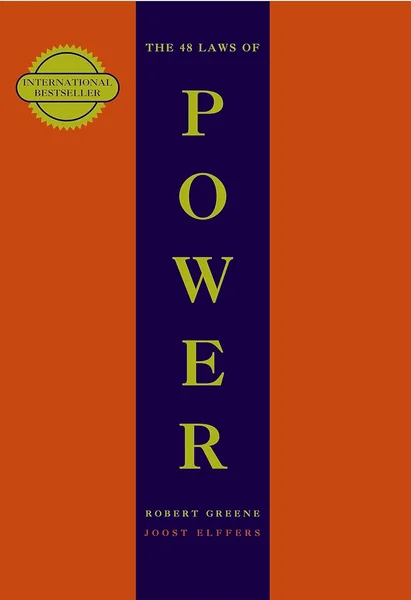
The 48 Laws Of Power by Robert Greene
4.7/5
Robert Greene's The 48 Laws of Power distills three thousand years of historical power dynamics into 48 discrete laws, drawing on the philosophies of Machiavelli, Sun Tzu, and Carl Von Clausewitz alongside case studies from figures ranging from Henry Kissinger to P.T. Barnum. A New York Times bestseller that has sold over 1.2 million copies in the United States and been translated into 24 languages, it remains one of the most discussed and debated self-help books of its era — celebrated for its historical breadth and condemned in equal measure for its unapologetically amoral worldview.
Reviewed Mar 20, 2026
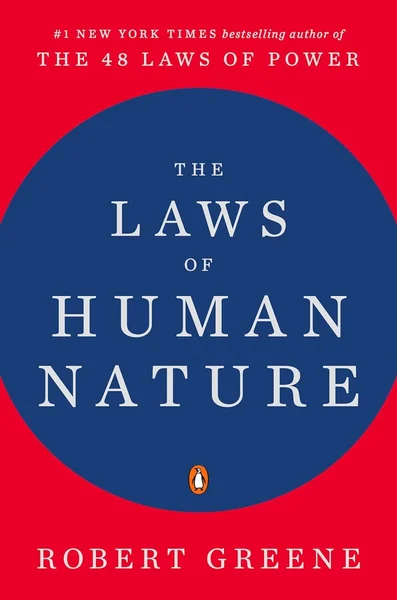
The Laws of Human Nature – International Bestseller on Psychology, Behavior & Human Nature by Robert Greene
/5
Robert Greene's The Laws of Human Nature is an ambitious, encyclopedic nonfiction work structured around 18 laws of human psychology and behavior, drawing on historical figures and philosophical traditions to argue that understanding — and mastering — the hidden forces driving human action is essential to navigating life, relationships, and power. It is a serious undertaking for patient, analytically inclined readers, though its neo-Machiavellian worldview and considerable length have drawn pointed criticism alongside a broad international following.
Reviewed Mar 15, 2026
Authors Like Robert Greene

Jonathan Haidt
Jonathan David Haidt is an American social psychologist and author.
3 books reviewed



Kristin Neff
Kristin Neff, Ph.D., is an Associate Professor of Educational Psychology at the University of Texas at Austin and a pioneer in self-compassion research, having conducted the first empirical studies in the field. She is the author of Self-Compassion: The Proven Power of Being Kind to Yourself (William Morrow, 2011) and co-founded the nonprofit Center for Mindful Self-Compassion (CMSC).
1 book reviewed

Charles Duhigg
Charles Duhigg is an American journalist and non-fiction author.
1 book reviewed
DK

Raymond Wheeler
Raymond H. Wheeler was a Professor of Psychology at the University of Kansas from 1925 to 1947. He was known for his research on Gestalt psychology and climatology's relationship to human behavior and civilizations. His publications include The Laws of Human Nature and Principles of Mental Development, co-authored with F.T. Perkins. Dr. Wheeler died in 1961.
1 book reviewed

James Madison
James Madison, the pen name of Charles Aronstein (August 27, 1870 – March 27, 1943), was an American theatre manager, writer, and publisher, best known for writing and publishing the periodical *Madison's Budget*.
1 book reviewed