8 min read
4.6
· 4,446 Amazon ratingsShare This Review
How Emotions Are Made by Lisa Feldman Barrett Review: A Paradigm-Shifting Science of Emotion
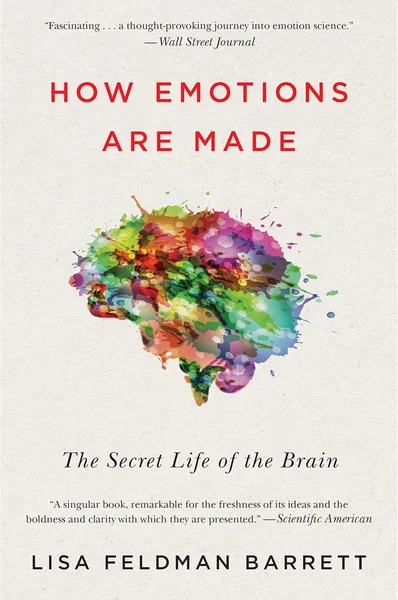
How Emotions Are Made: The Secret Life of the Brain is a landmark work of popular neuroscience in which psychologist and neuroscientist Lisa Feldman Barrett dismantles the dominant classical view of emotion and replaces it with her theory of constructed emotion — arguing that feelings are not hardwired reactions triggered in dedicated brain regions but are actively built, moment to moment, by core systems spanning the entire brain, shaped by a lifetime of learning.
LuvemBooks Verdict
Best for
Curious, educated lay readers — as well as researchers, clinicians, and professionals in law, psychiatry, or education — who want a fully developed, research-grounded account of what contemporary affective neuroscience actually says about how emotions work, rather than what popular culture has long assumed.
Worth it if
Worth engaging with if you're prepared to commit to a sustained, thesis-driven argument and are genuinely open to having deeply held intuitions about the nature of emotion systematically dismantled and rebuilt on a new conceptual foundation.
Skip if
Skip it if you're looking for a light, broad survey of emotion science — the 448-page depth of argument, and the specific academic controversy surrounding the emotional granularity thesis, make this a demanding read rather than an accessible overview.
What readers & critics say
Booklist awarded the book a starred review, calling Barrett's figurative framing "brilliant," and critical coverage (also starred) praised it as "well-argued, entertaining… highly informative, readable, and wide-ranging," both as retrieved via barnesandnoble.com. At the academic level, researchgate.net surfaces a linguistic and semiotic critique of Barrett's emotional granularity concept, indicating the book has generated substantive scholarly friction — itself a signal of serious disciplinary influence.
Sources: Barnes & Noble, Lisa Feldman Barrett (author site), ResearchGateAsk LuvemBooks
Was this helpful?
- Is it worth reading?
- For readers willing to commit to a sustained, thesis-driven scientific argument, LuvemBooks considers How Emotions Are Made a book with real conceptual stakes — one that replaces not just a theory but an entire conceptual framework. Researchers praised it as 'extraordinarily well written,' and Stuart Firestein, author of Ignorance: How It Drives Science, described it as a book that will have readers 'smacking your forehead wondering why it took so long to think this way about the brain.' The main caveat is that general readers seeking a lighter overview of emotion science may find the depth and length more demanding than expected.
- Similar books
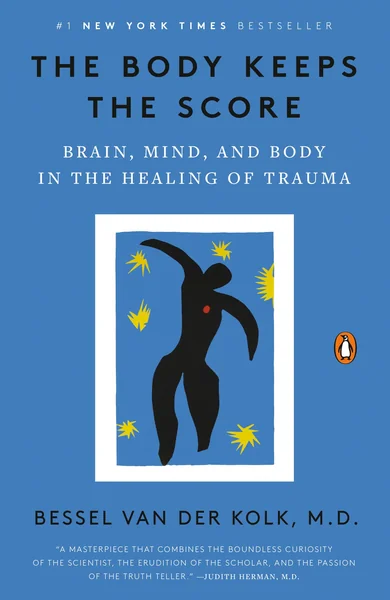
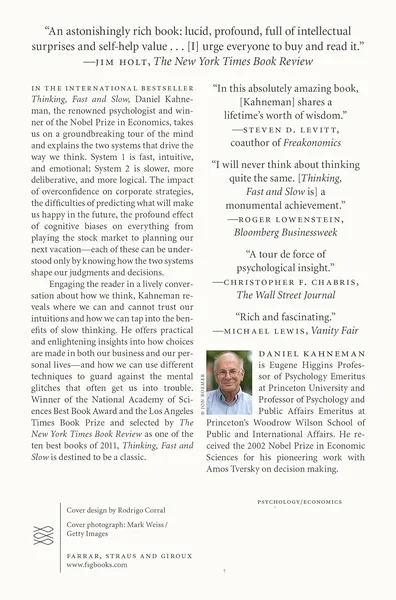
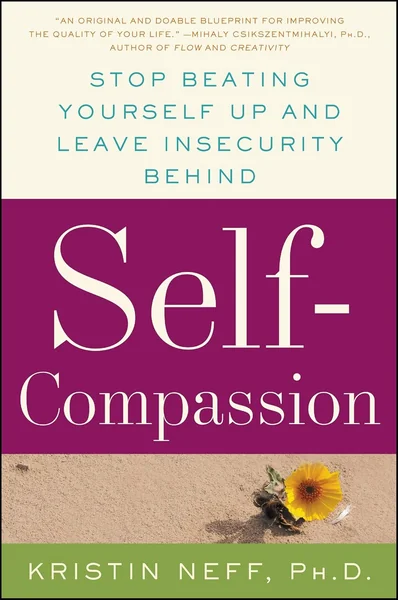
- Readers drawn to How Emotions Are Made will find strong companions in several titles. Daniel Kahneman's Thinking, Fast and Slow offers a similarly rigorous, paradigm-challenging account of how the mind actually works versus how we assume it does. Bessel van der Kolk's The Body Keeps the Score is a natural companion for readers interested in how the brain and body process emotional experience, particularly trauma. For those interested in behavioral change through a neuroscience lens, Charles Duhigg's The Power of Habit covers overlapping territory on habit, cognition, and self-regulation. Kristin Neff's Self-Compassion applies related ideas about emotion and self-perception to practical well-being, while The Psychology Book by DK provides a broad, accessible survey of the discipline for readers who want wider context.
- Who should read this?
- How Emotions Are Made is written for a general educated adult audience with an interest in psychology, neuroscience, or human behavior — no prior specialist knowledge is assumed. It is equally relevant to researchers and clinicians who want to engage with what contemporary affective neuroscience actually says, and to curious lay readers who want that understanding grounded in rigorous science rather than popular assumptions. Professionals in law, psychiatry, and education will find the book's implications especially direct, as Barrett's framework challenges established assumptions in all three fields.
- What are the main themes?
- The book's central themes are the construction of emotion, the limits of universal emotion-reading, and the practical consequences of understanding feelings as built rather than triggered. Barrett explores interoception as a survival mechanism, emotional granularity as a tool for coping and health, and the deeply contextual nature of perceiving emotions in others. The book also engages with the history of emotion science and with interdisciplinary implications spanning affective science, neuroscience, social psychology, philosophy, law, and medicine.
- How has it been received academically?
- The theory of constructed emotion has generated serious scholarly debate, including linguistic and semiotic critiques published in the research literature — particularly around the emotional granularity thesis, where some researchers argue the supporting experiments are too artificially constrained to bear the weight Barrett places on them. LuvemBooks' review frames this level of academic friction as a mark of the book's influence: a theory only attracts sustained formal criticism when it is taken seriously enough to argue with. Researchers who have endorsed it describe it as chronicling 'a paradigm shift in the science of emotion.'
- What's the reading experience like?
- How Emotions Are Made is a substantial undertaking at 448 pages, structured as a sustained, thesis-driven argument rather than a collection of loosely connected essays or case studies. The book opens with a history of emotion science, then works chapter by chapter through the mechanics of emotional construction, the role of interoception, the contextual nature of emotional perception, and the downstream implications for self-understanding and professional fields. Researchers have praised it as 'extraordinarily well written' for a technically demanding subject, but readers should expect to engage with an argument that requires dismantling assumptions they may hold deeply — it is not a light overview.
Summarize this book
Follow up
Synthesized from verified book data & published reviews · How we review
The Theory of Constructed Emotion: How Your Brain Builds Every Feeling You Have
Lisa Barrett's theory holds that emotions aren't hardwired reflexes but brain predictions built from body signals and memory.
Read more →
Are Facial Expressions Really Universal? What Neuroscience Says
Paul Ekman's six universal emotions theory, proposed in the 1960s, has faced serious challenges from decades of cross-cultural research.
Read more →
Press Enter to ask. Answers come from our editorial Q&A — start typing to see related questions.
Age & Reading Level
Recommended age
Adult
Reading level
Adult
who it suits
Skip if you want a light, accessible survey of emotion science rather than a sustained, paradigm-challenging scientific argument.
Our Review
What the Book Actually Argues
The Scope and Ambition of the Argument
Reception and Endorsements
Genuine Limitations and Who May Struggle
Who This Book Is For
Sources & Further Reading
The key facts and claims in this review are grounded in the retrieved, verified sources listed below.
- Cited in this review
- 1
lisafeldmanbarrett.com
- Further reading
- 2
- 3
psycnet.apa.org
Books like How Emotions Are Made
Curated picks for readers who enjoyed How Emotions Are Made, with our reasoning for each match.
If you liked How Emotions Are Made