7 min read
4.7
· 39 Amazon ratingsShare This Review
Our review
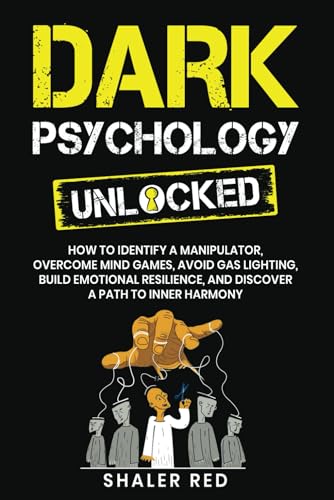
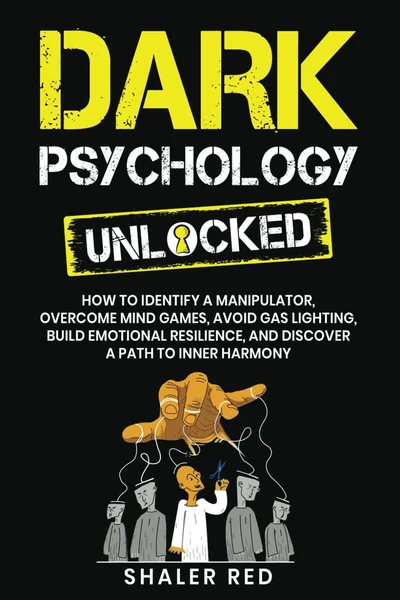
Dark Psychology Unlocked
Dark Psychology Unlocked by Shaler Red Review: A Practical Self-Help Guide to Manipulation Awareness
Dark Psychology Unlocked by Shaler Red is a self-help guide published independently in February 2025, designed to help readers identify manipulative tactics, understand the psychological mechanisms behind mind games, and develop strategies to protect their own mindset. It is available in paperback and as an audiobook narrated by Mike Peterson. This review is based on published descriptions and reader commentary from audible.com; LuvemBooks has not applied the material firsthand.
LuvemBooks Verdict
Best for
Readers who have experienced confusing or destabilizing relationship dynamics and want a clear, practical framework for recognizing manipulation tactics and rebuilding confidence in their own instincts.
Worth it if
You're coming to the subject of dark psychology and manipulation relatively fresh, or you want a compact, accessible consolidation of key concepts paired with actionable boundary-setting strategies rather than an exhaustive academic treatment.
Skip if
If you've already read widely in the manipulation, narcissism, or coercive control self-help space, or if you're looking for scholarly depth, primary research engagement, or extensive case studies — at 126 pages, this introductory guide is unlikely to break new ground for you.
What readers & critics say
Reader commentary retrieved from Audible highlights the book's dual focus — identifying manipulation while also protecting one's own mindset — as a standout quality, with listeners noting that the material helped them make sense of experiences they had struggled to articulate and that they began applying boundary-setting strategies with growing confidence.
Sources: AudibleAsk LuvemBooks
Was this helpful?
- Is it worth reading?
- For readers who have experienced confusing or destabilizing relationship dynamics and want a clear framework for understanding what happened, Dark Psychology Unlocked offers genuine practical value. Reader commentary on Audible describes people making sense of manipulation tactics they had experienced but could not previously articulate, and beginning to apply boundary-setting strategies with increased confidence. The value proposition is strongest for those coming to the subject relatively fresh; readers already well-versed in the self-help literature on manipulation, narcissism, and coercive control may find the core concepts familiar. At 126 pages, it is not a comprehensive academic treatment, but it is a focused, actionable starting point.
- Similar books
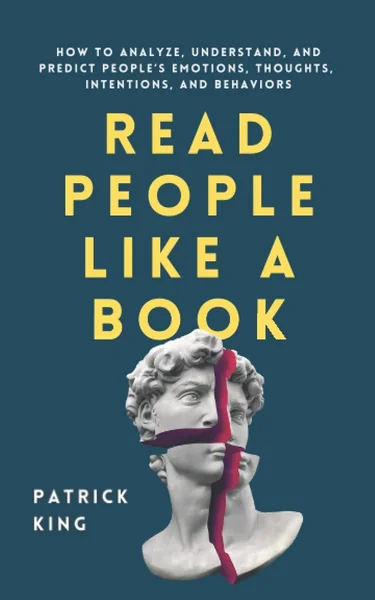
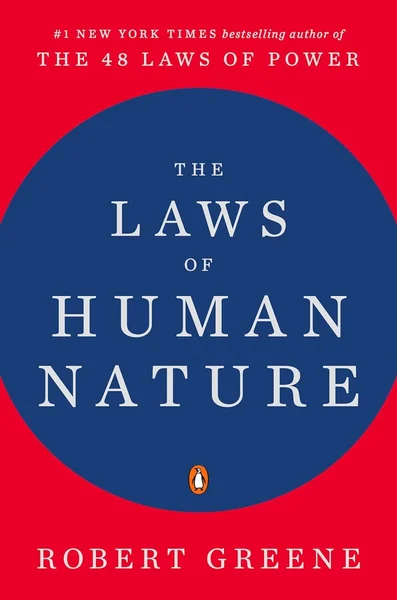
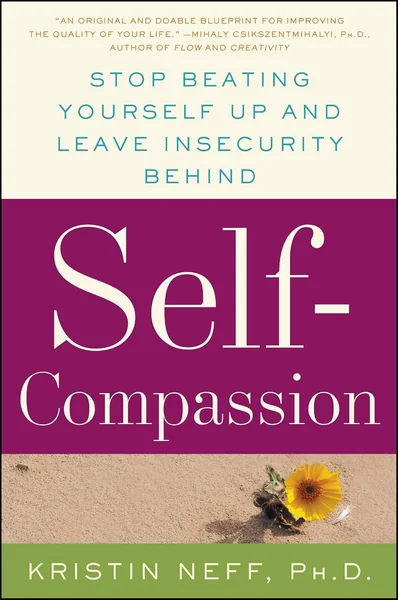
- Readers drawn to Dark Psychology Unlocked may also find value in Patrick King's Read People Like a Book, which similarly translates psychological insight into accessible, practical guidance for everyday social dynamics. Robert Greene's The Laws of Human Nature offers a more expansive and research-rich exploration of human motivation and manipulation for readers ready to go deeper. For those whose interest extends to rebuilding self-trust after difficult relationships, Kristin Neff's Self-Compassion: The Proven Power of Being Kind to Yourself provides a complementary internal-work framework. Julius Spes's Liberation Psychology: 7 Steps To Self-Rejuvenation rounds out the list for readers seeking a structured path toward psychological renewal.
- Who should read this?
- Dark Psychology Unlocked is most squarely aimed at readers who have encountered confusing or destabilizing relationship dynamics and want a clear framework for understanding what happened and how to respond differently. Reader commentary on Audible specifically calls it useful for those who have 'struggled with toxic relationships' or who have found themselves second-guessing their own instincts after difficult interactions. It is also well-suited to readers who want a concise, consolidated introduction to manipulation awareness rather than an exhaustive academic survey. Those already deeply familiar with the self-help literature on narcissism, coercive control, and manipulation may find the content introductory.
- What are the main themes?
- The book's central theme is that recognizing manipulation is only half the work — the other half is cultivating the mental groundedness to resist it. Red explores the mechanics of psychological manipulation, focusing on the conversational distortions that erode self-trust and cause people to doubt their own instincts. A secondary but equally prominent theme is agency: the book frames manipulation awareness not as a passive catalogue of warning signs but as an active skill readers can develop, paired with practical boundary-setting and mindset-protection strategies. The overall arc moves from diagnosis to defense to action.
- What are its limitations?
- At 126 pages, Dark Psychology Unlocked is necessarily compact, and LuvemBooks is direct about what that means: readers seeking an in-depth academic or clinical treatment — one that engages with primary research literature, competing theoretical frameworks, or extensive case studies — will find the scope more introductory than comprehensive. The book is designed for accessibility and immediate applicability, which is a genuine tradeoff. Additionally, readers who have already engaged extensively with self-help literature on manipulation, narcissism, and coercive control may find the foundational material familiar territory rather than new insight.
- How is the audiobook?
- The audiobook edition of Dark Psychology Unlocked is narrated by Mike Peterson and is available alongside the paperback. LuvemBooks notes that the audio format may be a particularly natural fit for this subject matter — given the focus on everyday relationship dynamics, engaging with it during commutes or other low-distraction windows is a practical option. The accessible, non-academic writing style that Audible readers praise in print translates well to an audio presentation.
Summarize this book
Follow up
Synthesized from verified book data & published reviews · How we review
What would you like to know about Dark Psychology Unlocked?
Answers come from our editorial notes on this book. If we haven't covered something, we'll say so.
Readers often ask
Our Review
We review the evidence: published critics, reader verdicts and BookTube reviews, gathered and weighed with AI assistance and edited by LuvemBooks, rather than one reader's first-hand take.
What the Book Is and What It Sets Out to Do

Core Focus and Approach
Strengths: Accessibility and Practical Orientation
Scope and Limitations
Who This Book Is For
Sources & Further Reading
The key facts and claims in this review are grounded in the retrieved, verified sources listed below.
- 1
Age & Reading Level
Recommended age
Adult
who it suits
Skip if you're looking for an in-depth academic or clinical treatment of dark psychology backed by primary research and extensive case studies.
Reader reviews
Be one of the first readers to answer.
Read it? Was it right for you?
Books like Dark Psychology Unlocked
Curated picks for readers who enjoyed Dark Psychology Unlocked, with our reasoning for each match.
If you liked Dark Psychology Unlocked