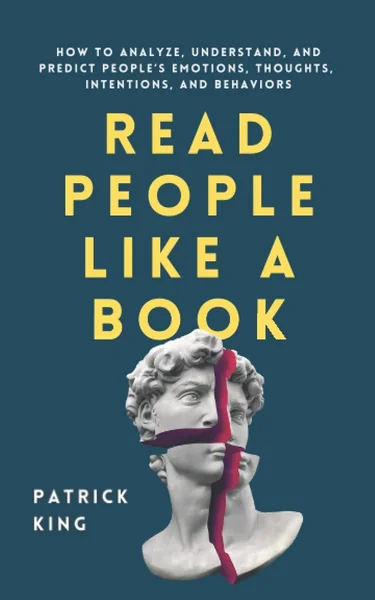
At a glance
LuvemBooks Verdict
Best for: Readers who want a single, accessible guide to improving social awareness — covering body language, lie detection, and behavioral prediction — in practical, everyday contexts like dating, workplaces, or managing social anxiety, without needing a psychology background.
Worth it? Skip it? Read the full verdict →Ask LuvemBooks
Was this helpful?
- Is it worth reading?
- For readers who want practical, accessible frameworks for improving social awareness — without requiring prior expertise — Read People Like a Book delivers on its core promise. Reader summaries highlight its clear, example-driven explanations and its applicability to real-world scenarios like spotting incongruence between words and body language. The documented trade-off is a lack of peer-reviewed citations, meaning its frameworks rest on King's coaching experience rather than independently verified scientific research. Readers who approach it as a practitioner's toolkit rather than a definitive guide to behavioral science are likely to find it genuinely useful; those expecting academic rigor will find it underbuilt.
- Similar books
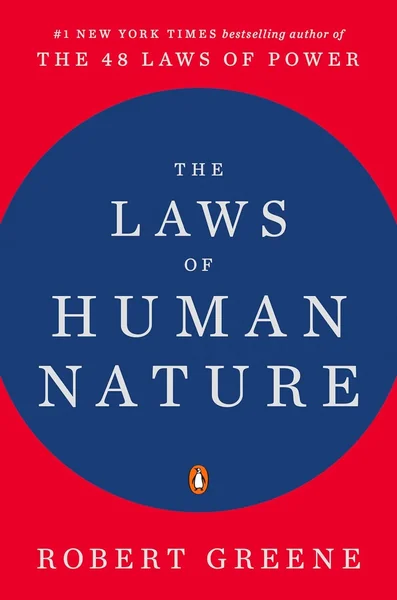
- Readers who enjoyed Read People Like a Book will find a natural next step in The Laws of Human Nature by Robert Greene, which takes a broad, ambitious look at the drivers of human behavior through a historical and philosophical lens. For those wanting a more structured psychological overview, The Psychology Book by DK and Psych 101 by Paul Kleinman both offer accessible, encyclopedic introductions to psychological concepts. The Dark Psychology Playbook by Roger Glenwood covers persuasion and manipulation tactics, overlapping with King's lie-detection and behavioral-analysis themes. How Emotions Are Made by Lisa Barrett brings a more research-grounded perspective on emotion, offering the scientific depth that Read People Like a Book deliberately sidesteps.
- Who should read this?
- Read People Like a Book is designed for a broad general adult audience — specifically people who want to improve social awareness, communicate more effectively, or navigate high-stakes environments like professional settings, dating, or conflict-prone relationships. It is explicitly not pitched at trained professionals, researchers, or readers seeking clinical accuracy. According to the review, readers who enjoy popular social-science titles that translate behavioral concepts into usable frameworks without demanding prior expertise will find the format familiar and approachable. Those who require rigorously sourced behavioral science would benefit from supplementing it with peer-reviewed material.
- About Patrick King
- Patrick King is an internationally bestselling self-published author who has published more than 25 books in just over a year, reaching the top of numerous categories on Amazon. His works cover topics such as reading people, body language, emotional intelligence, and effective communication, with titles including Read People Like a Book and How to Speak Effectively.
- What are the main themes?
- Read People Like a Book is organized around four interconnected skill areas: speed-reading people, deciphering body language, detecting lies, and understanding the broader mechanics of human nature. King frames these as a unified practical toolkit rather than separate academic disciplines, grounded in the idea that all we have access to is another person's external signals — their words, facial expressions, body language, tone, physical appearance, and past behavior. The book also touches on emotional intelligence and behavioral prediction, applying these concepts to relatable real-world contexts including workplace dynamics, dating, and social anxiety.
- Where should I start with Patrick King?
- Read People Like a Book is widely regarded as one of King's flagship titles and is a natural entry point into his catalog, given its broad scope covering body language, lie detection, emotional intelligence, and behavioral prediction in a single accessible volume. King has published more than 25 books, many of which build on related themes — so readers who connect with the framework here will find a rich series to continue with. How to Speak Effectively is another notable title for those whose primary interest is communication rather than behavioral analysis.
Summarize this book
Follow up
Synthesized from verified book data & published reviews · How we review
Press Enter to ask. Answers come from our editorial Q&A — start typing to see related questions.
Age & Reading Level
Recommended age
Adult
Reading level
Adult
who it suits
Skip if you want behavioral psychology claims grounded in peer-reviewed scientific research rather than a coach's applied framework.
Editorial Review
Patrick King's Read People Like a Book is a self-help guide designed to teach readers how to analyze body language, detect deception, and interpret the unspoken intentions behind everyday human behavior — written for a general audience with no background in psychology or professional interrogation training.
Read the Full ReviewBooks like Read People Like a Book
Curated picks for readers who enjoyed Read People Like a Book, with our reasoning for each match.
If you liked Read People Like a Book