8 min read
4.6
· 7,150 Amazon ratingsShare This Review
Self-Compassion: The Proven Power of Being Kind to Yourself by Kristin Neff Review: A Research-Backed Case for Inner Kindness
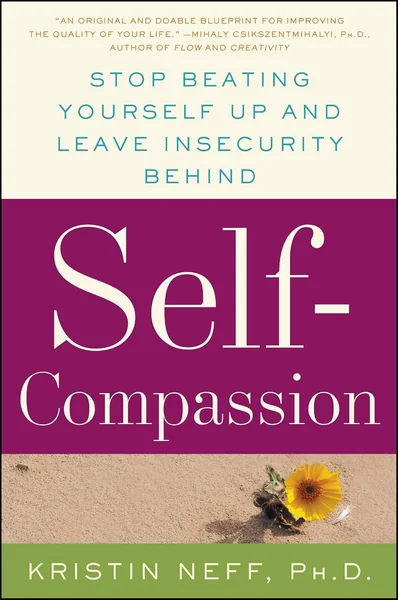
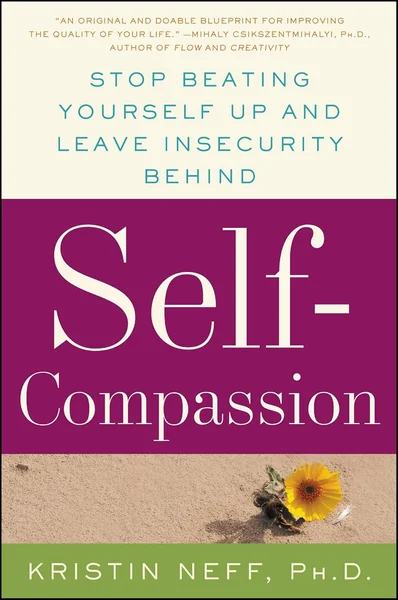
Kristin Neff's Self-Compassion: The Proven Power of Being Kind to Yourself is a self-help and psychology book that makes a rigorous, structured argument for replacing chronic self-criticism with self-compassion — covering its core components, its practical benefits, and its application across relationships, parenting, and personal growth. Originally published in 2011 and later issued in a William Morrow Paperbacks edition, it remains one of the field's foundational texts on the subject.
LuvemBooks Verdict
Best for
Readers who have long defaulted to harsh self-criticism and want a structured, research-grounded framework — not just motivational anecdotes — for replacing that habit with genuine self-compassion across their emotional life, relationships, and parenting.
Worth it if
You're ready to engage with a systematically argued, evidence-based case for self-compassion and want practical exercises alongside the intellectual scaffolding — especially if the book's reach into parenting, motivation, and relationships makes a broad framework more appealing than a narrow one.
Skip if
You're looking for a breezy, narrative-driven self-help memoir or a deep specialist guide to any single application of self-compassion, as the book's deliberate, argument-first structure and wide-ranging scope will likely feel either too academic or too thin in places for those expectations.
What readers & critics say
Review coverage at mentalhealthathome.org highlights Neff's persuasive challenge to the self-esteem movement — noting her argument that pursuing higher self-esteem isn't necessarily useful — and praises the book's blend of research findings and practical exercises. The Storygraph reader community echoes this, with reviewers describing it as a convincing, research-backed case for self-compassion that weaves together practical activities and the author's own story, while some wished for even deeper exploration of the benefits covered.
Sources: Mental Health @ Home, The StoryGraph, Yvonne Spence, mcnallyjackson.com, empowerprocess.comAsk LuvemBooks
Was this helpful?
- Is it worth reading?
- For readers willing to engage with a structured, research-informed argument, Self-Compassion offers genuine intellectual and practical value that most self-help books cannot match. It has demonstrated sustained relevance across more than a decade — originally published in 2011 and subsequently reissued by William Morrow Paperbacks — and continues to serve as a foundational text in the field. One of its standout qualities is that it anticipates reader resistance directly within the prose, including the tendency to self-criticize about self-criticism itself. Readers who prefer anecdote-heavy or narrative-driven self-help, or who want deep specialist coverage of a single domain like parenting or relationships, may find the broad scope a limiting factor.
- Similar books
- Readers drawn to Self-Compassion's research-informed approach to emotional well-being will find strong companions in several related titles. Brené Brown's The Gifts of Imperfection covers overlapping ground on self-worth and letting go of perfectionism, making it a natural pairing. For readers interested in the emotional science underpinning Neff's framework, Lisa Feldman Barrett's How Emotions Are Made offers a rigorous look at how emotions are constructed — complementing Neff's mindful-awareness component. Charles Duhigg's The Power of Habit is useful for readers focused on the behavioral-change and motivation sections of Neff's argument, while Liberation Psychology by Julius Spes broadens the conversation into the social and structural dimensions of psychological well-being.
- Who should read this?
- Self-Compassion is best suited to adult readers who are drawn to the psychology of well-being and want an intellectually grounded, rather than purely inspirational, case for changing their relationship with self-criticism. It is particularly valuable for those who are skeptical of conventional self-help and want to trace claims back to research, since the book includes bibliographical references and an index. Readers whose primary concerns touch on parenting, relationships, or emotional resilience will find dedicated sections addressing each. Those who prefer narrative-driven or anecdote-heavy self-help, or who are seeking a deep specialist manual on one specific application, are less well served by the book's broad, structured scope.
- What are the core ideas?
- The book is organized around three core components of self-compassion: being kind to oneself, recognizing shared human experience (framed as 'we're all in this together'), and practicing mindful awareness of one's emotional state ('being mindful of what is'). A central intellectual move is Neff's challenge to the self-esteem movement — arguing that relentlessly shoring up one's self-image is both exhausting and counterproductive, and that self-compassion is a more sustainable foundation. The book also addresses the paradox that readers may turn self-criticism onto the very act of being self-critical, and it tackles this trap directly within the prose.
- Does it go deep enough?
- The book's scope is broad by design — it covers emotional resilience, self-esteem, motivation, parenting, love, and relationships across its four sections. This breadth is a deliberate architectural choice intended to demonstrate how self-compassion applies across multiple life domains, but it does mean that readers seeking deep specialist treatment of any single area will find coverage necessarily limited. The book is best understood as a comprehensive introduction and argument for a way of living, rather than an exhaustive manual on any one application of self-compassion.
- Where to start with Kristin Neff?
- For most readers, Self-Compassion: The Proven Power of Being Kind to Yourself is the natural starting point with Neff's work — it is her foundational accessible text and the book that brought her academic research to a general audience after its original publication in 2011. Readers who want a more action-oriented or applied follow-up may find her later book Fierce Self-Compassion a strong next step, as it extends the framework in a more practice-focused direction. Those interested in the structured program that grew out of this work can also explore the Mindful Self-Compassion (MSC) program, which Neff co-developed.
Summarize this book
Follow up
Synthesized from verified book data & published reviews · How we review
Press Enter to ask. Answers come from our editorial Q&A — start typing to see related questions.
Age & Reading Level
Recommended age
Adult
Reading level
Adult
who it suits
Skip if you prefer narrative-driven, anecdote-heavy self-help over a structured, research-and-argument framework.
Our Review
What the Book Actually Is and Argues
Structure and Scope
Significance and Place in the Field
Genuine Strengths
Limitations and Who May Be Frustrated
Sources & Further Reading
The key facts and claims in this review are grounded in the retrieved, verified sources listed below.
- Cited in this review
- 1
- 2
yvonnespence.com
- 3
- Further reading
- 4
self-compassion.org
- 5
- 6
mentalhealthathome.org
- 7
Books like Self-Compassion
Curated picks for readers who enjoyed Self-Compassion, with our reasoning for each match.
If you liked Self-Compassion