At a glance
About the Author
Dr Alan Porter1 book reviewed
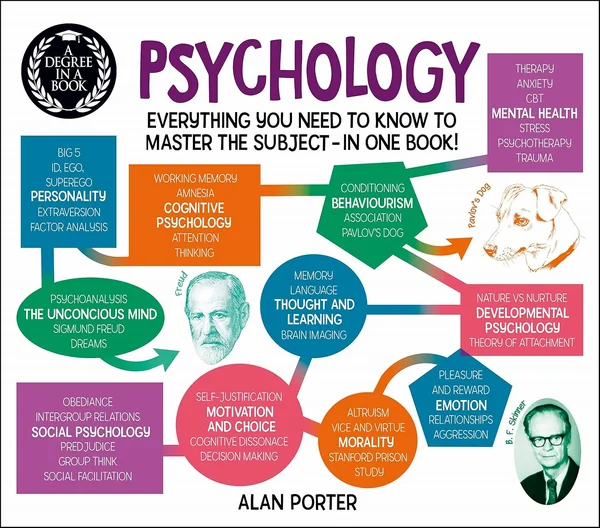
A Degree in a Book
Psychology
by Dr Alan Porter
LuvemBooks Verdict
Best for: The psychology-curious reader — someone weighing a degree course, a student in an adjacent field, or a former student wanting a refresher — who wants the field's major subfields and figures (Freud to the Five Factor model) mapped visually in a single sitting.
Worth it? Skip it? Read the full verdict →Ask LuvemBooks
Was this helpful?
- Is it worth reading?
- For the right reader, yes. The visual-first format genuinely works for a field whose history is a history of competing frameworks — seeing behaviourism, cognitivism and the psychodynamic tradition laid out as visual systems is an organizational strength rather than a gimmick, and readers have praised the easy, accessible prose with clearly defined terms. The caveat is structural: compressing subfields that could each sustain a year-long course into succinct chapters means omissions, some significant, and section placement that some readers have criticized. LuvemBooks' view is that it earns its place as an orientation for the psychology-curious and a refresher for returning students, provided no one mistakes the map for the territory.
- Who should read this?
- The book is pitched at the psychology-curious rather than the psychology-committed. Someone weighing a degree course, a student in an adjacent field who needs the lay of the land, or a general reader who wants Freud, Skinner and the Five Factor model contextualized in one sitting will find the format well matched to that goal. It also earns credible marks as a refresher for those who studied psychology years ago — that dual audience of introduction and refresher is where its pitch is most believable. Those already deep in the subject, or expecting genuine undergraduate analytical depth, should look to the further-reading trail instead.
- What's the reading level?
- The prose is adult-oriented but deliberately accessible: technical terms are defined either in the text or alongside it, and readers have described the writing as easy to follow. The real reading-level feature is the format itself — mind maps, flow charts, infographics and timelines let a reader grasp relationships between schools of thought and their key experiments without wading through conventional textbook chapters. It suits general adult readers and mature students; there is no specialist prerequisite.
- Can it replace a real textbook?
- No — and the book effectively concedes the point. Porter's introduction acknowledges omitted material, the further-reading suggestions function as an implicit admission that this is a starting point that points outward, and the 'master the subject in one book' subtitle overpromises what a single survey can deliver. What it can do is orient: it shows how the subfields and figures fit together so a reader knows where to go deeper. Serious students will still need the real textbooks on that trail.
- Is it good as a refresher?
- Yes — the refresher audience is half of where the book's pitch is most credible. Readers who studied psychology before have judged it a worthwhile refresher, because the mind maps and timelines re-anchor figures like Fechner, Ebbinghaus and Thorndike in the field's experimental origins and reassemble competing schools into a coherent visual system. Someone returning to the subject years later can reorient quickly without committing to a full textbook.
- Similar books
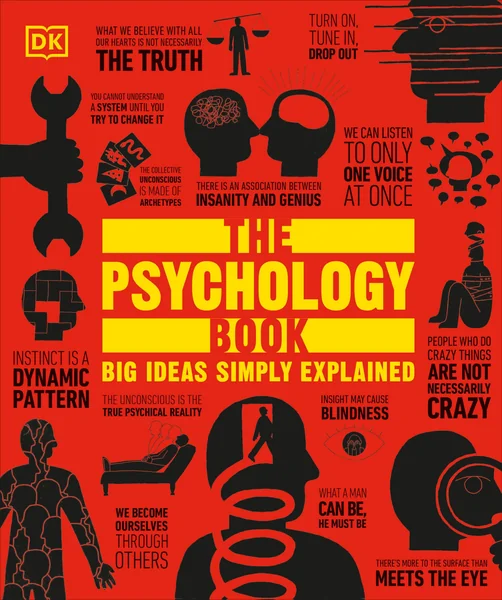
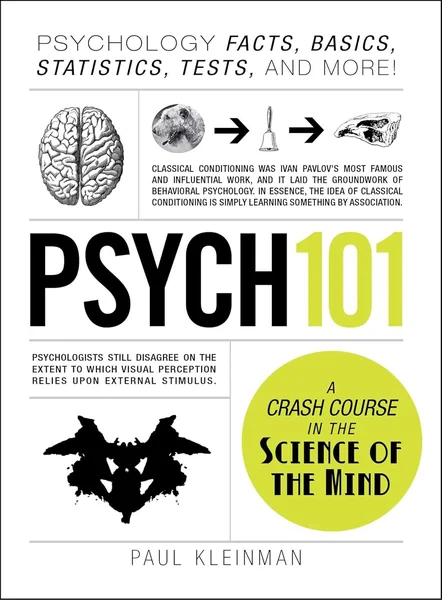
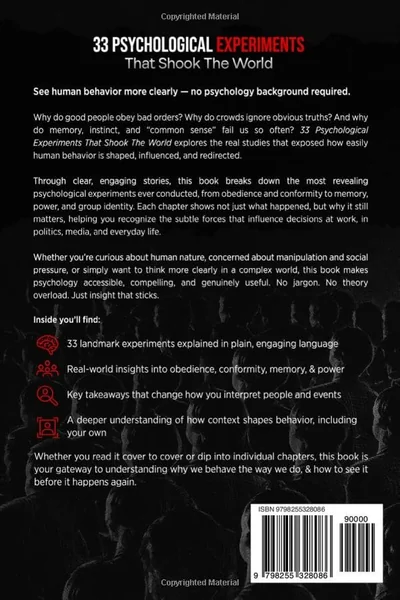
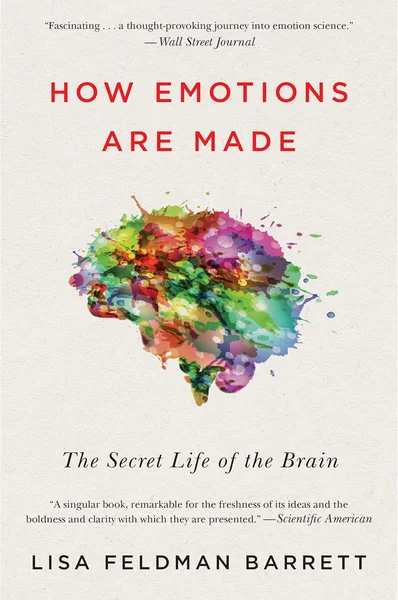
- Readers drawn to this visual survey format should look at DK's The Psychology Book: Big Ideas Simply Explained, which uses a similarly graphic approach to the discipline's landmark ideas, and Paul Kleinman's Psych 101, another accessible single-volume tour of foundational concepts. Andrew Whitaker's 33 Psychological Experiments That Shook The World digs into the landmark studies Porter's timelines can only gesture at. For a deeper single-argument read, Lisa Feldman Barrett's How Emotions Are Made and David Eagleman's Incognito: The Secret Lives of the Brain each take one corner of the field to full book length — the natural next step once this map has shown you where to go.
Summarize this book
Follow up
Synthesized from verified book data & published reviews · How we review
Press Enter to ask. Answers come from our editorial Q&A — start typing to see related questions.
Age & Reading Level
Recommended age
Adult
Reading level
Adult
who it suits
Skip if you need the analytical depth of an actual undergraduate textbook — this is a survey that trades depth for breadth, and serious students will need its further-reading trail.
Editorial Review
Dr Alan Porter's A Degree in a Book: Psychology (Arcturus, 2018) condenses the discipline's major subfields — from Freud and Skinner to cognitive, clinical and forensic psychology — into one visually driven volume of mind maps, diagrams and timelines. It succeeds as an accessible orientation for newcomers and a refresher for returning readers, provided no one mistakes the map for the territory.
Read the Full ReviewBooks like A Degree in a Book
Curated picks for readers who enjoyed A Degree in a Book, with our reasoning for each match.
If you liked A Degree in a Book