7 min read
Share This Review
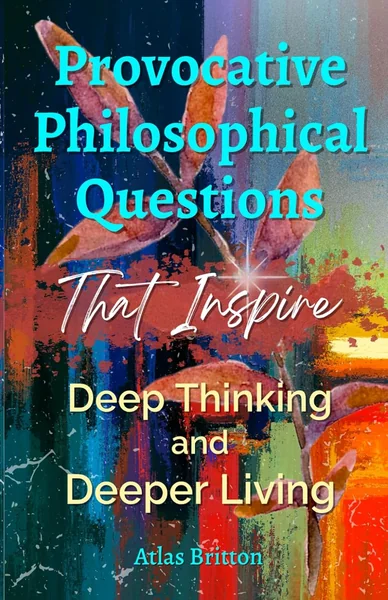
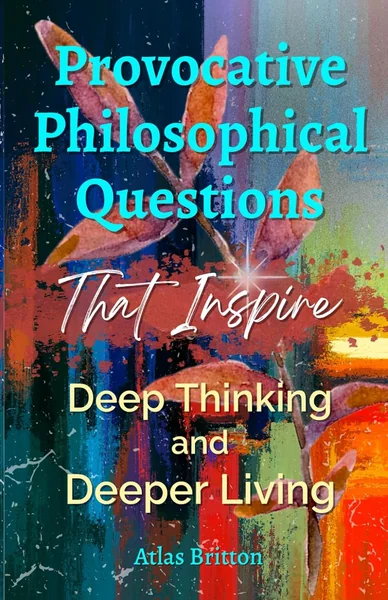
Provocative Philosophical Questions That Inspire Deep Thinking and Deeper Living by Atlas Britton Review: Accessible Entry Point Into Timeless Philosophy
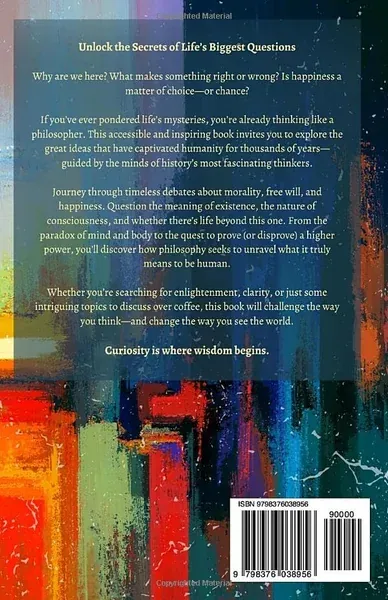
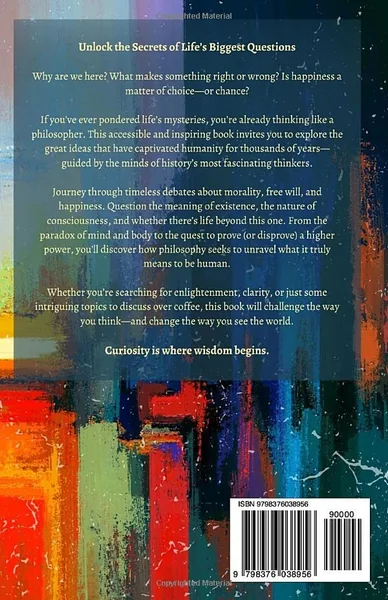
Atlas Britton's independently published guide frames philosophy as a living, practical pursuit by presenting thought experiments and big questions drawn from history's most celebrated thinkers — designed for curious readers with no prior academic background.
 Tap to enlarge
LuvemBooks Verdict
Best for
Curious readers who have long been drawn to life's big questions but have bounced off dense academic philosophy texts and want an accessible, dip-in-and-out entry point that works equally well for solo reflection or conversation.
Worth it if
You want philosophical thought experiments served in plain language — something you can pick up, explore a single question, put down, and return to without needing to hold a continuous argument in your head.
Skip if
You come to philosophy wanting close engagement with primary sources, competing scholarly interpretations, or the footnotes and further-reading apparatus that academic introductory texts provide.
What readers & critics say
Listener responses on Audible highlight the book's plain-language approach as a standout quality, with reviewers noting its thought-provoking subject matter and smooth audio delivery by narrator Joshua Johnson.
Sources: AudibleAsk LuvemBooks
Was this helpful?
- Is it worth reading?
- For its target audience — curious readers who have bounced off dense primary texts or jargon-heavy introductions — LuvemBooks considers it a well-executed invitation into philosophical thinking. The thought-experiment format keeps sections self-contained and inherently engaging, and the plain-language ethos is consistently reinforced across both the print and audiobook editions. The key caveat is scope: the book is best understood as an on-ramp, not a comprehensive map of the field, and readers wanting rigorous academic coverage will find it falls short of that ambition.
- Similar books
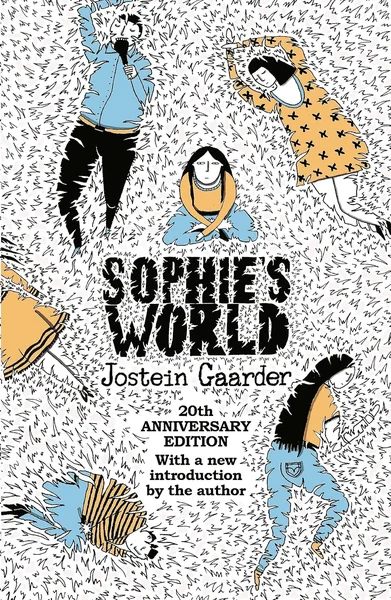
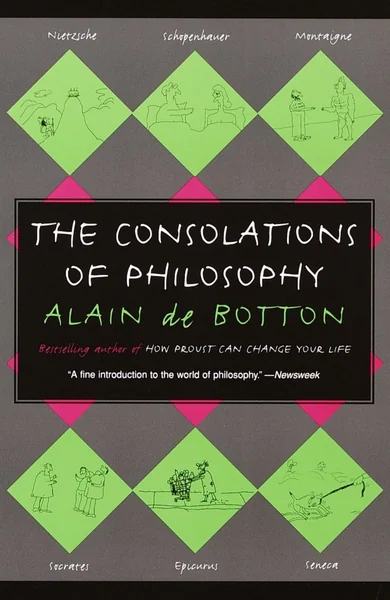
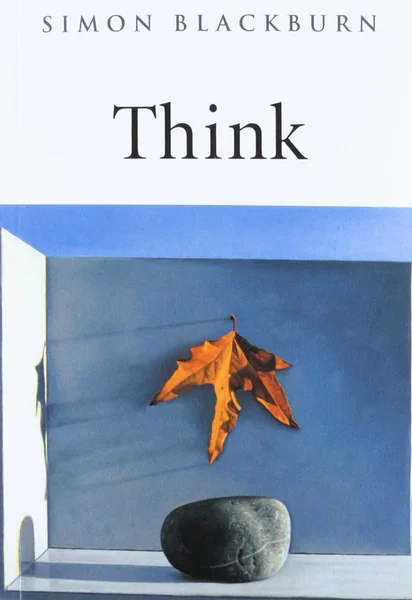
- Readers who enjoy Britton's approachable, question-led style will find much to like in Paul Kleinman's Philosophy 101: From Plato and Simon Blackburn's Think: A Compelling Introduction to Philosophy, both of which offer accessible entry points into the discipline with varying degrees of scholarly structure. Alain De Botton's The Consolations of Philosophy takes a similarly practical, life-application angle, while J. Gaarder's Sophie's World delivers the history of philosophy through an engaging narrative format suited to readers who prefer story-driven exploration. For those drawn to the idea of philosophy embedded in everyday culture, The Simpsons and Philosophy: The D'oh! of Homer (William Irwin, Mark T. Conard, Aeon J. Skoble) makes philosophical concepts accessible through a familiar pop-culture lens.
- Who should read this?
- This book is most clearly designed for curious adult readers who have wondered about life's big philosophical ideas but have never found a comfortable entry point — particularly those who have previously been put off by dense primary texts or jargon-heavy academic introductions. The dual-use framing also makes it well-suited to anyone who wants philosophical questions they can bring into social conversation, not just solitary study. Readers already familiar with academic philosophy, or those seeking rigorous scholarly coverage with primary-source engagement, are not the intended audience.
- What are the main themes?
- The book centres on foundational philosophical questions about existence, ethics, and knowledge — the kind of questions Britton describes as having 'captivated humanity for thousands of years.' A recurring thread is the idea that philosophical thinking is not confined to academia but happens naturally in everyday life, in kitchens and cafés as much as in libraries or seminar rooms. The thought experiments are framed as tools for both examining one's place in the world and engaging others in meaningful conversation, so the themes of self-reflection, practical wisdom, and accessible intellectual curiosity run throughout.
- What's the reading level?
- The book is written for a general adult audience in deliberate plain language, and no prior knowledge of philosophy is required or assumed. Audible listeners specifically note that it 'explains everything in plain English instead of talking above my head,' which reflects the book's core design intent. The accessible vocabulary and self-contained structure make it one of the more approachable philosophy titles available, though the depth of the ideas themselves means motivated older teenagers could engage with it meaningfully.
- How is the audiobook?
- The audiobook is narrated by Joshua Johnson and is available on Audible. Listeners describe Johnson's performance as having a smooth flow with a clear, captivating voice — a meaningful quality given that the accessible audio delivery reinforces the book's plain-language ethos. Some listeners report planning to revisit specific sections repeatedly, suggesting the audio edition works well in the dip-in-and-out format that the book's structure supports.
Summarize this book
Follow up
Synthesized from verified book data & published reviews · How we review
Press Enter to ask. Answers come from our editorial Q&A — start typing to see related questions.
Age & Reading Level
Recommended age
Adult
Reading level
Adult
who it suits
Skip if you want a rigorous, academically structured survey of philosophy with primary-source engagement, footnotes, and bibliographies.
Our Review
What the Book Actually Is
Scope, Structure, and Accessibility
Significance and Intended Use
Genuine Strengths
Limitations and Who May Be Frustrated
Sources & Further Reading
The key facts and claims in this review are grounded in the retrieved, verified sources listed below.
- Cited in this review
- 1
- Further reading
- 2
worldofbooks.com
- 3
Books like Provocative Philosophical Questions That Inspire Deep Thinking and Deeper Living
Curated picks for readers who enjoyed Provocative Philosophical Questions That Inspire Deep Thinking and Deeper Living, with our reasoning for each match.
If you liked Provocative Philosophical Questions That Inspire Deep Thinking and Deeper Living