8 min read
4.7
· 76 Amazon ratingsShare This Review

Our review
A History of Western Philosophy
A History of Western Philosophy by C. Stephen Evans Review: A Comprehensive, Christologically Framed Survey
C. Stephen Evans's A History of Western Philosophy: From the Pre-Socratics to Postmodernism is a single-volume academic textbook published by IVP Academic in 2018 that surveys the full arc of Western philosophical thought — from Thales and the Pre-Socratics through Nietzsche and postmodernism — while distinctively foregrounding the relationship between philosophical inquiry and Christian belief. This review is based on published source commentary and the book's documented contents, not hands-on use.
LuvemBooks Verdict
Best for
Students and instructors in Christian academic contexts — seminaries, faith-based colleges, and theology programmes — who want a single-volume, introductory survey of Western philosophy that takes theological questions seriously as philosophical ones.
Worth it if
Worth reading if you want a clearly structured, introductory sweep from the Pre-Socratics to postmodernism that gives the Medieval period its due weight and frames the entire tradition through the lens of philosophy's ongoing engagement with Christian thought.
Skip if
Skip it if you need a secular, analytic, or religiously neutral survey of Western philosophy, or if you want deep specialist coverage of postmodernism on its own continental or non-theological terms — the book's Christian interpretive framework and introductory scope will feel limiting on both counts.
What readers & critics say
Jwwartick.com describes the book as "a valuable entry in the list of single-volume histories of philosophy," noting that Evans approaches the topic from a Christian perspective while integrating critiques into his exposition. Faithandselfdefense.com characterises it as "an excellent introductory textbook for serious Christian apologists," and readingreligion.org acknowledges that criticism aimed at Evans's treatment of postmodernism — prominently marketed in the subtitle — may be justified based on his conception of what Western philosophy constitutes as an independent movement.
Sources: jwwartick.com, faithandselfdefense.com, readingreligion.orgAsk LuvemBooks
Was this helpful?
- Is it worth reading?
- For students and instructors in Christian academic contexts — seminaries, faith-based colleges, and theology programs — the book offers something genuinely rare: a rigorous single-volume survey that treats theological questions as serious philosophical questions rather than peripheral concerns. Reading Religion describes it as providing 'masterful clarity' as an introductory manual, and John G. Stackhouse Jr. of Crandall University calls it 'a rare gift' likely to earn wide readership. The main caveat is for readers seeking a secular or strictly analytic survey: Evans's theological interpretive framework is persistent throughout, and the treatment of postmodernism may not fully satisfy those expecting deep engagement with its non-theological dimensions.
- Similar books
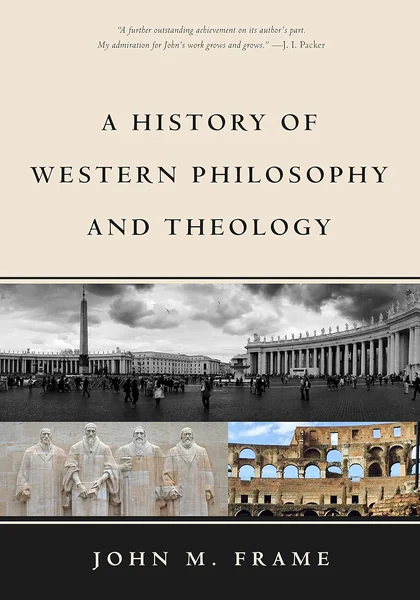
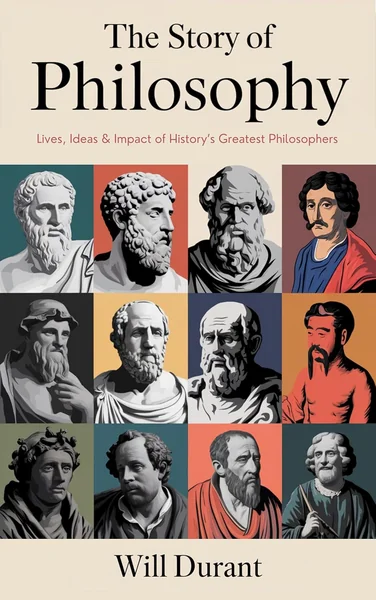
- Readers drawn to Evans's book may also find value in John M. Frame's A History of Western Philosophy and Theology, which similarly approaches the philosophical tradition through a Christian theological lens and is a natural companion volume. For a more secular and narrative-driven introduction to the same broad sweep, Will Durant's The Story of Philosophy remains a classic of the genre. Simon Blackburn's Think: A Compelling Introduction to Philosophy offers a crisp, analytic alternative for readers who want a secular entry point. For those approaching philosophy more gently, Jostein Gaarder's Sophie's World presents the history of Western philosophy in accessible, story-driven form, while Alain de Botton's The Consolations of Philosophy offers a more personal and humanistic take on key thinkers.
- Who should read this?
- The book is best suited to undergraduate and seminary students encountering the sweep of Western philosophy for the first time, particularly those studying at faith-based colleges, seminaries, or theology programs where the intersection of philosophy and Christian thought is a curricular priority. Instructors at such institutions will find the book's framing — which treats theological questions as genuinely philosophical ones and devotes five chapters to the Medieval era — especially well-suited to their teaching contexts. Readers seeking a purely secular or analytic survey, or advanced specialist treatment of any particular era or movement, are not the primary audience Evans has in mind.
- How does the Christian framework shape the book?
- Evans's central argument is that a true and complete history of Western philosophy must account for the relationship between philosophical thought and Christian belief, on the grounds that virtually all great Western thinkers — ancient, medieval, and modern — were deeply engaged with questions about God and spiritual realities. Rather than treating theology as peripheral to the philosophical tradition, the book positions it as integral to understanding how Western philosophical thought actually developed. The most visible structural consequence is the five-chapter treatment of the Medieval era — covering Augustine, Aquinas, and Ockham at length — which distinguishes this text from secular surveys that treat the medieval period as a brief interlude between antiquity and modernity.
- What do reviewers and scholars say?
- The reception from published commentary is positive, particularly within the Christian academic tradition. Reading Religion describes the book as 'an introductory manual that provides, with masterful clarity, an overview of the basic figures and thoughts of Western philosophy from the Pre-Socratics to Postmodernism,' and calls it 'a valuable entry in the list of single-volume histories of philosophy.' John G. Stackhouse Jr., Samuel J. Mikolaski Professor of Religious Studies at Crandall University, endorses it as 'a rare gift' and expresses confidence it will earn wide readership. The one substantive critical note raised by the Reading Religion reviewer concerns whether Evans's treatment of postmodernism fully delivers on the prominence that movement receives in the subtitle.
- What is the reading level?
- The book is designed as an introductory-level academic textbook, intended for students encountering the sweep of Western philosophy for the first time at the undergraduate, seminary, or graduate level. Evans connects philosophical figures to one another, traces lines of influence, and contextualizes thinkers within broader intellectual and social conditions in ways that serve newcomers to the discipline. It is not a general-audience trade book, and readers with no prior exposure to academic reading may find the textbook format and philosophical terminology a steeper entry point than more popular introductions such as Jostein Gaarder's Sophie's World or Alain de Botton's The Consolations of Philosophy.
Summarize this book
Follow up
Synthesized from verified book data & published reviews · How we review
What would you like to know about A History of Western Philosophy?
Answers come from our editorial notes on this book. If we haven't covered something, we'll say so.
Readers often ask
Our Review
This review covers the book's content, premise and published critical reception, not a first-hand reading.
What the Book Is and What It Argues
Scope, Structure, and Coverage
A Valued Entry in a Competitive Field
The Christian Perspective as Strength and Limitation
Who This Textbook Is Designed For
Sources & Further Reading
The key facts and claims in this review are grounded in the retrieved, verified sources listed below.
- Cited in this review
- 1
- 2
- 3
- Further reading
- 4
readingreligion.org
- 5
- 6
Age & Reading Level
Recommended age
Adult
who it suits
Skip if you want a secular, analytic, or continental survey of Western philosophy unfiltered by a Christian interpretive framework.
Reader reviews
Be one of the first readers to answer.
Read it? Was it right for you?
Books like A History of Western Philosophy
Curated picks for readers who enjoyed A History of Western Philosophy, with our reasoning for each match.
If you liked A History of Western Philosophy