8 min read
4.8
· 187 Amazon ratingsShare This Review

Our review
A History of Western Philosophy and Theology
A History of Western Philosophy and Theology by John M. Frame Review: A Landmark Reformed Guide to Western Thought
A History of Western Philosophy and Theology is a 912-page hardcover reference and textbook by John M. Frame, published by P&R Publishing in November 2015, that surveys major figures and movements in Western philosophy from a distinctly Reformed, Scripture-anchored perspective. This review is based on the book's content as described by its publisher and published sources, not hands-on use. Praised by theologians including D. A. Carson and J. I. Packer, it is designed as both a comprehensive historical overview and a model for integrating philosophy with Christian theology — an ambitious undertaking that has earned significant acclaim in Reformed academic and pastoral circles, while its unapologetically confessional standpoint will not suit every reader equally.
LuvemBooks Verdict
Best for
Seminary students, pastors, and Reformed theology scholars who want a comprehensive, critically evaluative tour of Western philosophy assessed explicitly against the standard of Christian Scripture and the presuppositional Kuyper-Van Til tradition.
Worth it if
You want a single-volume resource that doesn't just map Western philosophical history but actively guides you through it with a coherent, Bible-grounded theological framework — and you're prepared to engage Frame's Reformed presuppositionalism on its own terms across 900-plus pages of structured academic depth.
Skip if
You're looking for a philosophically pluralist or secular survey of Western thought — Frame's unapologetically confessional, Scripture-first standpoint is the organizing principle of the entire work, not a marginal feature, making it a fundamental mismatch for readers who want neutral description.
What readers & critics say
Reception in Reformed and evangelical academic circles has been strongly positive: wtsbooks.com describes it as "a further outstanding achievement by John Frame" whose "solid brilliance" makes it "a most effective advocacy for the Kuyper-Van Til perspective," while sharperiron.org identifies Frame as exactly "the kind of guide, the kind of teacher, you want on a journey through Western philosophy," praising his evaluative depth over mere description. Booksataglance.com singles out Frame's lucidity — noting it is "very rare to find a book that is both insightful in terms of analysis and clear in terms of presentation" — and heritagebooks.org calls it "a model for how to integrate philosophy and theology." Commentary on its reception outside confessional Reformed circles remains limited in available public sources.
Sources: WTS Books, Sharper Iron, Books at a Glance, Heritage Books, Servants of Grace, Emerging Scholars Blog, The Aquila Report, What Then Shall I ReadAsk LuvemBooks
Was this helpful?
- Is it worth reading?
- For its intended audience — seminary students, pastors, and readers already working within a Reformed theological framework — the book offers exceptional value: breadth across the full sweep of Western philosophy combined with the kind of sustained critical evaluation that D. A. Carson says will 'teach you how to think in theological and philosophical categories.' J. I. Packer called it 'a further outstanding achievement by John Frame' and expressed hope for its wide use as a textbook. However, the book's worth is inseparable from its confessional standpoint — Frame evaluates every thinker against a Reformed, presuppositional theological standard, and that framework is not presented as one option among many. Readers outside Reformed academic or pastoral circles, or those seeking a secular or philosophically pluralist survey, are unlikely to find the book compatible with their needs.
- Similar books
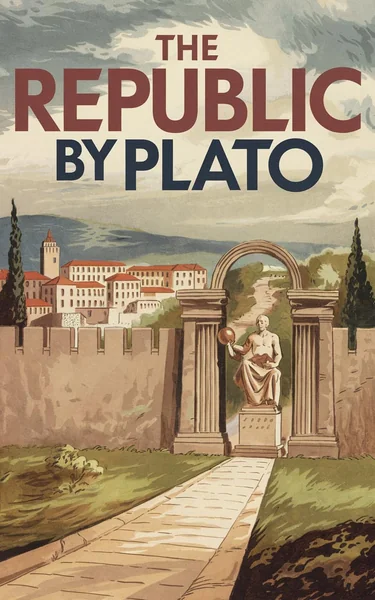
- Readers drawn to A History of Western Philosophy and Theology may find useful companions among several related titles. Bertrand Russell's The History of Western Philosophy covers comparable chronological ground as a single-volume survey, though from an entirely secular and analytically skeptical standpoint — a sharp contrast to Frame's confessional approach. Plato's The Republic and René Descartes' Meditations on First Philosophy represent primary-source touchstones for the ancient and early modern periods Frame evaluates. For readers interested in a Reformed cultural critique that shares Frame's presuppositional sensibility, Carl Trueman's The Desecration of Man offers a related perspective. Those looking for a more accessible entry point into philosophy before tackling Frame's density might consider Philosophy 101 by Paul Kleinman.
- Who should read this?
- The book is explicitly designed for seminary and college students, pastors, and scholars working within or seriously engaging the Reformed theological tradition. Published commentary consistently identifies this as its natural home, and J. I. Packer's endorsement specifically expresses hope for its wide adoption as a textbook in theological education. D. A. Carson's endorsement broadens the audience slightly to anyone who 'tires of ostensible neutrality' — readers who want philosophical history assessed against a theological standard. Those outside this orbit — readers seeking a secular, pluralist, or neutral survey of Western philosophy — will find the book's presuppositional Reformed framework a fundamental mismatch.
- What makes this different from other philosophy histories?
- Where comparable survey texts offer neutral description, Frame's governing ambition is rigorous, guided evaluation of every thinker against the standard of Holy Scripture. A review at Sharper Iron identifies this as the book's defining virtue: readers are not simply handed a map of philosophical terrain but are accompanied by a guide who has 'firmly fixed his theology in God's revelation,' enabling sustained critical judgment rather than passive cataloguing. This places the book in the Kuyper–Van Til presuppositional tradition and distinguishes it sharply from secular surveys such as Bertrand Russell's The History of Western Philosophy. The result, according to endorsers including D. A. Carson and J. I. Packer, is a model for integrating philosophy and Christian theology — not merely a reference compendium.
- What are Frame's academic credentials?
- John M. Frame holds the J. D. Trimble Chair of Systematic Theology and Philosophy at Reformed Theological Seminary in Orlando. His academic background spans Princeton University, Westminster Theological Seminary, and graduate study at Yale — a combination of institutions that spans both elite secular and confessional Reformed contexts. A History of Western Philosophy and Theology extends his long-running Theology of Lordship series, making it a capstone to decades of scholarly output in Reformed systematic theology and philosophy.
- Who has endorsed or praised this book?
- The book has earned significant praise from leading figures in Reformed academic and pastoral circles. J. I. Packer, Board of Governors' Professor of Theology at Regent College, Vancouver, called it 'a further outstanding achievement by John Frame' and expressed hope that it would achieve wide use as a textbook. D. A. Carson, Research Professor of New Testament at Trinity Evangelical Divinity School, endorsed its pedagogical value, stating it will 'teach you how to think in theological and philosophical categories.' A review at Westminster Theological Seminary Books described it as presenting a 'full overview of Western thought about knowledge of God' in a 'well-digested form' of the Kuyper–Van Til perspective, while Sharper Iron highlighted Frame's firmly grounded theological stance as the book's defining virtue.
Summarize this book
Follow up
Synthesized from verified book data & published reviews · How we review
What would you like to know about A History of Western Philosophy and Theology?
Answers come from our editorial notes on this book. If we haven't covered something, we'll say so.
Readers often ask
Our Review
This review covers the book's content, premise and published critical reception, not a first-hand reading.
What the Book Actually Is and Does
Significance and Place in the Field
Strengths: Evaluation Over Mere Description
Audience and Practical Scope
Limitations and Honest Caveats
Sources & Further Reading
The key facts and claims in this review are grounded in the retrieved, verified sources listed below.
- Cited in this review
- 1
- 2
- 3
theaquilareport.com
- 4
blog.emergingscholars.org
- Further reading
- 5
- 6
- 7
- 8
- 9
pcabookstore.com
- 10
Age & Reading Level
Recommended age
Adult
who it suits
Skip if you want a neutral, secular, or philosophically pluralist survey of Western thought rather than one evaluated through a Reformed, Scripture-first theological framework.
Reader reviews
Be one of the first readers to answer.
Read it? Was it right for you?
Books like A History of Western Philosophy and Theology
Curated picks for readers who enjoyed A History of Western Philosophy and Theology, with our reasoning for each match.
If you liked A History of Western Philosophy and Theology