At a glance
About the Author
Pema Chodron1 book reviewed
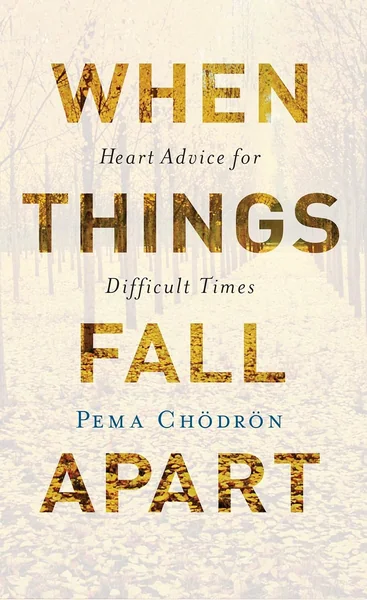
When Things Fall Apart
Heart Advice for Difficult Times
by Pema Chodron
LuvemBooks Verdict
Best for: Readers navigating grief, fear, or personal crisis who are open to a Buddhist-rooted framework and want something warmer and more philosophical than a clinical self-help guide.
Worth it? Skip it? Read the full verdict →Ask LuvemBooks
Was this helpful?
- Is it worth reading?
- For readers open to a Buddhist-rooted framework, When Things Fall Apart is widely regarded as one of the most influential Western-facing Buddhist texts of its era. Critics described it as demonstrating 'how effective the Buddhist point of view can be in bringing order into disordered lives,' and Spirituality & Health called it 'incredibly wise and poignantly practical.' Its sustained relevance across nearly three decades — marked by a 2016 anniversary edition — speaks to the perennial resonance of its teachings. Readers seeking secular, clinical tools for anxiety or grief, however, will find the framework philosophical and theological rather than evidence-based.
- Similar books
- Readers who connect with When Things Fall Apart often gravitate toward other foundational mindfulness and contemplative texts. Jon Kabat-Zinn's Wherever You Go, There You Are offers a similarly accessible, practice-oriented approach to present-moment awareness. Thich Nhat Hanh's The Miracle of Mindfulness is another landmark text that translates Buddhist wisdom into everyday application with warmth and clarity. Viktor Frankl's Man's Search for Meaning shares the book's unflinching engagement with suffering as a source of meaning rather than an obstacle to it. Tara Brach's Radical Acceptance and Chödrön's own The Places That Scare You are also frequently paired with this title for readers wanting to go deeper into self-compassion and fear.
- Who should read this?
- When Things Fall Apart is ideally suited for adults navigating grief, crisis, fear, or existential uncertainty who are open to — or curious about — a Buddhist-rooted philosophical framework. It is specifically calibrated for readers without prior background in Tibetan Buddhism, functioning as a bridge text between general self-help and serious contemplative practice. Those who found meaning in Harold Kushner's When Bad Things Happen to Good People, or who are drawn to authors like Thich Nhat Hanh or Tara Brach, are likely to find Chödrön's approach equally resonant. It is not the right fit for readers who specifically need secular, evidence-based tools aligned with cognitive behavioral therapy or contemporary clinical psychology.
- What are the main themes?
- The book's overarching theme is the practice of moving toward difficulty — fear, pain, loneliness, uncertainty — rather than away from it. Specific subjects across the twenty-two chapters include intimacy with fear, loneliness, hopelessness, death, the 'eight worldly dharmas,' nonaggression, the four maras, ego dissolution, choicelessness, and the dismantling of 'us versus them' thinking. Later chapters address working with chaos through three specific methods and the concept Chödrön calls 'reversing the wheel of samsara.' Throughout, the practice of maitri — loving-kindness toward oneself — serves as the foundational thread connecting all of these subjects.
- Is there an updated edition?
- Yes. Shambhala published a twentieth-anniversary edition in 2016 that includes a new afterword, adding context for readers coming to the text nearly two decades after its original 1997 publication. The core teachings remain unchanged, but the afterword signals the book's sustained relevance and gives long-time readers or returning readers something additional to engage with. The anniversary edition is the version most widely available today.
- How does this compare to When Bad Things Happen to Good People?
- Critics described When Things Fall Apart as 'the Tibetan Buddhist equivalent of Harold Kushner's When Bad Things Happen to Good People' — a comparison that captures both its accessibility to general readers and its philosophical weight. Where Kushner's book approaches suffering from within a Jewish theological framework, asking why God allows pain, Chödrön's book draws on Tibetan Buddhist concepts like groundlessness and maitri to argue that suffering is a doorway rather than an injustice. Both are widely regarded as landmark texts for readers facing hardship, but they operate from very different premises and traditions.
Summarize this book
Follow up
Synthesized from verified book data & published reviews · How we review
Press Enter to ask. Answers come from our editorial Q&A — start typing to see related questions.
Age & Reading Level
Recommended age
Adult
Reading level
Adult
who it suits
Skip if You are looking for secular, evidence-based tools — such as those grounded in cognitive behavioral therapy or clinical psychology — for managing anxiety, grief, or trauma.
Editorial Review
When Things Fall Apart: Heart Advice for Difficult Times by Pema Chödrön draws on traditional Tibetan Buddhist teachings to argue that moving toward pain, fear, and groundlessness — rather than away from it — is the only path to lasting relief. Critics called it "the Tibetan Buddhist equivalent of Harold Kushner's When Bad Things Happen to Good People," a comparison that captures both its accessibility and its weight.…
Read the Full ReviewBooks like When Things Fall Apart
Curated picks for readers who enjoyed When Things Fall Apart, with our reasoning for each match.
If you liked When Things Fall Apart