At a glance
LuvemBooks Verdict
Best for: Readers drawn to women's adventure memoir who want the full, unsanitised picture — the recklessness alongside the wonder — and who are comfortable with a narrator who accumulates extraordinary experiences without packaging them into a tidy life lesson.
Worth it? Skip it? Read the full verdict →Ask LuvemBooks
Was this helpful?
- Is it worth reading?
- For readers drawn to high-stakes adventure writing and honest accounts of lives deliberately unmapped, The Wilder Way is a compelling and unusually wide-ranging debut. Kirkus Reviews calls zu Beck "a captivating storyteller," and the breadth of geography — deserts, Arctic tundra, Central Asian steppe, remote island — gives the memoir genuine variety rather than the repetition of a single adventure mode. The key caveat is structural: zu Beck intentionally withholds the tidy epiphany most self-discovery memoirs deliver, which will feel either bracingly authentic or somewhat unsatisfying depending on the reader's appetite. Those who prize emotional honesty over resolved narrative arcs will find it rewarding; those seeking a clear, hard-won lesson by the final page may come away frustrated.
- Similar books
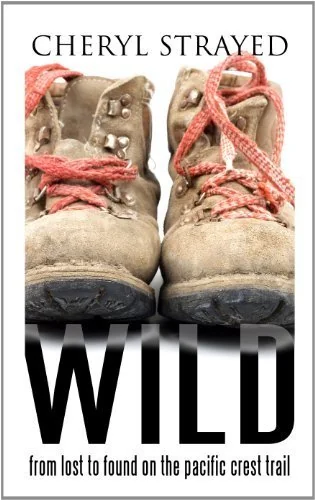
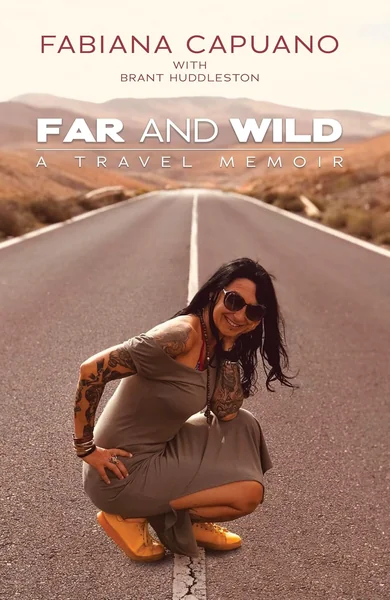
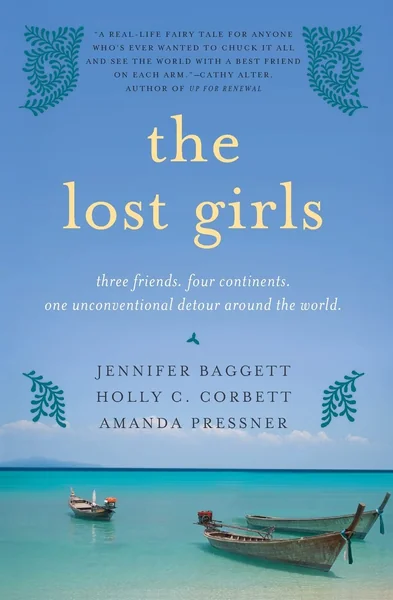
- Readers who respond to The Wilder Way will likely gravitate toward several kindred titles on the adventure and women's travel memoir shelf. Cheryl Strayed's Wild is the most-cited comparison — both centre a woman in crisis who strikes out on a physically gruelling journey as self-reclamation, though Wild offers a more resolved emotional arc. Jennifer Baggett's The Lost Girls follows three women who leave their careers to travel the world, sharing the open-ended solo-travel spirit of zu Beck's odyssey. Jean-Philippe Soulé's Dancing with Death covers extreme adventure in remote and dangerous terrain, appealing to the same appetite for high-stakes storytelling. For readers drawn to the memoir's honest account of an unconventional life, Alice Steinbach's Without Reservations and the collaborative Far and Wild by Fabiana Capuano and Brant Huddleston round out the shelf with their own explorations of freedom and self-discovery through travel.
- Who should read this?
- The Wilder Way is best suited to readers who love adventure writing that does not sanitise the recklessness that makes adventure possible, and who are comfortable accompanying a narrator who never fully resolves her search for self. Fans of Cheryl Strayed's Wild will find a thematically kindred but geographically far wider companion here. It is also a strong pick for readers interested in honest accounts of lives deliberately unmapped — those drawn to questions of identity, displacement, and what it means to choose freedom over stability. Readers who require a reflective protagonist or a clear moral at the memoir's close are less likely to be satisfied.
- Are there any difficult themes?
- Yes — The Wilder Way deals candidly with substance abuse and infidelity as the catalysts for zu Beck's departure from her London life, and the memoir is set partly in conflict-affected or remote regions, including Yemen. Publishers Weekly notes that zu Beck's emotional fault lines trace back to childhood feelings of not being seen or feeling at home, so themes of psychological displacement and personal crisis run throughout. The memoir is written for adult readers; its content is frank rather than graphic, but readers sensitive to accounts of addiction and relationship breakdown should be aware these are present.
- What makes this memoir distinctive?
- What most distinguishes The Wilder Way within the women's adventure memoir tradition is zu Beck's refusal to deliver the expected epiphany. Critical coverage notes she admits she "failed to find myself" in her travels but learned instead to live with uncertainty and keep stretching toward new horizons — and by the memoir's own logic, that honest non-resolution is the point. Where most self-discovery narratives are structured around lessons delivered, zu Beck's is structured around experiences accumulated, giving it an emotional honesty that sets it apart from more conventional entries in the genre. The book's geographic scale — seven years, five continents, from Mongolian steppe to Arctic tundra — also gives it an unusually large footprint within the form.
- How wide is the geographic range?
- The Wilder Way covers an exceptionally broad geographic canvas for a single memoir — Mongolia's wilderness, the remote Socotra islands of Yemen, the Passu Cones mountains of Pakistan near the Chinese border, a solo drive from Mexico to Alaska in an eighteen-year-old truck, and an attempted 300-mile ultramarathon in the Arctic Circle. This spans deserts, Arctic tundra, Central Asian steppe, and remote island environments, giving the memoir genuine variety rather than the repetition of a single adventure mode. Critical coverage notes that this breadth — seven years and five continents — gives The Wilder Way an unusually large footprint within the women's adventure memoir form, exceeding the scope of the Cheryl Strayed comparisons it typically attracts.
Summarize this book
Follow up
Synthesized from verified book data & published reviews · How we review
Press Enter to ask. Answers come from our editorial Q&A — start typing to see related questions.
Age & Reading Level
Recommended age
Adult
Reading level
Adult
3 content notes · who it suits
Content to know about
Best for: Adults — candid treatment of substance abuse, infidelity, and ongoing psychological crisis makes this best suited to adult readers.
Skip if you want a self-discovery memoir that delivers a clear, hard-won lesson or resolved transformation by the final page.
Editorial Review
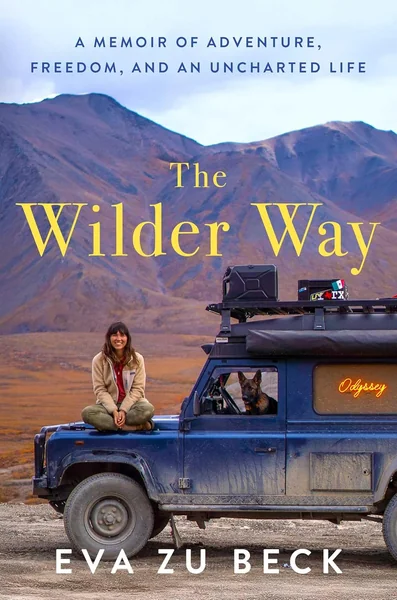
The Wilder Way is Eva zu Beck's debut memoir, published by Gallery Books in June 2026, tracing her seven-year transformation from a conventional London life into an existence defined by extreme adventure and self-interrogation — from solo horse-trekking in Mongolia to riding out COVID-19 alone on a remote Yemeni island. Critical coverage finds her "frustratingly impulsive and naïve at times" but ultimately "a captivating storyteller," and critical coverage notes that the narrative resists neat resolution by design, with zu Beck herself acknowledging she "failed to find myself" in her travels yet learned to live with uncertainty.…
Read the Full ReviewBooks like The Wilder Way
Curated picks for readers who enjoyed The Wilder Way, with our reasoning for each match.
If you liked The Wilder Way