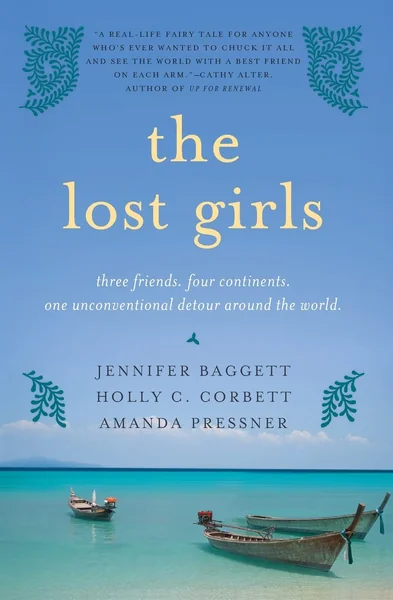
The Lost Girls: Three Friends. Four Continents. One Unconventional Detour Around
Three New York women leave their careers to spend a year traveling four continents, documenting the personal and professional reckonings that follow.
Read our full reviewAt a glance
LuvemBooks Verdict
Best for: Readers in their twenties navigating career or life crossroads who enjoy women's travel writing and want an energetic, companionable group memoir covering eleven countries across four continents through three distinct journalistic voices.
Worth it? Skip it? Read the full verdict →Ask LuvemBooks
Was this helpful?
- Is it worth reading?
- For readers already drawn to travel writing and women's memoirs, The Lost Girls delivers polished, vivid prose from three professional journalists and an unusually companionable group-narrative format that solo travelogues cannot replicate. Critics described the authors as 'gifted writers' whose 'passionate, vivid descriptions' make the book 'an intensely enjoyable read for fans of travel writing.' The key caveat from Kirkus Reviews is that the emotional depth doesn't always match the ambition of the material — experiences like volunteering in Kenya never achieve the profound resonance readers might hope for, and the memoir's resolution leans on sentiment over hard-won insight. Readers willing to engage with it as an energetic, companionable account of friendship tested by long-term travel will find considerably more to enjoy than those expecting a deeply literary meditation.
- Similar books
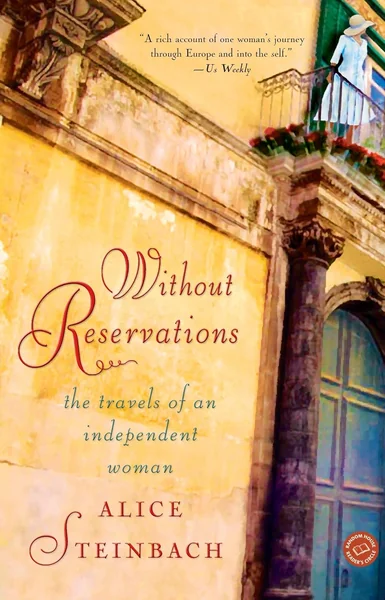
- Readers who enjoyed The Lost Girls will find kindred titles in the curated selection below. Far and Wild: A Travel Memoir by Fabiana Capuano and Brant Huddleston offers another immersive, adventure-driven travel narrative, while Without Reservations: The Travels of an Independent Woman by Alice Steinbach is a classic of women's solo travel writing that shares the memoir's interest in identity and reinvention. Dancing with Death: An Inspiring Real-Life Story of Epic Travel Adventure by Jean-Philippe Soulé delivers high-stakes international travel writing for readers drawn to the more visceral end of the genre. For those drawn to the broader memoir-of-self-reinvention tradition, Educated: A Memoir by Tara Westover provides a deeply literary counterpoint — one that Kirkus critics of The Lost Girls might argue achieves the emotional resonance they felt was missing.
- Who should read this?
- The Lost Girls is most likely to resonate with readers already drawn to travel writing and women's memoirs, and with anyone who has stood at a professional or personal crossroads in their twenties. Critical coverage described it as 'immediately relatable' for readers uncertain about their own futures, and the memoir's depiction of three friends navigating a year abroad together gives it particular appeal for anyone who values the relational and social dimensions of travel. Readers seeking a deeply introspective or literary meditation on place and identity may find the book lighter than they hoped — Kirkus found its emotional resolution leaning on sentiment — but those after an energetic, companionable account of friendship under pressure will find the three professional journalists consistently hold attention scene by scene.
- About Jennifer Baggett
- Jennifer Baggett is a co-author of The Lost Girls: Three Friends. Four Continents. One Unconventional Detour Around the World. She previously held editorial positions at Self and Woman's Day magazines before serving as a project manager at the Food Network. She collaborated with co-authors Holly C. Corbett and Amanda Pressner on a second book.
- What did critics say?
- Critical reception was split. On the positive side, reviewers praised Baggett, Corbett, and Pressner as 'gifted writers' whose 'passionate, vivid descriptions of their far-flung travels, bolstered by thoughtful insights and genuine intentions,' make the book 'an intensely enjoyable read for fans of travel writing.' Novelist and New York Times bestselling author Allison Winn Scotch called it 'a triumphant journey about losing yourself, finding yourself and coming home again.' Kirkus Reviews was more cautious, finding the rotating narrator structure initially confusing, the Latin American opening closer to a college spring-break excursion than a soul-searching venture, and arguing that even weighty experiences — such as volunteering amid poverty in Kenya — 'never take on the profound, moving quality readers may expect.'
- What sets it apart from other travel memoirs?
- The most distinctive feature of The Lost Girls is its explicitly collective format — this is not one woman's solo journey of self-discovery but a story of three friends navigating the same road, sometimes in harmony and sometimes not. Critics noted that the relational dimension gives the memoir 'a social texture that solo-narrator travelogues cannot replicate.' The semi-improvisatory travel style — neither a packaged luxury tour nor a stripped-down backpacking trip — also gives the book a broader perspective than either extreme would afford. All three authors brought professional journalism credentials to the project, which shapes the book's narrative fluency, though Kirkus argued it also contributes to an occasionally reportorial distance from raw emotion.
Summarize this book
Follow up
Synthesized from verified book data & published reviews · How we review
Press Enter to ask. Answers come from our editorial Q&A — start typing to see related questions.
Age & Reading Level
Recommended age
Adult
Reading level
Adult
who it suits
Skip if you're looking for a deeply introspective, literary meditation on place and identity rather than an entertaining companionable travel narrative.
Editorial Review
The Lost Girls is a group memoir in which three Manhattan media professionals — Jennifer Baggett, Holly C. Corbett, and Amanda Pressner — quit their jobs, leave their boyfriends, and spend a year backpacking 60,000 miles across four continents.…
Read the Full ReviewBooks like The Lost Girls
Curated picks for readers who enjoyed The Lost Girls, with our reasoning for each match.
If you liked The Lost Girls